
Last updated November 2, 2026
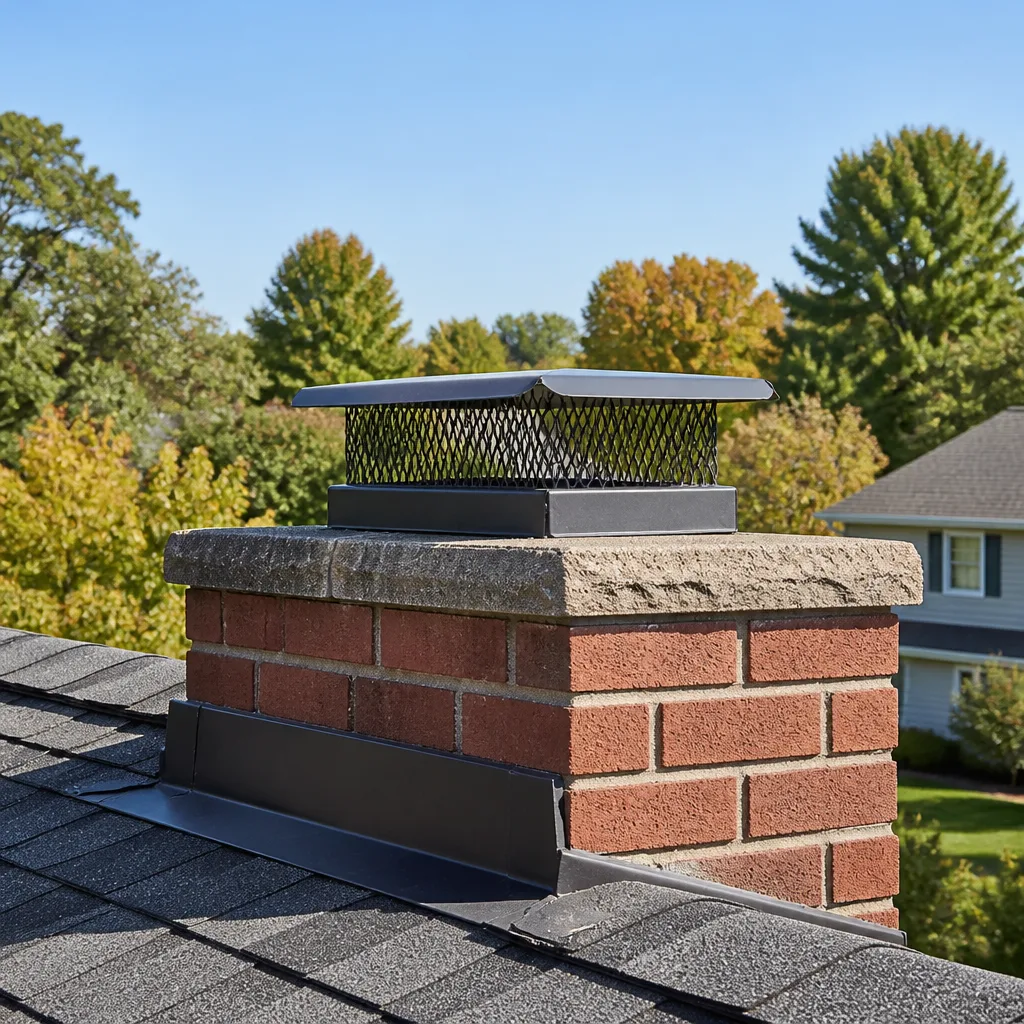 Sweep & inspection
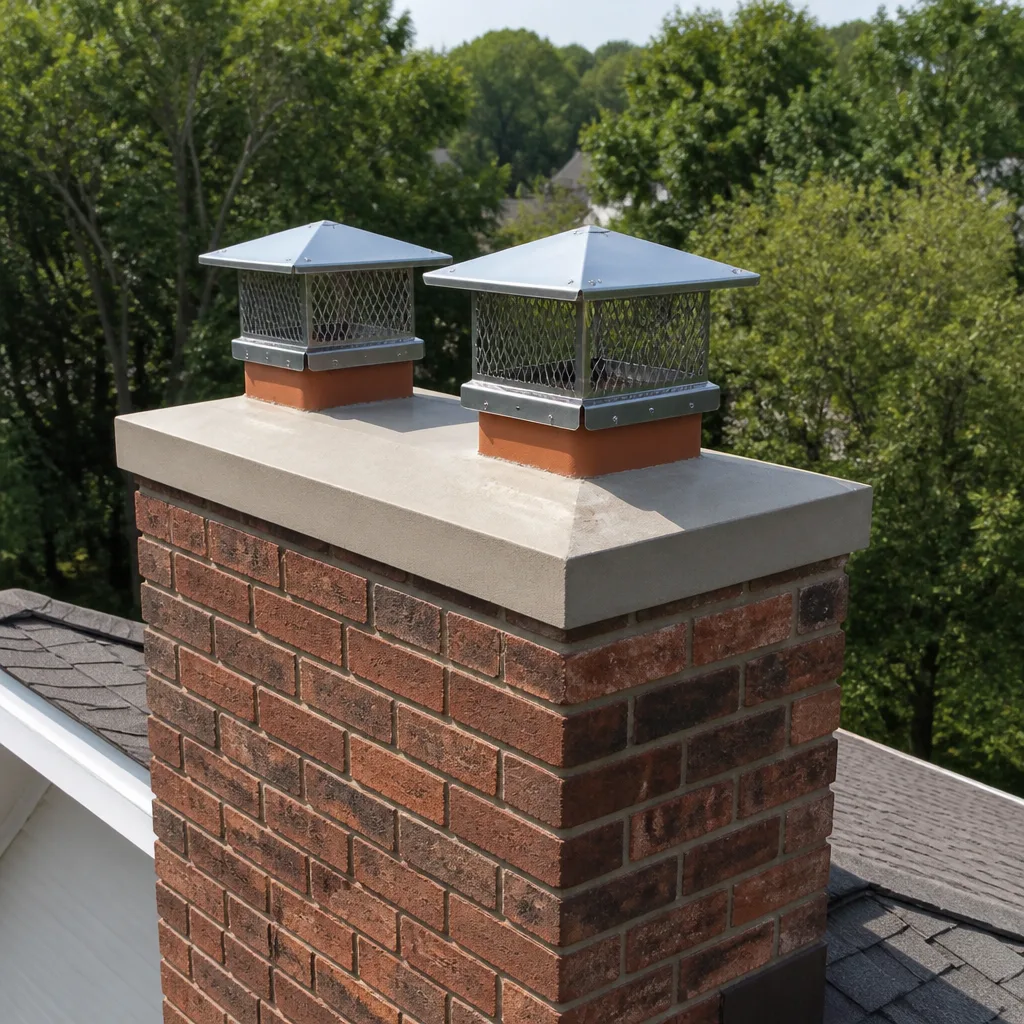 Caps & crowns
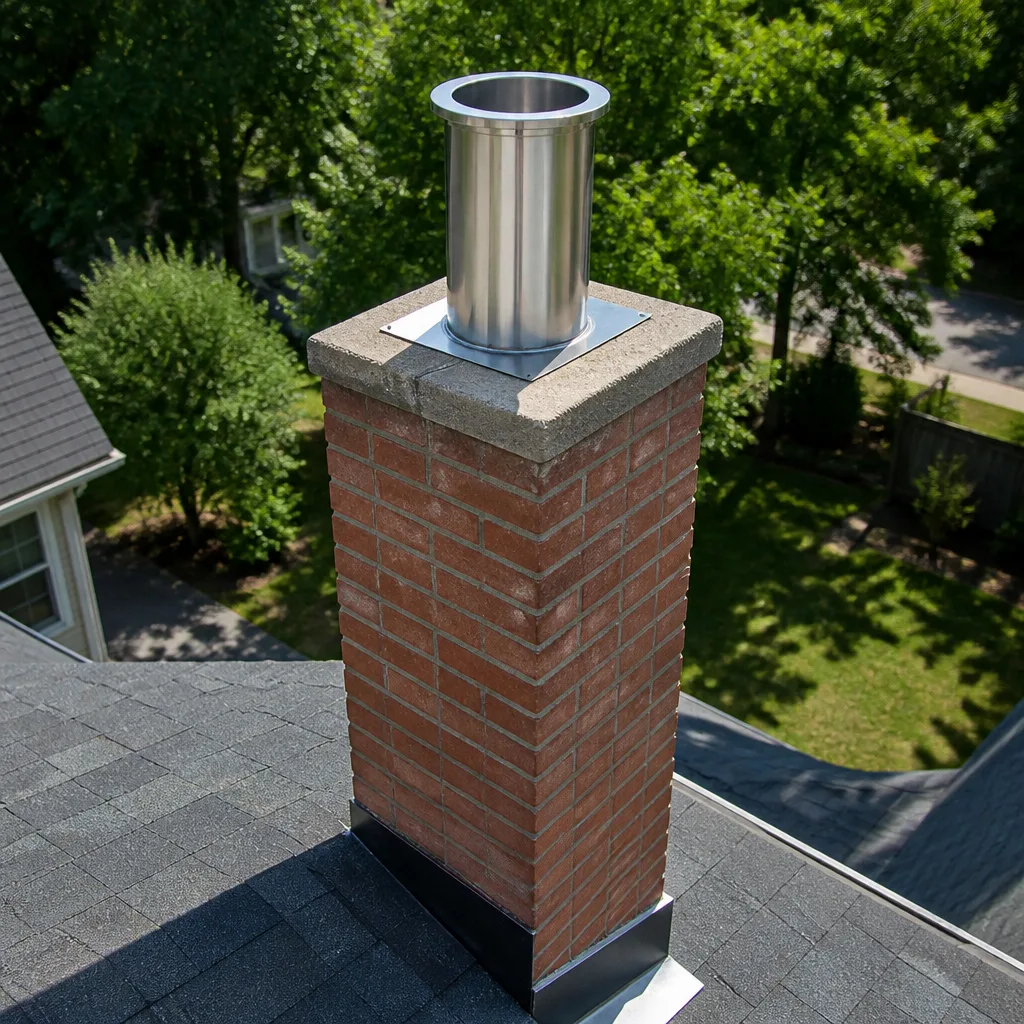 Flue relining
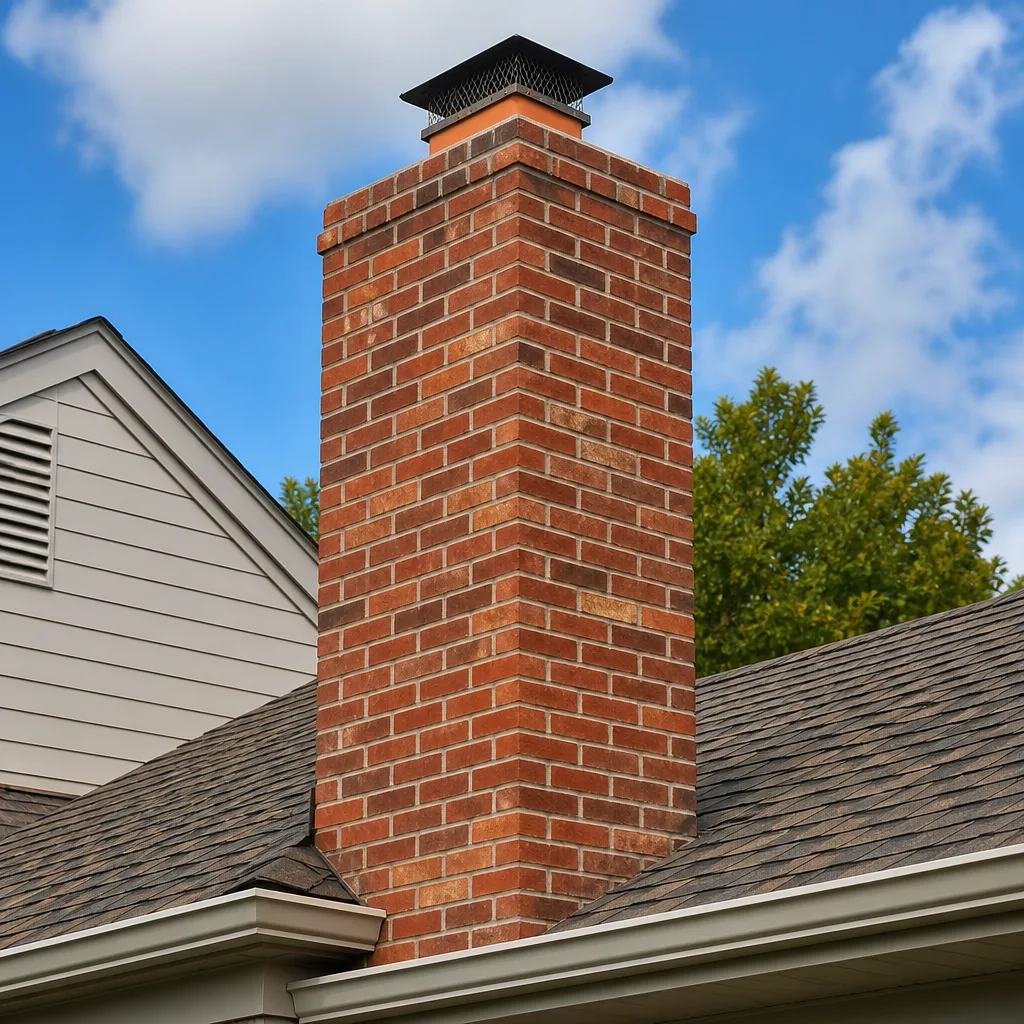 Masonry repair
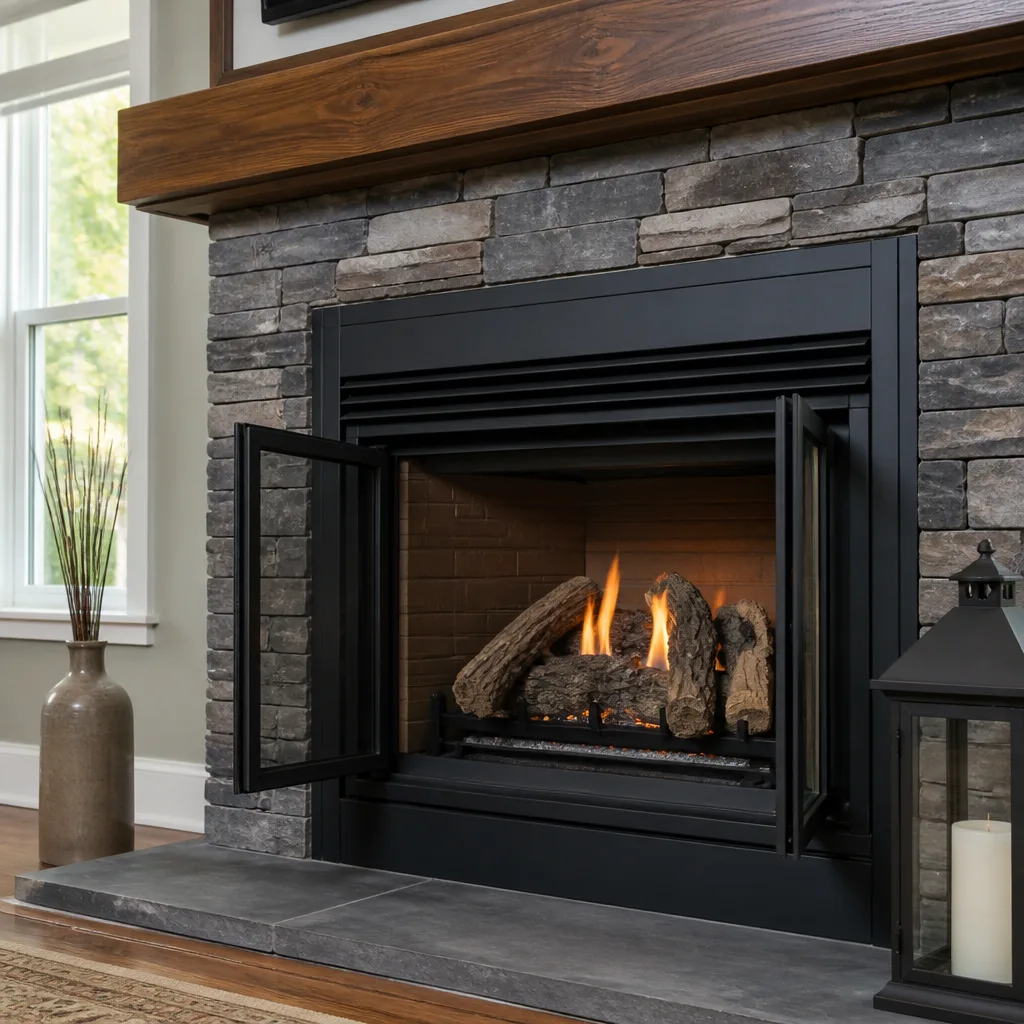 Gas fireplace service
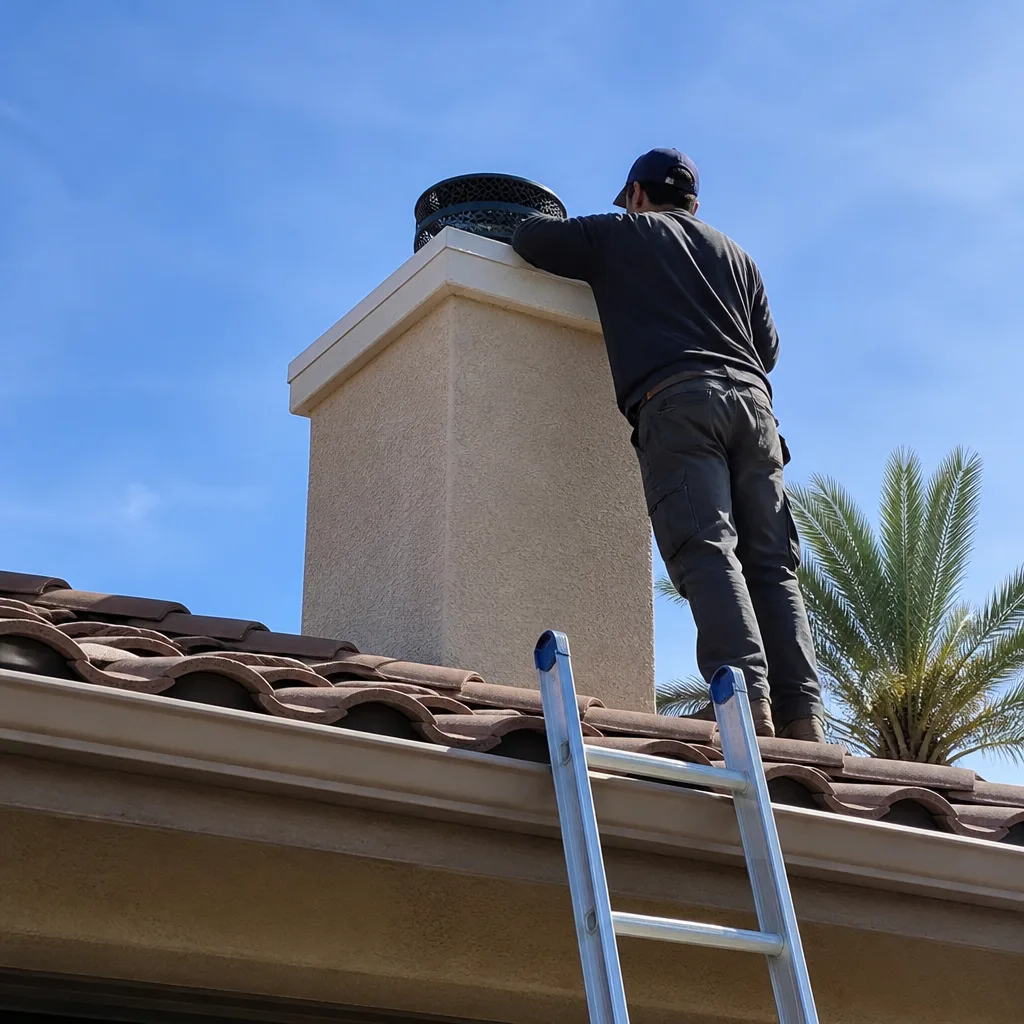
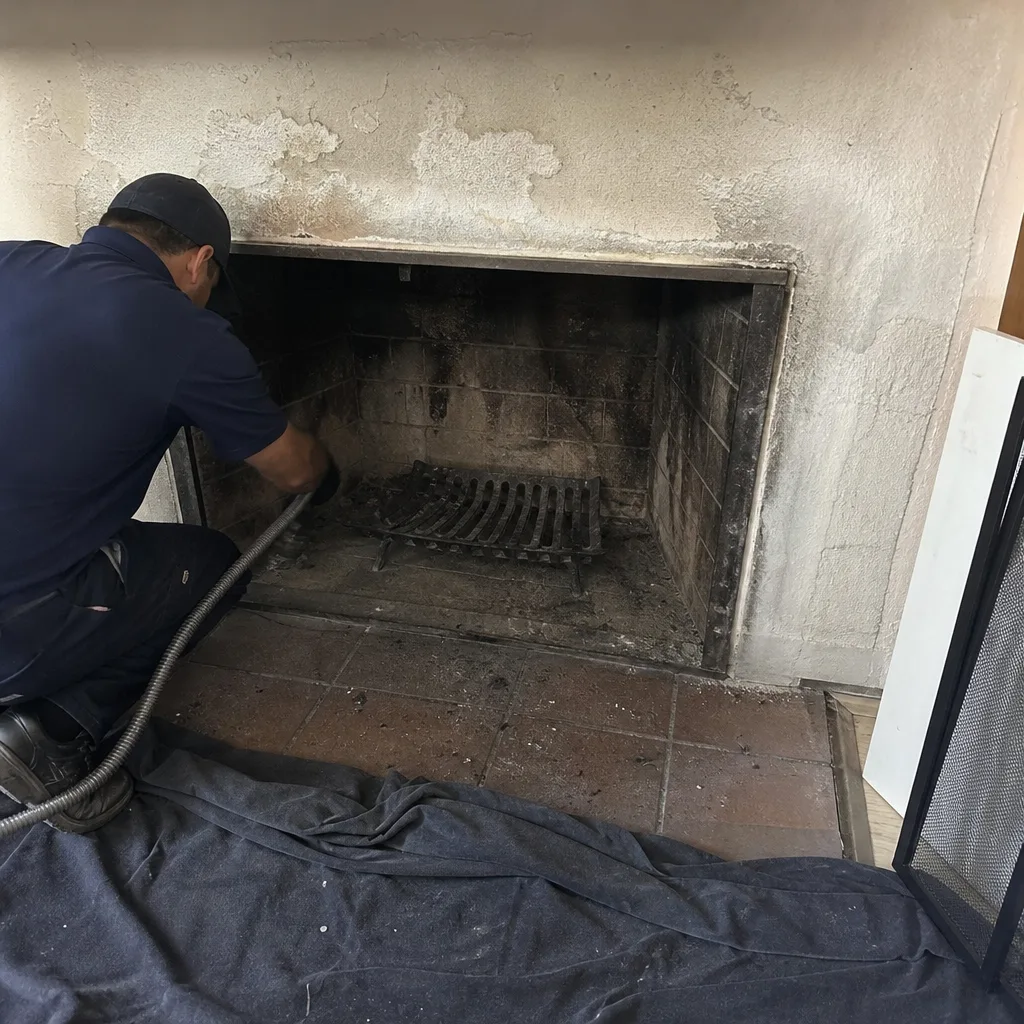
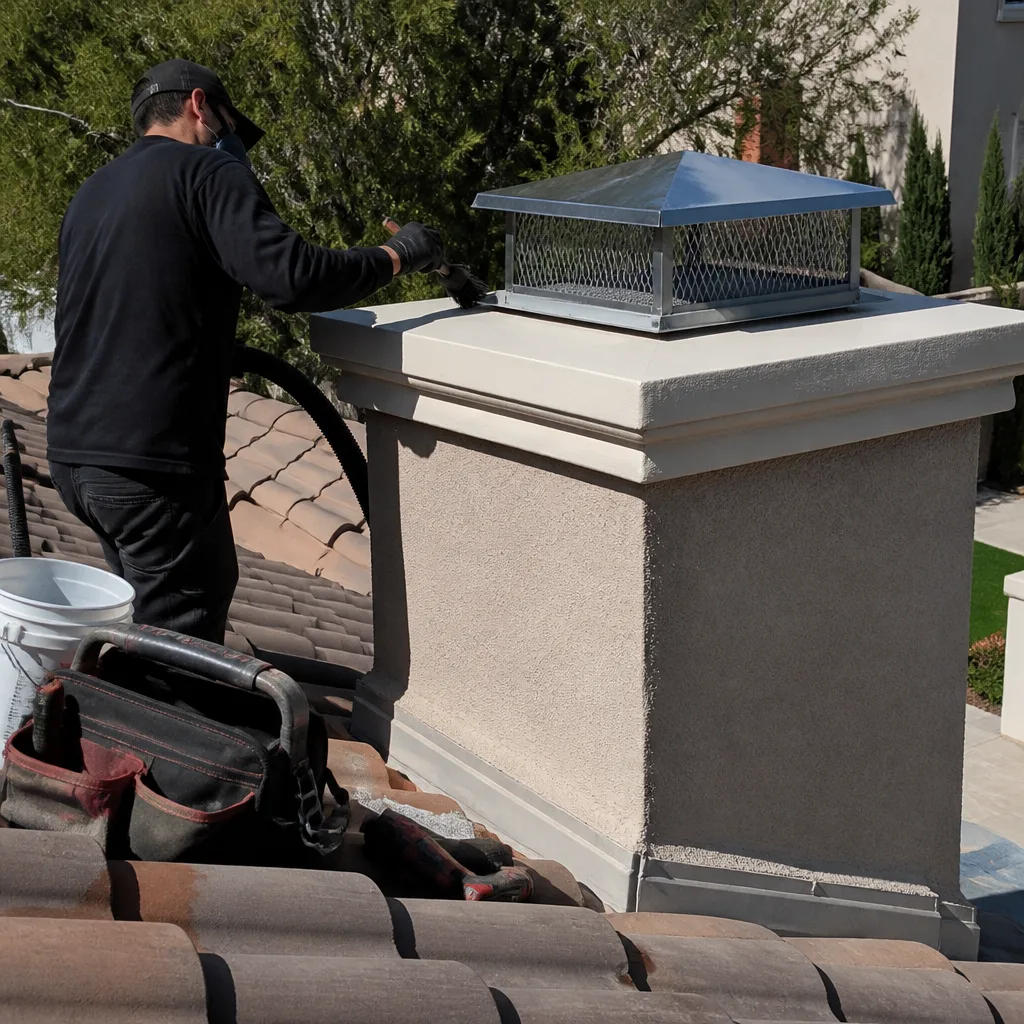
Level 1 sweep and inspection to the NFPA 211 annual standard - flue, crown, cap, and flashing checked and photographed
Chimney sweep logs do not sweep chimneys. They loosen some creosote - which then falls where a brush and vacuum still have to collect it.
The Complete Chimney Sweep Guide for Indio Homeowners
Most Indio homeowners use their fireplace fewer than 30 nights a year. That short burn season, counterintuitively, can deposit enough creosote to warrant a full Level 2 inspection because incomplete combustion from infrequent fires leaves more residue per burn than daily use in colder climates. A fire that smolders at low temperature for three hours on a December evening produces a different, stickier creosote than a hot, efficient burn in a Minnesota January. This guide translates standard chimney care into what actually applies to a Coachella Valley home, where desert dust, palm debris, monsoon moisture, and wildfire ash create a contamination profile most national guides never address. You’ll learn how to read a sweep report, what your flue liner condition actually determines, and why Indio’s warm winters make gas insert inspections just as critical as wood-burning sweeps.
Quick Answer
A chimney sweep in Indio should happen once per year if you burn wood more than a dozen times per season, and every two years for gas-only fireplaces. The desert environment introduces fine dust, palm fiber, and ash that combine with creosote into a denser, harder deposit than what coastal California homes typically produce. A professional sweep includes a camera inspection of the flue liner, and any recommendation for repair should come with photos you can see for yourself.
Styles & brands we work with
- Sweep & inspection
- Caps & crowns
- Flue relining
- Masonry repair
- Gas fireplace service
Table of Contents
- Why Indio’s Desert Climate Creates a Different Chimney Contamination Profile
- How to Read a Chimney Sweep Report: Stage 1, Stage 2, Stage 3 Creosote
- CSIA-Certified Sweep vs. General Handyman: What to Check Before Anyone Gets on Your Roof
- Why Gas Insert Inspections Matter as Much as Wood-Burning Sweeps in Indio
- What Your Flue Liner Condition Determines: Relining vs. Resurfacing
- Dryer Vent Cleaning: The Other Combustion Risk in Your Indio Home
- A Seasonal Maintenance Calendar for the Coachella Valley
- Common Mistakes to Avoid
- When to Call a Professional
- Frequently Asked Questions
Why Indio’s Desert Climate Creates a Different Chimney Contamination Profile
Chimneys in Indio collect a different kind of debris than chimneys in San Diego or Sacramento. The Coachella Valley’s combination of fine desert dust, palm tree fiber, monsoon-season moisture, and seasonal wildfire ash produces a layered deposit that National Fire Protection Association guidelines, written for typical American climates, don’t fully account for.
Here’s what we see when we open up a chimney in Indio that hasn’t been swept in two or three years:
- Fine silt that gets past the cap. Indio’s airborne dust is extremely fine, finer than what coastal homes deal with. It settles into every horizontal surface inside the flue and mixes with creosote to form a paste that hardens faster than pure creosote would.
- Palm debris. Palm fronds, fibrous seed material, and the dust they shed end up in chimneys across Indio neighborhoods. The fiber is surprisingly fire-resistant, which means it sits in the flue and acts as kindling that smolders rather than burns clean.
- Monsoon moisture cycles. July through September brings humidity spikes that cause the dust-creosote mixture to absorb moisture, then dry into a cement-like layer. This is harder to remove than the flaky creosote you get in consistently dry or consistently damp climates.
- Wildfire ash. When fires burn in the San Bernardino or San Jacinto mountains, ash drifts into the valley. That ash contains fine particulate that adds to the flue load and, in some cases, accelerates acidic corrosion on older clay tile liners.
None of this means Indio chimneys are inherently dangerous. It means the maintenance timeline is different. A chimney that would be fine for two years in a mild, humid coastal climate might need annual attention here purely because of how the deposits layer and harden. The good news is that a professional sweep in Indio, done with rotary cleaning tools and followed by a camera inspection, removes this specific contamination profile completely.
The practical takeaway for Indio homeowners: if your chimney hasn’t been inspected in the last 18 months, assume the flue contains a dust-creosote composite rather than simple soot. That changes the tools required and, in some cases, the number of passes needed to get the flue back to bare surface.
How to Read a Chimney Sweep Report: Stage 1, Stage 2, Stage 3 Creosote
Every reputable chimney sweep classifies creosote using a three-stage system. Understanding what each stage means, and what it looks like, helps you evaluate whether a recommended cleaning or repair is justified. Here’s what each stage actually looks like inside a flue and why each requires a different approach.
Stage 1 Creosote
Stage 1 is a fine, dusty, flaky coating. It looks like black soot mixed with ash, and it brushes off relatively easily with standard sweeping equipment. In Indio, Stage 1 creosote almost always includes a percentage of desert dust and palm fiber. A standard rotary brush sweep removes Stage 1 deposits in a single visit.
Stage 2 Creosote
Stage 2 is a thicker, tar-like layer with a granular texture, like coffee grounds pressed into a paste. This is the stage most Indio chimneys reach after a full burn season without cleaning. Stage 2 requires more aggressive mechanical cleaning, typically a rotary loop system that scrapes the flue walls rather than just brushing them. In our experience, the dust content in Indio’s air makes Stage 2 deposits harder and more compacted here than in coastal cities, which means some sweeps take longer and require more passes.
Stage 3 Creosote
Stage 3 is a hardened, glossy, tar-like glaze that can be an eighth of an inch thick or more. It looks like melted plastic that has cooled onto the flue walls. Stage 3 is a genuine fire hazard because it’s concentrated fuel. Standard brushing will not remove Stage 3 creosote. Removal requires chemical treatment (such as a creosote remover applied and left to dwell) combined with aggressive mechanical cleaning, and in some cases a product specifically designed for glazed creosote removal. After Stage 3 removal, a camera inspection is essential because the underlying flue liner often shows damage.
What the Report Should Tell You
A proper sweep report includes the creosote stage, the flue liner condition, any blockages found, and photos or video stills from the camera inspection. If a sweep tells you that you have Stage 3 creosote but doesn’t show you the camera footage, ask to see it. Any recommendation for a new liner, a HeatShield resurfacing, or masonry repair should come with visual evidence you can evaluate yourself.
CSIA-Certified Sweep vs. General Handyman: What to Check Before Anyone Gets on Your Roof
The chimney sweep industry has a recognized credential: certification from the Chimney Safety Institute of America (CSIA). A CSIA-certified sweep has passed written and field examinations covering chimney physics, building codes, fire safety, and inspection methodology. This matters because most of the work in a proper chimney service happens where you can’t see it: inside the flue, behind the damper, in the smoke chamber.
A general handyman offering chimney cleaning typically does not have this training. The risks of an uncertified cleaning include:
- Brushing a flue without first inspecting it, which can dislodge damaged liner sections and create a blockage
- Missing Stage 2 or Stage 3 creosote and calling the job done
- Failing to identify a cracked flue liner, which is the single most important safety finding in a chimney inspection
- Using equipment that doesn’t match the flue dimensions, leaving creosote in the corners
- Not checking the smoke chamber, where creosote accumulates and where many chimney fires actually start
What should you physically verify before anyone gets on your roof in Indio? Ask to see the CSIA certification card. Confirm that the company carries liability insurance. Ask whether the sweep will run a camera through the flue as part of the service, and whether you’ll receive photo documentation. A professional who hesitates on any of these points is not operating at the standard the job requires.
Here’s the simplest way to think about it: chimney sweeping is a fire-safety service, not a household chore. The person doing it should be trained to identify structural problems, not just remove black stuff. When we perform a sweep in Indio, the cleaning is the entry point. The inspection findings are the actual value.
Why Gas Insert Inspections Matter as Much as Wood-Burning Sweeps in Indio
Many Indio homes have converted from wood-burning fireplaces to gas inserts or gas logs. Homeowners often assume that gas means no maintenance. That assumption is wrong, and in the Coachella Valley it’s particularly wrong for a reason most national guides miss: Indio’s warm winters mean the gas insert may sit unused for eight months, then run intermittently for four, and any issue that develops during the dormant period goes unnoticed until the first cold evening.
Gas fireplace and insert inspections cover a different set of failure points than wood-burning sweeps:
- Venting integrity. Gas inserts vent through a flue liner or direct-vent pipe. Desert dust can obstruct air intakes. A blocked vent causes carbon monoxide to back up into the living space. This is not theoretical. CO is odorless and colorless, and the first symptom of a venting failure is often a headache that doesn’t go away.
- Flue liner condition in dual-fuel setups. If you have a gas insert inside a masonry fireplace, the original clay tile liner may still be present and deteriorating. The gas insert doesn’t use the clay liner the way a wood fire would, but a failing liner still allows moisture intrusion and can eventually compromise the structure.
- Gas line and connection checks. A professional inspection includes checking for gas leaks at the connection points. This should be part of any annual gas fireplace service.
- Log placement and burner condition. Gas logs that have shifted or burners with clogged ports produce improper flame patterns, which increases soot production and reduces efficiency.
In Indio, we recommend that gas fireplaces be inspected every two years at minimum, and annually if the fireplace is the home’s primary heat source during cold snaps. The inspection is faster and less expensive than a full wood-burning sweep, but it catches the issues that matter: vent blockages, CO risk, and liner condition.
What Your Flue Liner Condition Determines: Relining vs. Resurfacing
The flue liner is the most important structural component of your chimney. It contains the heat, directs the exhaust upward, and protects the surrounding masonry from the corrosive byproducts of combustion. When a liner fails, the risks are chimney fire and carbon monoxide intrusion into the home.
An older Indio home built with a clay tile liner may show one of several failure patterns:
- Spalling. The clay tile surface flakes off in layers. This happens faster in the Coachella Valley because the tiles absorb monsoon moisture, then bake in summer heat, causing thermal stress.
- Cracking. Vertical or horizontal cracks in the tiles. Horizontal cracks are more serious because they indicate the sections have separated.
- Gaps between tile sections. The mortar joints between clay tiles erode over time, opening gaps where heat and gases can reach the surrounding masonry.
- Erosion in the mortar crown or throat area. This allows moisture into the chimney structure, which accelerates liner degradation.
When a liner has failed, there are two main repair pathways: full relining or resurfacing.
Full relining means installing a new liner system inside the existing flue. For wood-burning fireplaces, this is typically a stainless steel flexible liner, and the industry benchmark products are DuraFlex and Olympia Chimney systems. These liners are rated for high-temperature wood combustion and are installed to code. For gas fireplaces, a lighter-grade liner is used that matches the appliance’s BTU rating. In Indio, relining is the appropriate solution when the original clay liner has substantial spalling, multiple cracks, or separated sections that cannot be reliably restored.
Resurfacing means applying a product like HeatShield to the existing liner rather than removing it. HeatShield is a cerfractory material (ceramic refractory) that is sprayed or troweled onto the damaged liner surface, filling cracks and restoring a continuous flue path. HeatShield certification-level work is available through trained chimney specialists, and it’s a legitimate alternative to full relining when the original liner is still structurally sound but has surface cracks or minor spalling.
The decision between relining and resurfacing comes down to what the camera inspection shows. If the liner has shifted sections or deep structural damage, resurfacing won’t fix it. If the damage is surface-level, HeatShield can restore the liner without the cost and disruption of a full reline. In either case, the recommendation should be based on visual evidence you can see.
We use DuraFlex and Olympia Chimney liner systems because they’re what the job actually requires when a full reline is necessary. For surface damage, we use HeatShield because it’s a spec-grade material that most generalist handymen cannot access or install correctly. The brands we carry aren’t accidental. They’re what professionals specify.
Dryer Vent Cleaning: The Other Combustion Risk in Your Indio Home
A chimney sweep and a dryer vent cleaning seem like different categories of home maintenance. They’re not. Both systems exhaust products of combustion, both accumulate flammable material in narrow passageways, and both fail silently over time. A clean chimney and a safe dryer vent are the same category of problem: combustion risk.
Lint is the dryer vent equivalent of creosote. It’s highly flammable, it accumulates gradually, and the restriction it causes has compounding effects. When a dryer vent is clogged, the dryer runs hotter, the motor works harder, and the exhaust temperature rises. The U.S. Fire Administration has reported thousands of dryer fires annually, and the leading cause is accumulated lint in the vent system.
Indio’s desert dust accelerates lint accumulation because the fine particulate adds to the lint load. Homes with longer vent runs, typically single-story ranch-style houses where the dryer is on an interior wall and the vent exits through the roof, are at higher risk because the lint has more distance to travel and more places to settle.
Signs your dryer vent needs cleaning:
- Clothes take more than one full cycle to dry
- The outside of the dryer becomes hot to the touch during a cycle
- The exhaust vent flap doesn’t open when the dryer is running
- You notice a burning smell when the dryer runs
- There’s visible lint around the exterior vent opening
Professional dryer vent cleaning removes the accumulated lint from the full length of the vent, from the dryer connection to the exterior termination. This is not the same as cleaning the lint trap, which only catches a fraction of the material. In most Indio homes, a dryer vent clean every one to two years is appropriate, more frequently if you do heavy laundry or have a long vent run.
The practical advantage of using a company that handles both chimney and dryer vent work is that the inspection standards are the same. We look at both systems the same way: find where the flammable material is, remove it, and verify the path is clear. Chimney sweep, repair, and dryer vent, one call covers all three.
A Seasonal Maintenance Calendar for the Coachella Valley
Indio’s short burn season and high-wind spring months create a different maintenance calendar than what national guides recommend. Here’s a month-by-month framework that matches how Coachella Valley homes actually use their fireplaces:
- September – Pre-season inspection. Before the first cold snap, have the chimney inspected and swept if needed. This catches any debris that accumulated during the monsoon months and confirms the flue is clear after the summer dormant period. If you have a gas insert, this is the time to have the burner, logs, and venting checked.
- October – Test burn. Light a small fire and watch the smoke. It should draw cleanly up the flue. Any smoke entering the room indicates a drafting problem that needs attention before the regular burn season begins.
- November through February – Active burn season. Burn seasoned hardwood only. Avoid burning palm fronds, yard debris, or construction lumber, all of which produce excessive creosote or introduce materials that don’t belong in a flue. If you burn more than twice per week, consider a mid-season check.
- March through May – High-wind months. Coachella Valley spring winds stir up dust and can carry debris onto rooftops. Check that your chimney cap is secure and undamaged. A missing or damaged cap allows birds, rodents, and palm fiber into the flue during the months when the fireplace is not in use.
- June through August – Dormant period with monsoon risk. The chimney sits unused, but monsoon moisture penetrates any cracks in the crown, cap, or masonry. This is the season when clay tile liners experience thermal stress from moisture absorption followed by extreme heat. If you noticed any water staining during the previous winter, address it before monsoon season.
- Dryer vent check – Every 12 to 24 months, regardless of season. Dryer vent cleaning doesn’t follow a burn season calendar. Schedule it based on usage and performance, not the weather.
This calendar reflects what actually happens in Indio: a short, intermittent burn season, a windy spring, and a monsoon summer. Following it keeps your chimney in sync with the local climate rather than with generic national advice.
Common Mistakes to Avoid
- Assuming “we never use the fireplace” means “the chimney is fine.” An unused chimney still collects dust, debris, and possibly animal nests. In Indio, fine desert dust settles into the flue regardless of whether you burn. A chimney that sits unused for years still needs an inspection before any future use.
- Burning unseasoned wood. Green or wet wood burns at a lower temperature and produces significantly more creosote. In the desert, wood dries quickly if stored properly, but that doesn’t mean all firewood sold locally is properly seasoned. Ask when the wood was split. It should be at least six months old.
- Treating a chimney sweep as optional if you have a gas insert. Gas inserts produce carbon monoxide. A blocked or damaged vent is a silent hazard. The inspection is not optional just because there’s no creosote.
- Ignoring a slow-drying dryer. A dryer that takes longer to dry is not just inefficient. It’s running hotter, which means the lint in the vent is approaching a temperature where it can ignite. Slow drying is the clearest early warning sign of a dryer vent fire risk.
- Failing to check the chimney cap after windstorms. Indio’s spring winds can dislodge a chimney cap or carry debris that blocks the flue. A missing cap is an open invitation to birds and rodents looking for a nesting site.
- Accepting a repair recommendation without seeing photos. Any reputable chimney company in Indio runs a camera inspection and provides image documentation. If you’re told you need a new liner or extensive masonry work and you haven’t seen visual evidence, get a second opinion.
- Letting monsoon water damage go unaddressed. A small crack in the chimney crown or cap lets moisture into the masonry. In the Coachella Valley’s heat-and-moisture cycle, that small crack becomes a spalling problem faster than it would in a milder climate. Address water intrusion before it becomes structural.
When to Call a Professional
Call a professional chimney company if you notice any of these conditions: smoke entering the room during a fire, a strong creosote or burning odor even when the fireplace is not in use, visible soot stains around the fireplace opening, water staining on the ceiling or walls near the chimney, chunks of clay tile or mortar falling into the firebox, or a dryer that takes more than one cycle to dry a normal load. If you’ve recently purchased an older Indio home and the chimney condition is unknown, an inspection should be part of your first season in the house. If a home inspection report flagged chimney concerns, don’t let that sit; the issues those reports catch are usually real and usually worsen with time. Chimney Sweep Indio offers free estimates in Indio, call (877) 378-2419.
Frequently Asked Questions
How much does a chimney sweep cost in Indio?
A standard chimney sweep in Indio typically runs between $180 and $340, depending on the flue condition, the creosote stage, and whether the chimney has been recently maintained. A Level 2 inspection with a full camera run adds to that because it includes documentation of the flue liner condition. If Stage 3 creosote is present, removal costs more than a standard sweep because it requires chemical treatment and aggressive mechanical cleaning. Call (877) 378-2419 for an exact quote, estimates are free.
How often should a chimney be swept in the Coachella Valley?
For wood-burning fireplaces used more than a dozen times per season, an annual sweep is appropriate. The specific contamination profile in Indio (desert dust mixed with creosote) means deposits harden faster here than in milder climates. Gas-only fireplaces should be inspected at least every two years. Dryer vents should be cleaned every one to two years depending on usage and vent length.
Do I really need a new liner if the sweep says I do?
Only if the camera inspection shows structural failure, and that evidence should be provided to you directly. A cracked clay tile liner is a genuine fire and carbon monoxide risk, but the recommendation should come with photos or video showing the cracks, gaps, or spalling. Surface cracks can often be addressed with a HeatShield resurfacing rather than a full reline. If the liner has separated sections or major spalling, a DuraFlex or Olympia Chimney reline is the appropriate fix. Never accept a liner recommendation without seeing the footage.
What actually happens if I skip a chimney sweep?
Creosote accumulates, and creosote is fuel. At Stage 2 or Stage 3, a hot fire can ignite the creosote inside the flue, producing a chimney fire that can reach 2,000 degrees Fahrenheit. That heat can crack the flue liner, damage the masonry, and in the worst cases spread to the surrounding structure. Even without a chimney fire, a blocked or restricted flue can push carbon monoxide back into the living space. The risk compounds the longer you wait, because creosote does not degrade or disappear on its own.
Are gas fireplaces safer than wood-burning fireplaces in Indio?
Gas fireplaces eliminate the creosote risk but introduce a carbon monoxide risk that wood-burning fireplaces don’t have. The venting requirements for gas appliances are specific, and any block or damage in the vent path means CO can accumulate inside the home. Gas fireplaces are not maintenance-free. They need vent inspections, burner checks, and gas connection checks on a regular schedule.
Can I clean my own chimney with a brush from the hardware store?
You can remove some loose soot with a hardware store brush, but you cannot remove Stage 2 or Stage 3 creosote, and you cannot perform a meaningful inspection of the flue liner without a camera. The most important part of a chimney service is the inspection finding, not the cleaning itself. A DIY sweep gives you a partial result and a false sense of confidence. For the condition of the liner, the smoke chamber, and the hidden areas where chimney fires start, you need professional equipment and trained eyes.
The Bottom Line
Indio’s desert climate creates a chimney maintenance picture that’s different from what national guides assume. The dust, the palm debris, the monsoon moisture, and the short burn season combine to produce a contamination profile that’s denser and harder to remove than typical coastal or northern creosote. Maintenance here means an annual sweep for wood-burning fireplaces, a biennial inspection for gas inserts, and regular dryer vent cleaning as a fire-safety service, not an afterthought. The brands that professionals specify, DuraFlex, HeatShield, and the rest, exist because the job sometimes requires more than a brush. When it does, use the right materials. A complete guide ends where a phone call begins: Chimney Sweep Indio handles sweeping, repair, and dryer vent cleaning for Indio homeowners, call (877) 378-2419.
Written by the team at Chimney Sweep Indio, serving Indio since 2015. For service details, see our Chimney Sweep in Indio page, Dryer Vent Cleaning in Indio page, or Chimney Repair in Indio page.
See the difference
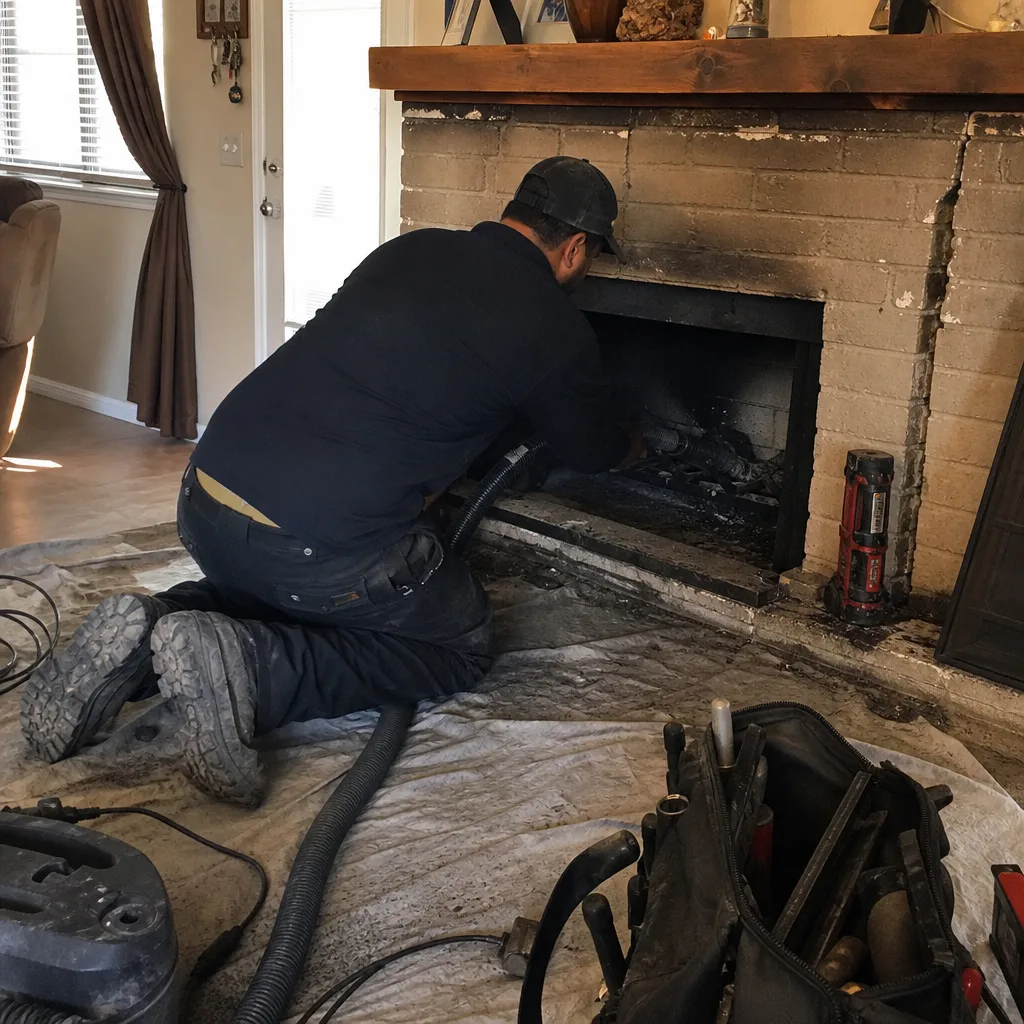 Before
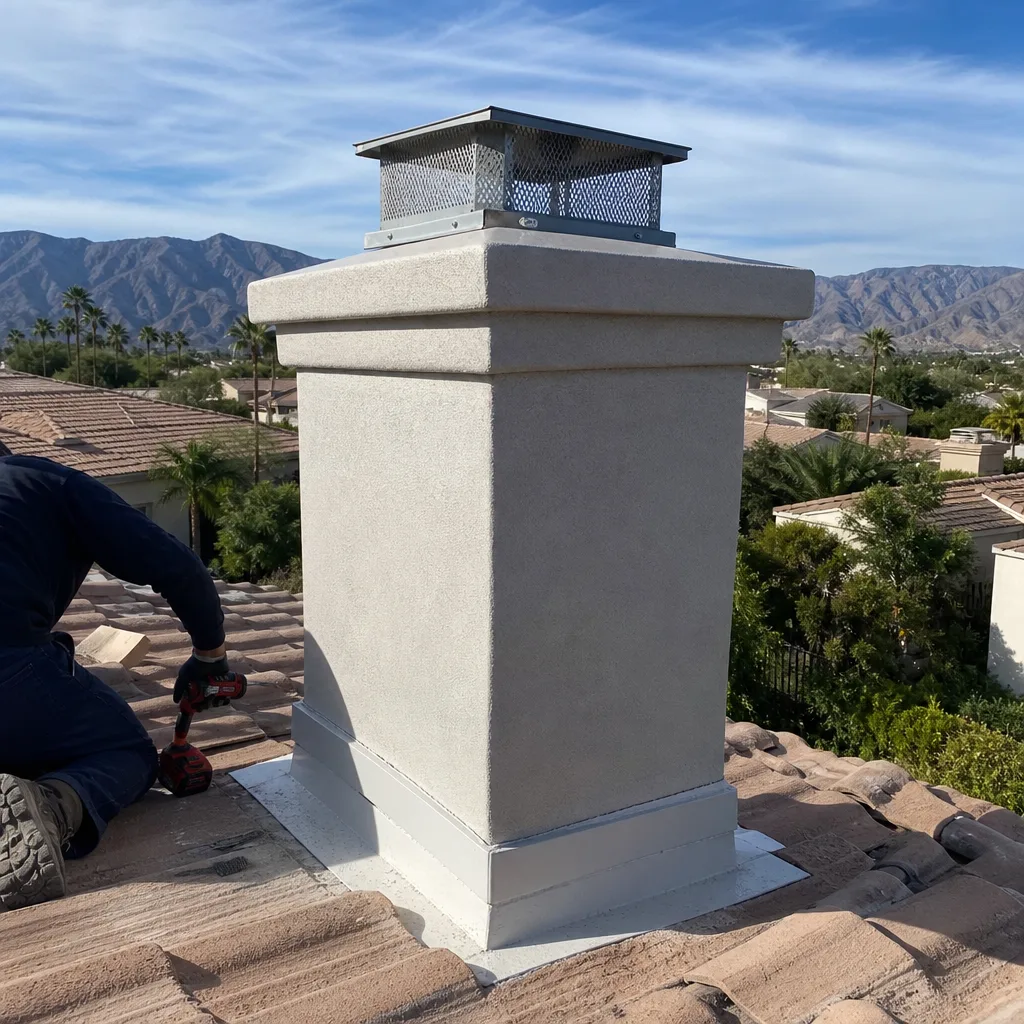 After
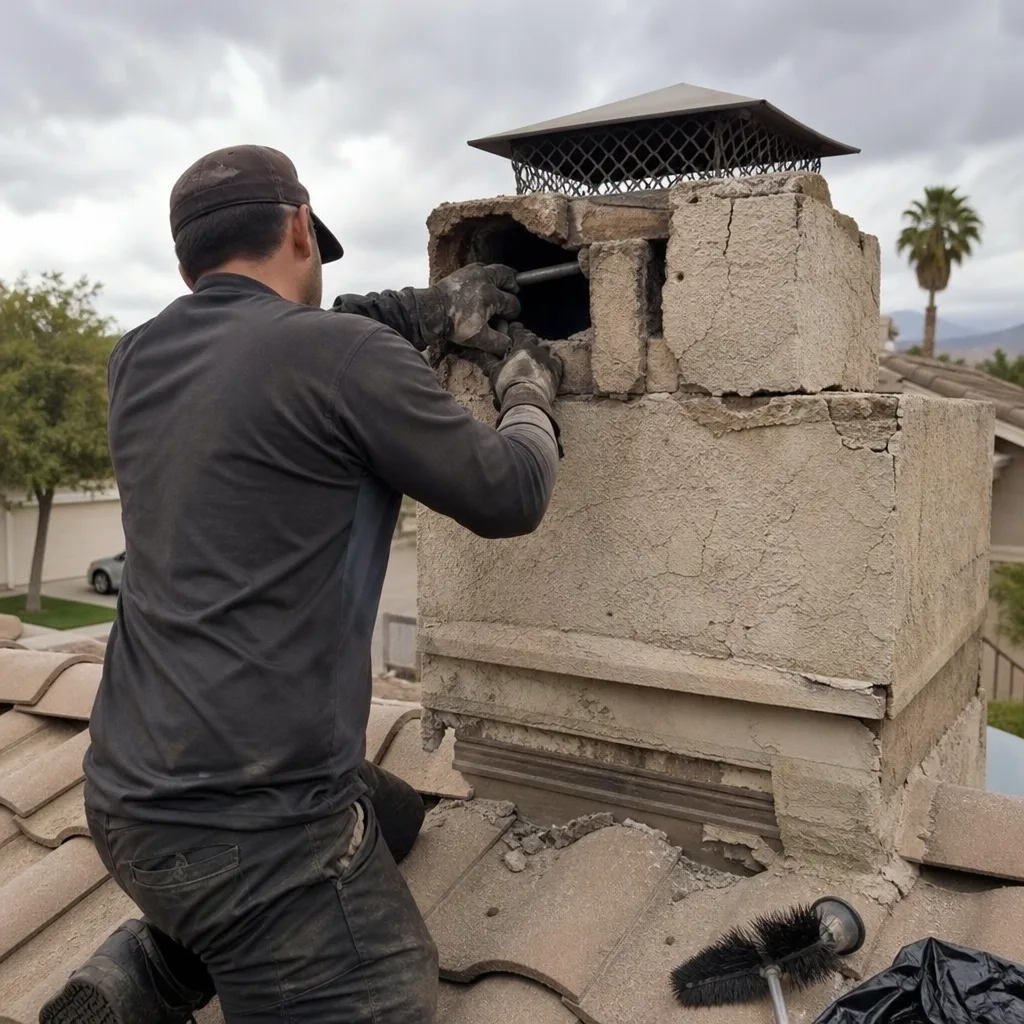 Before
 After
 Before
 After