
Last updated November 2, 2026
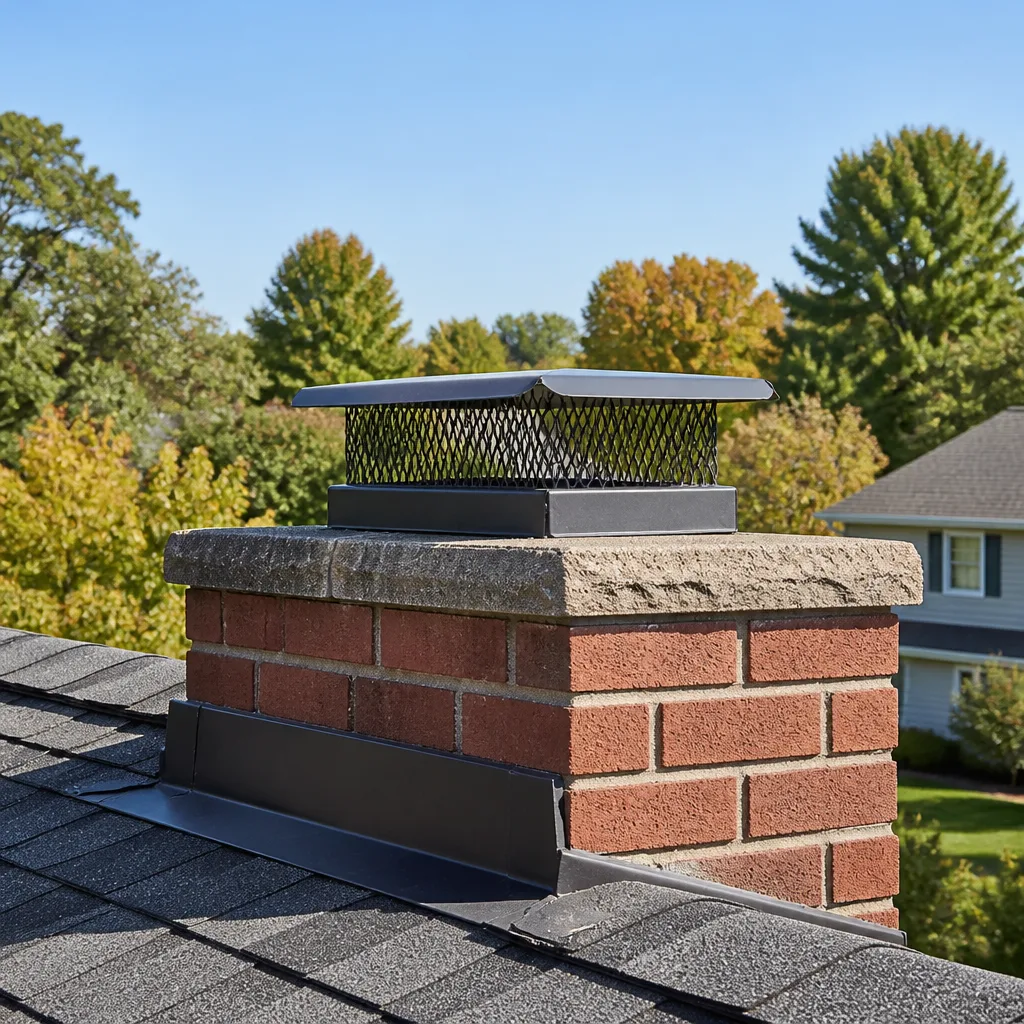 Sweep & inspection
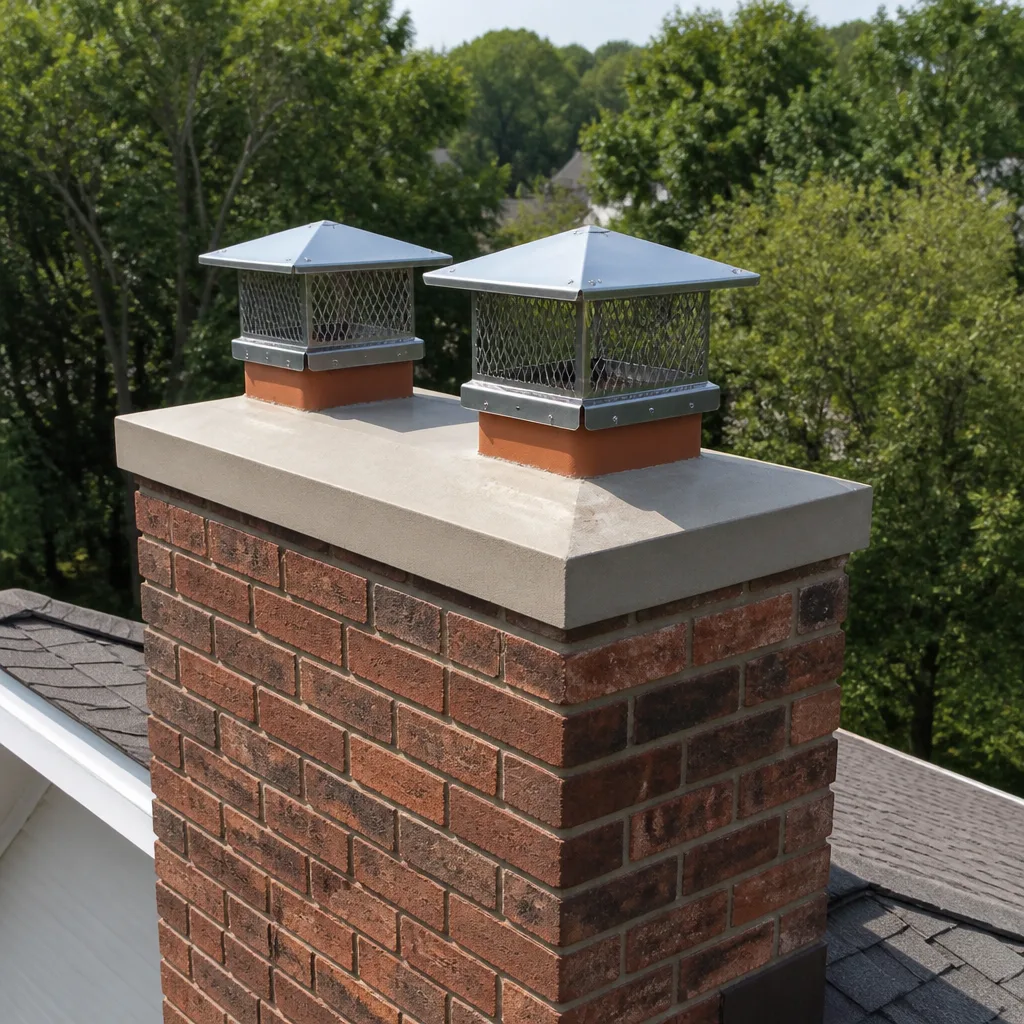 Caps & crowns
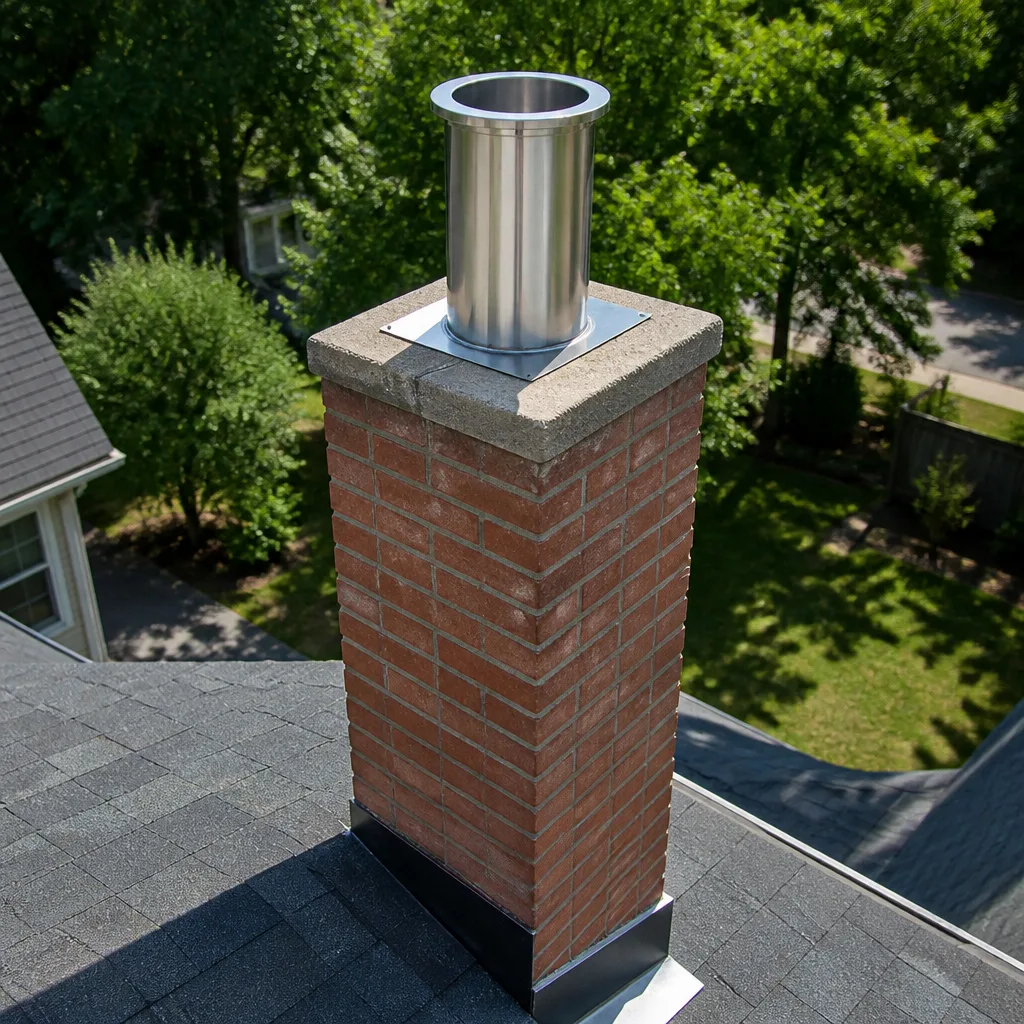 Flue relining
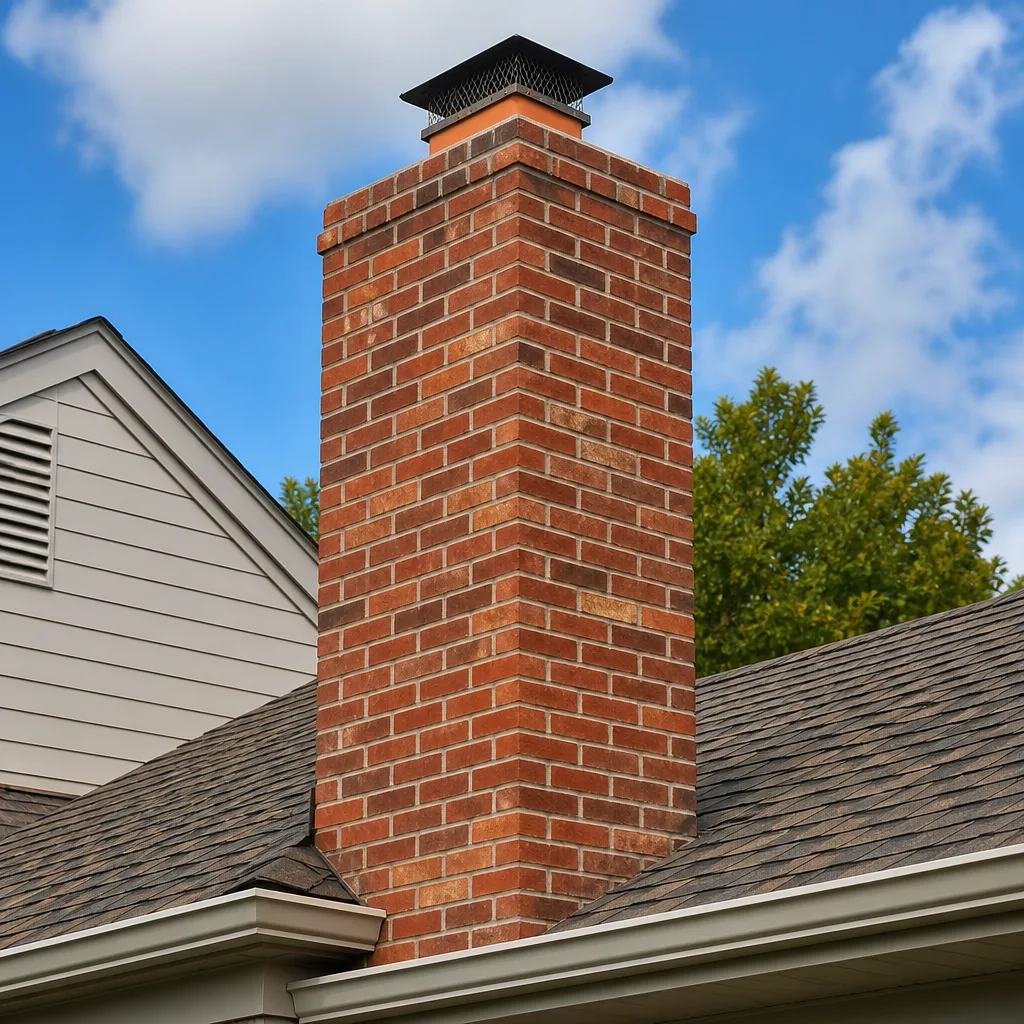 Masonry repair
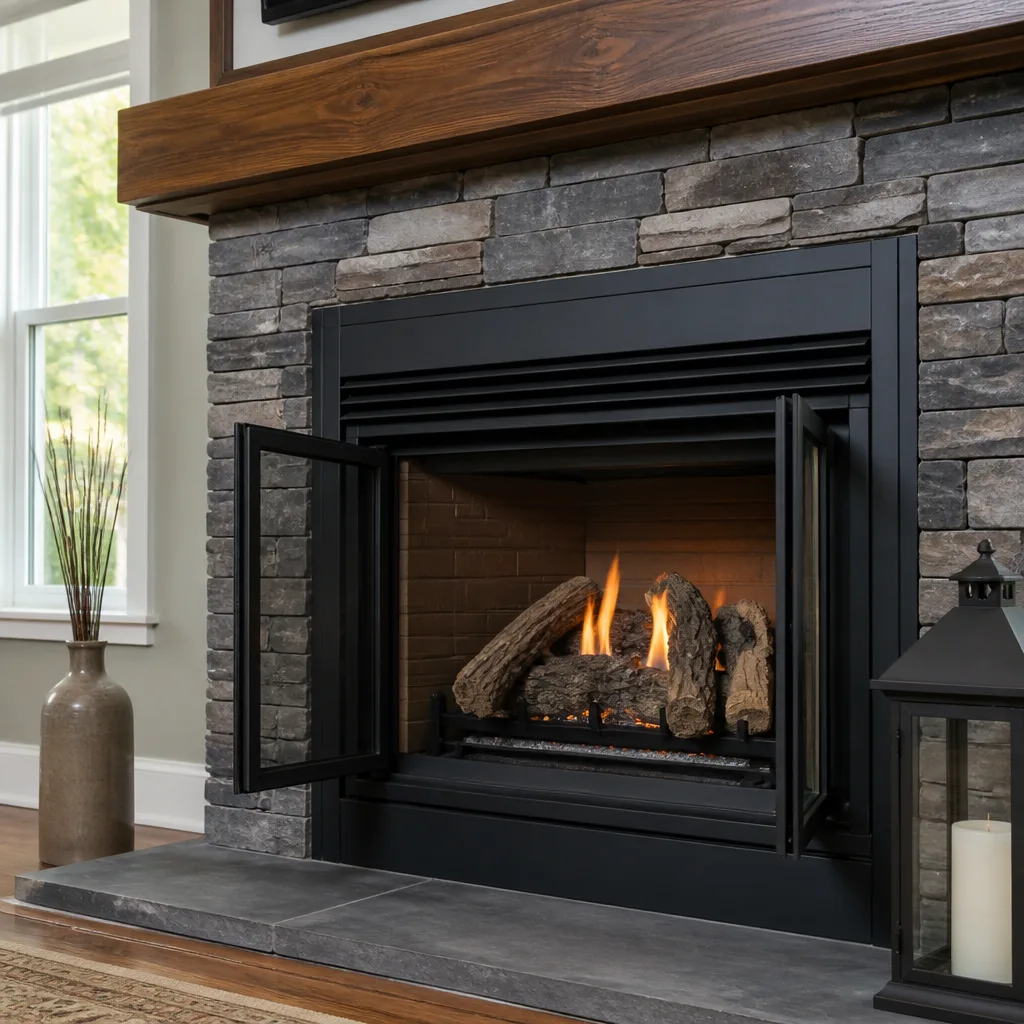 Gas fireplace service
Level 1 sweep and inspection to the NFPA 211 annual standard - flue, crown, cap, and flashing checked and photographed
Chimney sweep logs do not sweep chimneys. They loosen some creosote - which then falls where a brush and vacuum still have to collect it.
How to Hire a Chimney Cleaning Contractor in Indio: A Step-by-Step Guide
Any company with a shop vac and a set of rotary brushes can call themselves a chimney sweep. The question isn’t whether they’ll show up – it’s whether they’ll find the problems that actually matter before your next fire season. In Indio, where summer heat bakes creosote into a hardened glaze and winter nights still draw families to the fireplace, that distinction matters more than most guides admit. This page walks through the screening process step by step: what certifications to verify, which questions separate a specialist from a generalist, and the red flags that show up in the fine print of quotes and reviews. By the end, you’ll know exactly what a proper chimney inspection in Indio should include and what it should cost.
Quick Answer
To hire a chimney cleaning contractor in Indio, verify CSIA certification (not just a general contractor license), ask five specific technical questions about creosote stages and liner inspection, require a written proposal that itemizes the equipment and inspection level, and confirm the contractor carries chimney-specific insurance beyond basic general liability. The strongest signal of a qualified sweep is their vocabulary: they should talk about stage 2 creosote, liner integrity, and draft readings, not just “getting the soot out.”
Styles & brands we work with
- Sweep & inspection
- Caps & crowns
- Flue relining
- Masonry repair
- Gas fireplace service
Table of Contents
- Certifications That Actually Matter
- Five Interview Questions That Separate Specialists From Generalists
- Red Flags in Reviews: What “Quick and Professional” Omits
- How to Verify Chimney-Specific Insurance Coverage
- What a Proper Job Proposal Should Itemize
- Indio-Specific Considerations: Climate, Code, and Market Realities
- Common Mistakes to Avoid
- Frequently Asked Questions
Certifications That Actually Matter
When homeowners in Indio start vetting chimney contractors, the first question is usually “Are you licensed and insured?” That’s a fine starting point, but it doesn’t go nearly far enough. A general contractor license in California allows someone to perform a wide range of work, and chimney sweeping is not a separately regulated trade in the same way electrical or plumbing work is. What that means in practice: a licensed generalist can legally clean your chimney without having ever been trained to identify a cracked flue liner, a stage 3 creosote situation, or a draft problem that’s been silently pushing carbon monoxide back into your home.
The certification that actually signals chimney-specific training is the CSIA (Chimney Safety Institute of America). A CSIA-certified sweep has passed a technical exam covering combustion physics, creosote chemistry, installation codes (NFPA 211), and inspection methodology. They’ve also agreed to continuing education requirements. When you hire a CSIA-certified sweep, you’re hiring someone who has demonstrated knowledge of how chimney systems fail, not just how to run a brush through them.
Here’s what each credential covers:
- CSIA certification: Technical knowledge of chimney systems, inspection levels (Level 1, 2, and 3 per NFPA 211), creosote classification, liner evaluation, and clearance-to-combustible requirements. This is the benchmark for chimney-specific competency.
- California general contractor license: A legal requirement for work over $500 in the state. It indicates the contractor has insurance and a bond, but it says nothing about chimney-specific training.
- NCSG membership: National Chimney Sweep Guild. Membership indicates the contractor stays connected to the industry, but it’s not a certification with a test.
- HeatShield certification: Specific training for installing HeatShield’s ceramic liner resurfacing system. This matters if your chimney needs a liner repair rather than a full replacement, because the product requires proper application to perform.
In Indio, where many homes were built during the 1980s and 1990s construction boom with prefabricated fireplace units, CSIA certification is especially relevant. Prefab flues have specific clearance requirements and often use proprietary components. A sweep trained in masonry chimneys may not recognize the failure patterns unique to factory-built units. Ask specifically: “What training do you have with prefab fireplace systems?” The answer should be specific, not a vague “we work on all kinds.”
Five Interview Questions That Separate Specialists From Generalists
When you call a chimney company in Indio, most conversations stay at surface level: “When can you come out?” and “How much does it cost?” Those questions tell you about availability and pricing, but nothing about competence. Before you book, ask these five questions. A specialist will answer without hesitation. A generalist will pause, deflect, or give you a generic response.
- “What stage of creosote do you typically find in Indio chimneys, and how does it change your approach?” This question does two things. It confirms the contractor knows that creosote comes in three stages (stage 1 is flaky and removable with standard brushing; stage 2 is a baked-on tar that may require rotary chains or chemical treatment; stage 3 is a hardened glaze that often requires specialized removal). It also tests whether they understand local burn patterns. In the Coachella Valley, the dry heat means creosote doesn’t absorb moisture the way it does in coastal climates, so stage 2 creosote is common even in lightly used fireplaces. A contractor who says “we just clean it all out” without acknowledging the difference hasn’t been paying attention.
- “What do you use to inspect the liner, and will I see the results?” A proper chimney inspection in Indio should include a way to evaluate the flue liner from top to bottom. The minimum standard is a strong light and a mirror, but a video scan camera is the difference between “looks okay” and documented evidence. Contractors who offer HeatShield resurfacing or DuraFlex relining will typically have camera equipment on hand because they need to verify liner condition before recommending those products. If a contractor can’t show you what’s happening inside your flue, you’re hiring on trust alone.
- “What’s your process for evaluating draft and airflow?” Chimney function is about pressure differential, not just cleanliness. A specialist will talk about smoke tests, draft gauges, or at minimum visual verification that the damper opens fully and the flue is properly sized for the appliance. A generalist will look at you blankly. Draft problems in Indio homes can stem from negative pressure created by modern HVAC systems or from flues originally sized for a different appliance. Without a draft evaluation, a chimney can be spotless and still smoke into the room.
- “If you find damage during the cleaning, what happens next?” This is the question that separates sweep-only companies from chimney specialists. A sweep-only contractor will clean the chimney and hand you a referral, or worse, ignore the problem. A full-service contractor like Chimney Repair in Indio can quote the fix on the spot using materials they stock. Listen for whether the contractor can name specific liner products – DuraFlex for flexible relining, HeatShield for ceramic resurfacing, Olympia Chimney components for caps and dampers. If they can’t name a single product, they’re probably not doing the repair work themselves.
- “What’s your policy if the cleaning reveals a problem outside the original quote?” This tests their transparency and business ethics. A professional answer includes documenting the issue with photos or video, explaining the severity honestly (is it urgent or can it wait until next season?), and pricing the repair separately from the cleaning. A questionable answer involves pressure tactics, vague warnings, or a refusal to show you the evidence. In Indio, some contractors count on the fact that homeowners can’t see inside their own chimneys. The good ones make the invisible visible.
The pattern across all five questions is simple: specialists talk about method and materials. Generalists talk about time and price. When the conversation stays on the surface, so does the work.
Red Flags in Reviews: What “Quick and Professional” Omits
Online reviews for chimney companies in Indio follow a predictable pattern. Most five-star reviews say some version of “quick, professional, left the place clean.” That’s useful for confirming basic reliability, but it tells you nothing about whether the contractor actually did the technical job correctly. A chimney can be “cleaned” by running a brush through it while a cracked liner, blocked flue, or faulty damper goes completely unaddressed. The homeowner sees a tidy firebox and writes a glowing review about a job half done.
When you’re reading reviews for chimney sweeps in the Indio area, look for the following:
- Reviews that mention specific problems found and fixed. “They found a cracked tile and showed me the camera footage.” “They identified the draft issue as a damper problem.” “They recommended relining and explained why with pictures.” These reviews confirm the contractor is doing inspection work, not just cleaning.
- Reviews that describe the process, not just the outcome. “They covered the furniture, ran a HEPA vacuum, took about two hours, and walked me through the before and after.” Method descriptions indicate a professional operation.
- Reviews that mention communication around finding damage. “They called me from the roof to explain what they were seeing.” “They sent photos before recommending the repair.” This is the behavior you want when something’s wrong.
On the flip side, be cautious of the following:
- Clusters of reviews that all use the same phrases. Five reviews in a row saying “quick and professional” may be legitimate, but they may also be templated. Real experiences have variation.
- Reviews that mention upsell pressure without documentation. If a homeowner says they were told they needed thousands in repairs but were never shown proof, that’s a serious warning sign. Legitimate contractors document everything.
- Reviews that describe a very short visit. A proper chimney sweep and Level 1 inspection in a typical Indio home takes 60 to 90 minutes minimum. If reviews mention the contractor being in and out in 30 minutes, they probably skipped the inspection.
- No reviews mentioning equipment or inspection at all. An absence of specific language across dozens of reviews isn’t proof of a scam, but it is proof that either the contractor isn’t doing thorough work or customers aren’t seeing value in it.
How to Verify Chimney-Specific Insurance Coverage
Every contractor in California is required to carry general liability insurance. It’s the baseline for operating legally. But here’s what most Indio homeowners don’t realize: general liability insurance covers property damage and bodily injury caused by the contractor’s work. It does not necessarily cover damage caused by the work being incomplete or technically inadequate. If a chimney sweep cleans your flue but fails to identify a cracked liner, and that cracked liner contributes to a chimney fire six months later, standard general liability may not cover the loss. Your homeowner’s insurance might, but your rates will take the hit.
When you’re vetting a chimney contractor in Indio, ask for the following:
- A certificate of insurance (COI) with your name listed as an additional insured. Any professional contractor will provide this without hesitation. It takes them one phone call to their insurance agent.
- Coverage for “completed operations.” This is the insurance industry term for coverage that extends after the job is finished. It’s the piece that protects you if chimney problems surface months after the sweep.
- Coverage limits that match the risk. For chimney work, a minimum of $500,000 per occurrence is standard for general liability. Contractors doing structural repair or liner installation should carry $1 million. The work involves fire risk, and cheap insurance often means low limits.
- Workers’ compensation insurance. If the contractor has employees or subcontractors and someone falls off your roof, you don’t want that liability on your homeowner’s policy. In California, workers’ comp is required for any contractor with employees. Ask to see the certificate.
Insurance verification takes five minutes and eliminates the riskiest candidates from your list. Contractors who dodge the request or provide outdated certificates are telling you something about their operation without saying a word.
What a Proper Job Proposal Should Itemize
Vague quotes are hiding something. A professional chimney cleaning company in Indio should be able to hand you a written proposal that breaks down exactly what you’re paying for, with enough specificity that two different contractors’ quotes can be compared line by line. If the proposal says “chimney cleaning: $189” and nothing else, you don’t know what tools are being used, whether an inspection is included, or whether the price covers problems found mid-job.
A proper proposal should include:
- Inspection level. NFPA 211 defines three levels. Level 1 is the standard visual and basic inspection during routine cleaning. Level 2 is required when the chimney has changed in some way: new appliance, property transfer, or after a fire, earthquake, or weather event. Level 2 includes video scanning of the flue. Level 3 is invasive and rarely needed for routine maintenance. Your proposal should state which level is included.
- Equipment specified. “Rotary steel cable cleaning with HEPA-filtered vacuum” tells you something. “Cleaning” doesn’t. The equipment matters because different creosote stages require different removal methods, and HEPA filtration is the difference between dust contained and dust throughout your Indio living room.
- Camera or video documentation, if included. If the proposal includes a Level 2 inspection, it should state that video scan footage or still images will be provided to you. Without this line item, you may not get the documentation you’re paying for.
- Scope limitations. A professional proposal will note what’s not included: repair work, liner replacement, chimney cap installation, or dryer vent cleaning. Many Indio homeowners bundle Dryer Vent Cleaning in Indio with their chimney sweep, but it should be a cited line item, not an unstated assumption.
- Flat-rate vs. hourly distinction. Flat-rate pricing is standard for routine sweeps. If the contractor quotes hourly, ask what happens when the job runs long. Hourly quotes leave the cost ceiling open.
- Brand names for any repair components. If the proposal anticipates liner work, cap replacement, or damper repair, the materials should be named. DuraFlex for relining, Olympia Chimney for caps and dampers, HeatShield for resurfacing. Generic “quality materials” language doesn’t allow you to verify what you’re paying for.
If a contractor can’t produce a written proposal with this level of detail, the most likely explanation is that they’re either disorganized or deliberately vague. Neither is a reason to hire them. In our experience serving the Indio area, the contractors with the most detailed paperwork are also the ones who do the most thorough work. The attention to detail shows up in both places.
Indio-Specific Considerations: Climate, Code, and Market Realities
Chimney maintenance in the Coachella Valley is a different animal than chimney maintenance in, say, San Francisco or Lake Arrowhead. The Indio climate creates specific conditions that affect how often you should clean, what problems develop, and how you should evaluate a contractor’s local knowledge.
The Creosote Factor in Desert Heat
Indio’s summer temperatures routinely exceed 110 degrees. Inside a chimney flue, temperatures climb even higher. This heat bakes creosote into a hardened state – stage 2 or even stage 3 – much faster than in cooler, more humid climates. What that means for you: chimneys that are used even moderately during Indio’s short winter burn season can develop glazed creosote deposits that standard brushes won’t remove. A contractor who doesn’t account for this may run a brush through, find resistance, and call it done without actually clearing the flue.
Ask any sweep you’re considering whether they use rotary chain systems or chemical treatments for glazed creosote. If they don’t have an answer for how they handle stage 2 or stage 3 deposits, they’re not equipped for Indio conditions.
Monsoon Season and Chimney Caps
The Coachella Valley gets its moisture in concentrated bursts during monsoon season, typically July through September. High winds and driving rain can push debris and water into uncapped chimneys. Birds nest in open flues year-round. A proper chimney cap – one with a spark arrestor mesh sized for the local conditions – is not optional in Indio. When you’re hiring a sweep, ask whether they’ll evaluate your cap condition as part of the inspection. If your chimney doesn’t have one, that’s a conversation you should have before burn season.
Earthquake Awareness
Indio sits in a seismically active region. Every significant earthquake – and the Coachella Valley has had several in the past decade – can shift masonry, crack mortar joints between flue tiles, or loosen the connection between a prefab fireplace and its flue pipe. The NFPA 211 standard requires a Level 2 inspection after any seismic event strong enough to affect the home. If you’ve felt a noticeable quake since your last sweep, mention it when booking. It changes what the contractor should be looking for.
Older Indio Neighborhoods
Many homes in central and north Indio, particularly those built before 1990, have masonry chimneys with clay tile liners. These liners crack over time, and the cracks allow heat and combustion gases to reach the surrounding structure. In desert conditions, repeated extreme heating and cooling cycles accelerate this deterioration. If you live in an older Indio neighborhood, your chimney is more likely to need liner evaluation than a newer home in a recently developed subdivision. A contractor who works throughout the Coachella Valley should be able to speak to the specific failure patterns they see in different Indio housing stock.
Local Market Pricing
Chimney sweep pricing in Indio typically ranges from $150 to $300 for a standard cleaning with a Level 1 inspection, depending on chimney height, creosote stage, and the age of the system. A Level 2 inspection with video scan adds $100 to $200. Liner work – whether relining with DuraFlex or resurfacing with HeatShield – is a different category entirely, typically $2,000 to $6,000 depending on scope. These are realistic ranges based on the Coachella Valley market. Bids significantly below these ranges usually mean the contractor is skipping steps or will attempt upsell revenue during the visit. Bids significantly above may reflect a premium operation, but you should see evidence of what the premium covers.
Common Mistakes to Avoid
- Hiring based on price alone. A $99 sweep special sounds like a bargain until you factor in what’s being skipped: inspection time, HEPA filtration, documentation. In Indio, the low-bid operators are often running volume businesses where every minute matters. Your chimney is not where you want a contractor cutting corners on time.
- Assuming “licensed and insured” means “qualified for chimneys.” As covered above, a general contractor license doesn’t indicate chimney-specific training. Always ask about CSIA certification separately.
- Skipping the liner inspection. Some homeowners ask for a “cleaning only” to save money. The problem: if your liner is compromised, the cleaning may not matter. Indio homes built before 1990 are more likely to have liner issues, so ask what the inspection covers.
- Not asking for documentation of problems found. If a contractor says you need repairs, you should see video or photo evidence. Anything less is a red flag, no matter how convincing the verbal description sounds.
- Ignoring the chimney cap conversation. Un-capped chimneys in Indio attract debris, nesting birds, and monsoon water. A cap is cheap insurance, and any thorough inspection should evaluate whether yours needs replacement.
- Bundling chimney work with general handyman services. Using a generalist for chimney work because they’re already at your house doing other repairs is a false economy. Chimney systems have specific failure modes that general home repair knowledge doesn’t cover.
- Assuming a clean-looking fireplace means a safe chimney. The firebox is the bottom of the system. What matters is the flue, the liner, the crown, and the cap. Any of those can fail invisibly to the homeowner.
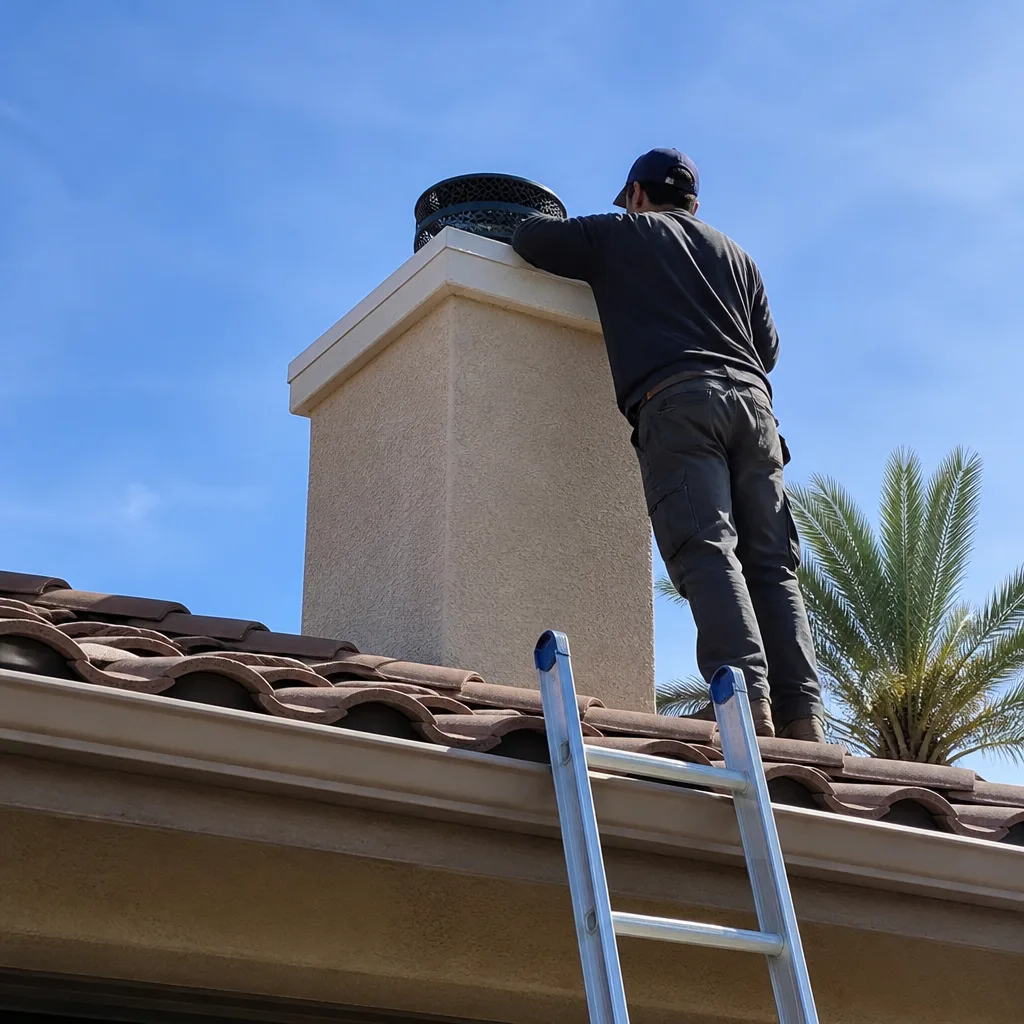
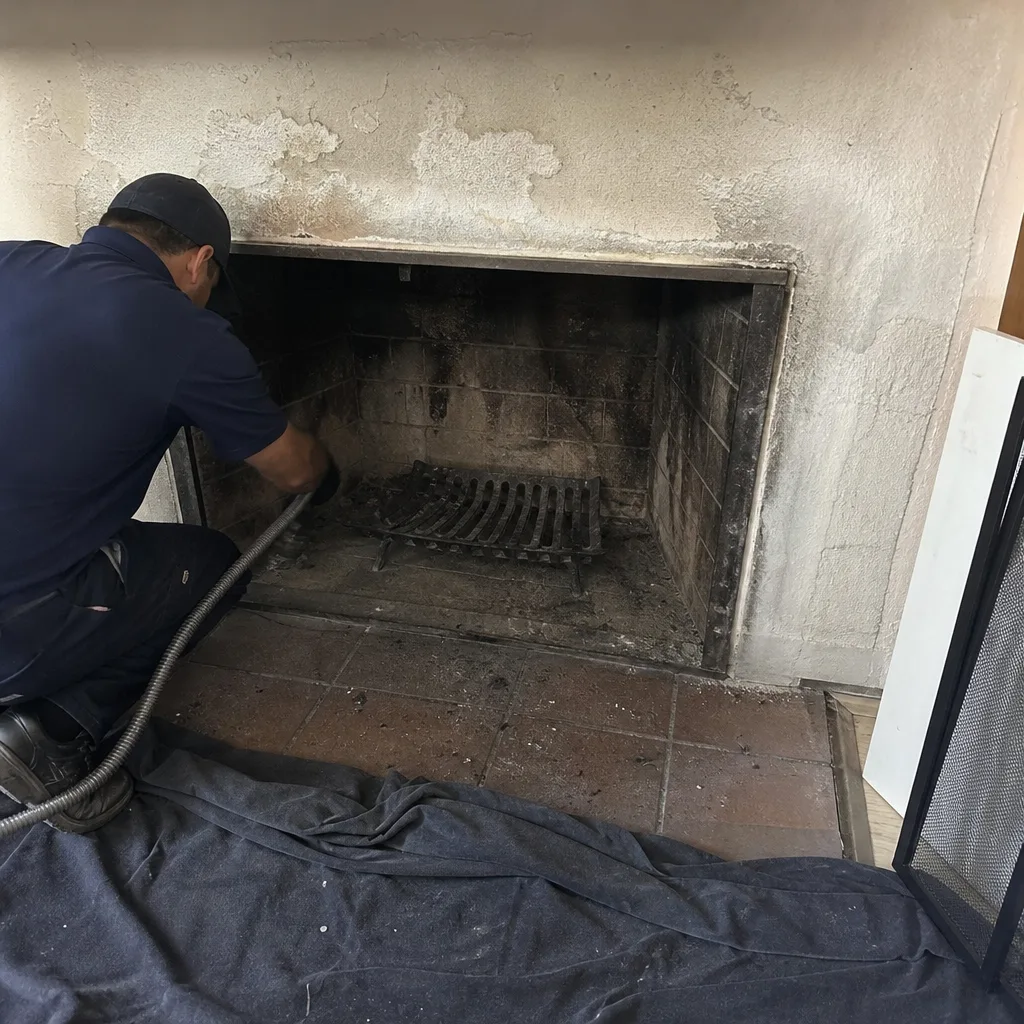
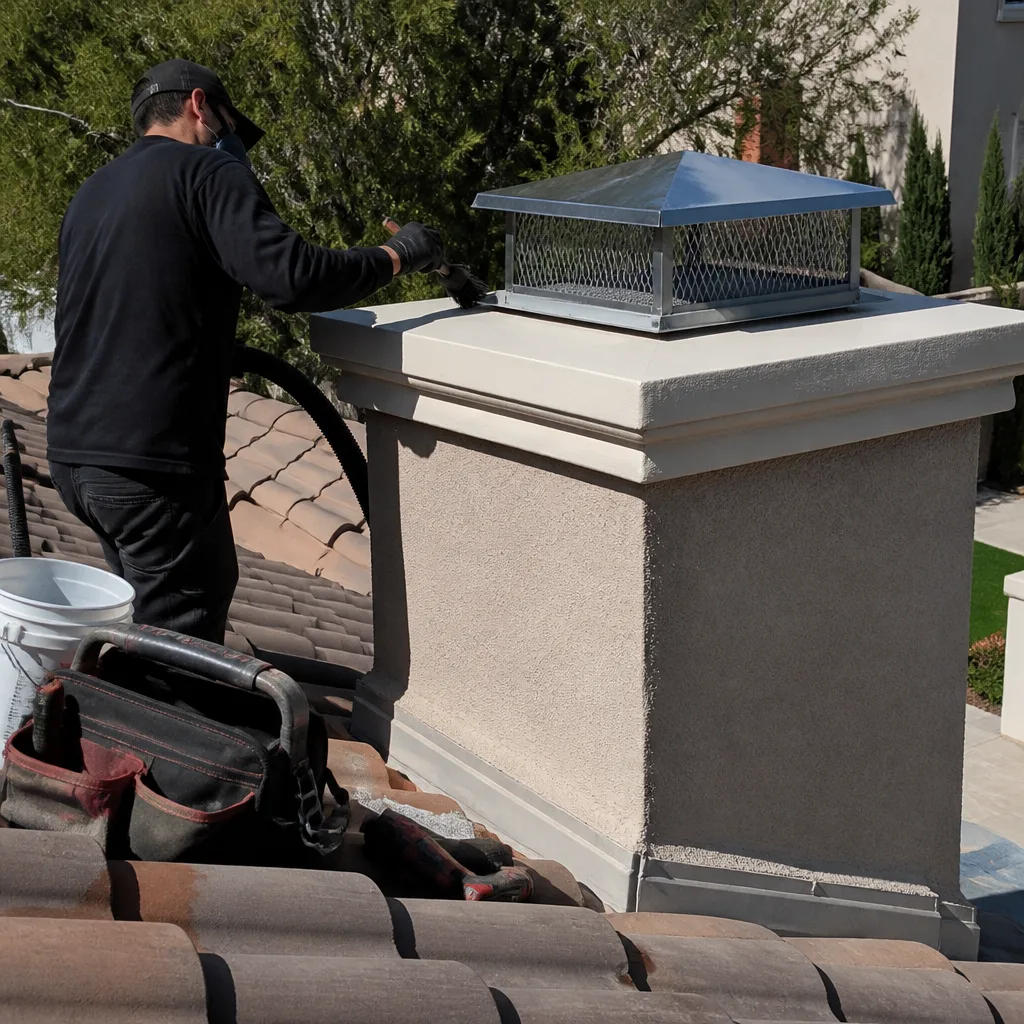
See the difference
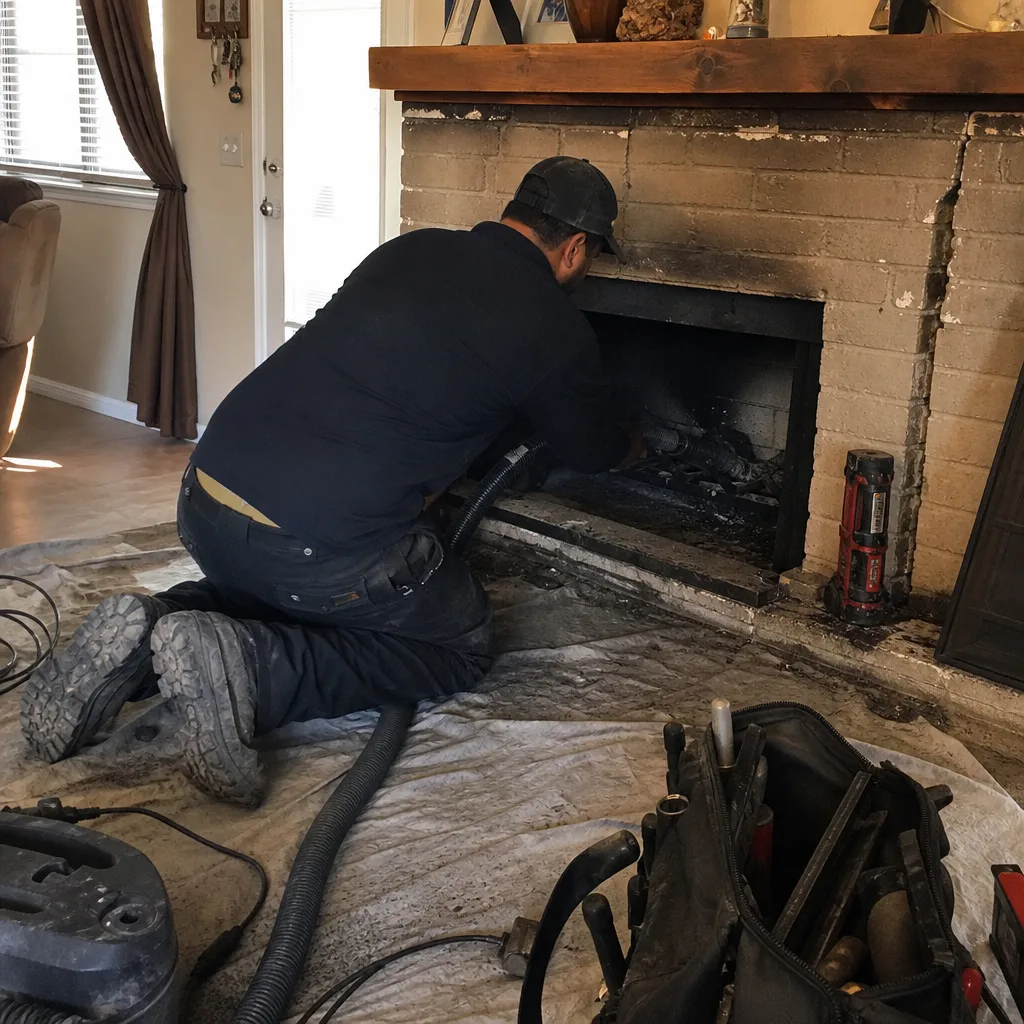 Before
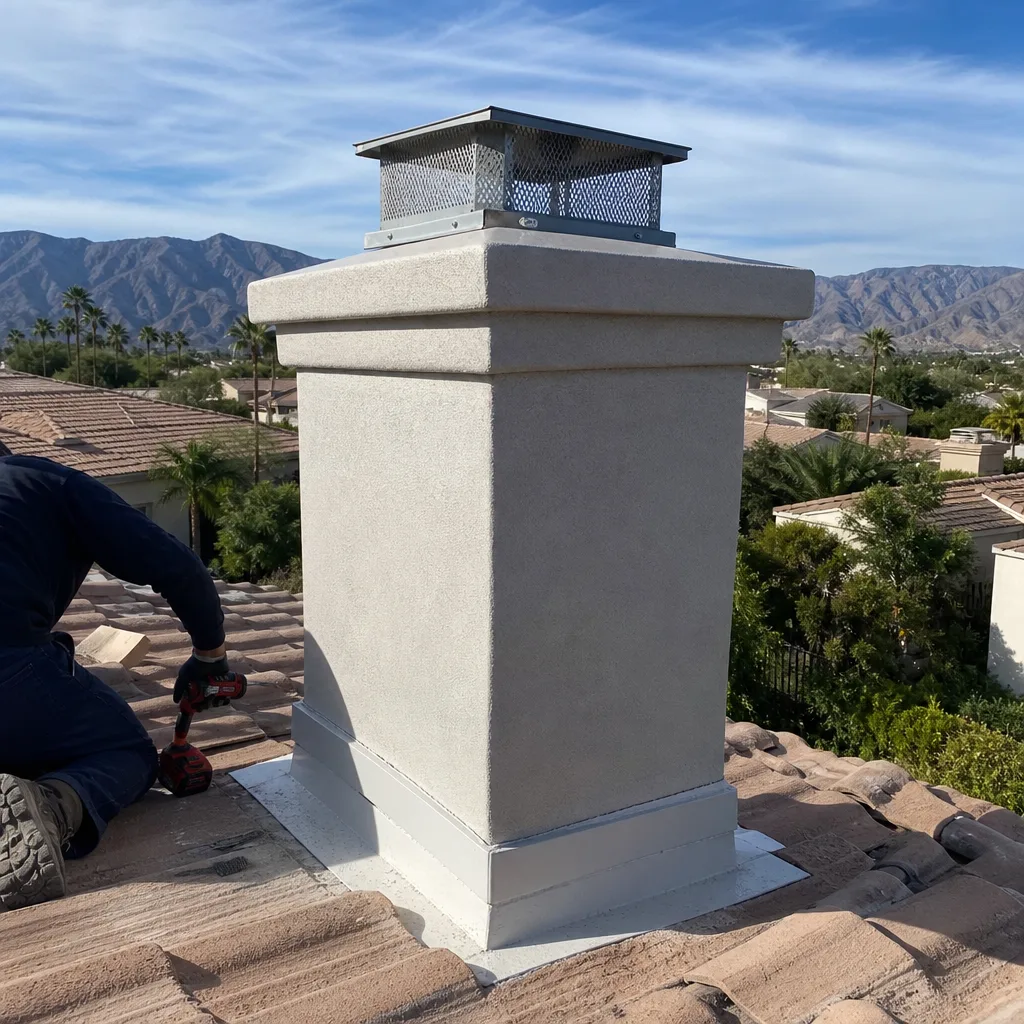 After
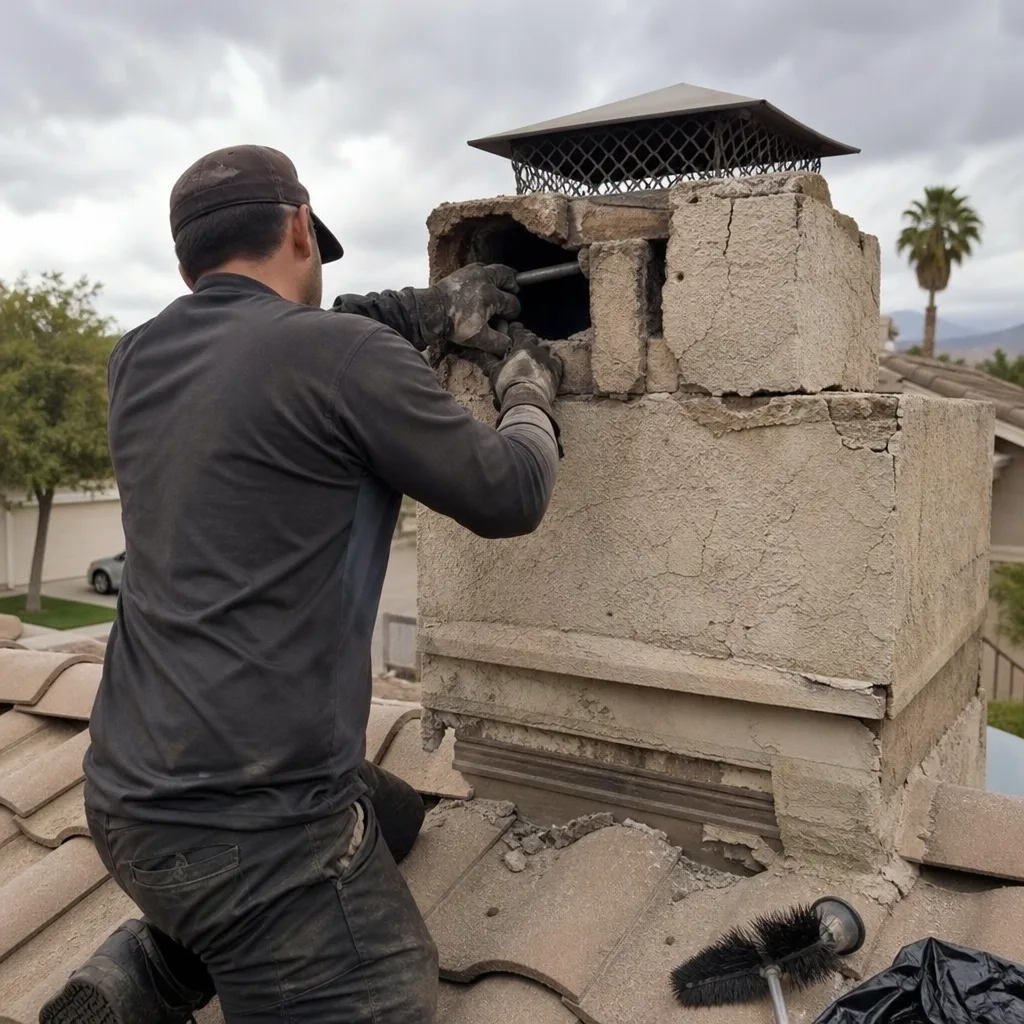 Before
 After
 Before
 After
When to Call a Professional
Call a chimney professional in Indio if you notice any of the following: smoke backing into the room when the fireplace is in use, a persistent campfire-like smell even when the chimney is cold, visible black residue around the firebox or damper, animal sounds from the chimney, or water stains on the ceiling near the fireplace. Also schedule an inspection if you’ve had a chimney fire and the fire is out, if you’ve purchased a home with no chimney maintenance records, or if a significant earthquake has occurred since your last inspection. These are not conditions you should self-diagnose. Chimney Sweep in Indio offers free estimates throughout the Coachella Valley – call (877) 378-2419 to schedule.
Frequently Asked Questions
The National Fire Protection Association recommends a chimney inspection at least once per year, with cleaning as needed based on usage and creosote buildup. For Indio homeowners who use their fireplace regularly during the winter months, an annual sweep before burn season is the standard. Homes used only occasionally may stretch to every 18 – 24 months, but the annual inspection is still recommended because desert heat accelerates creosote hardening and monsoon season introduces moisture and debris into uncapped flues.
A standard chimney sweep with Level 1 inspection in Indio typically ranges from $150 to $300. A Level 2 inspection with video scanning adds $100 to $200. Liner repair or replacement work is separate, typically $2,000 to $6,000 depending on whether you need HeatShield resurfacing or a full DuraFlex relining. For an exact quote on your chimney, call (877) 378-2419 – estimates in Indio are free.
A Level 1 inspection is sufficient for chimneys that have been regularly maintained with no changes to the system. You should request a Level 2 inspection if you’ve purchased the home, changed the appliance connected to the chimney, experienced a chimney fire, or felt a significant earthquake. In Indio’s seismically active region, Level 2 is also appropriate for older homes with clay tile liners that haven’t been inspected in years.
A contractor license allows someone to legally operate a business in California. CSIA certification proves they’ve passed a chimney-specific technical exam covering NFPA codes, creosote chemistry, inspection levels, and liner evaluation. In chimney work, these are not interchangeable credentials. Ask for both.
You can, but you’ll be operating blind. Store-bought brush kits remove loose stage 1 creosote from the flue’s vertical run, but they don’t evaluate liner condition, inspect the cap, or verify draft performance. In Indio, where creosote often hardens into stage 2 or stage 3 deposits from the heat, a rotary brush kit from a hardware store won’t break through glazed buildup. More importantly, a retail kit can’t tell you whether your chimney has a crack that’s actively allowing heat to reach combustible framing. The cleaning is the easy part. The inspection is where the safety value lives.
A thorough chimney sweep in Indio should take 60 to 90 minutes and include: furniture protection, a HEPA-filtered vacuum running throughout, mechanical cleaning appropriate to your creosote stage, a Level 1 or Level 2 visual inspection, documentation of any issues found with photos or video, and a written summary of recommendations. If your sweep is in and out in under 45 minutes and hands you a verbal “all good,” you didn’t receive a full inspection. For a proper chimney evaluation in Indio, call (877) 378-2419.
The Bottom Line
Hiring a chimney cleaning contractor in Indio comes down to one principle: hire someone who can inspect as well as clean. Certifications like CSIA tell you the person has technical training. Interview questions about creosote stages, liner inspection methods, and repair capabilities separate specialists from generalists. Insurance verification protects you from the gaps in basic general liability coverage. And detailed written proposals force accountability that vague quotes can’t provide. The right contractor will document findings, recommend only what’s necessary with evidence to back it up, and leave you with a chimney that’s ready for fire season. In a market like Indio, where heat-hardened creosote and seismic activity create conditions most guides & resources ignore, that rigor is the difference between a clean chimney and a safe one.
Written by the team at Chimney Sweep Indio home, serving Indio since 2015.