
Last updated November 2, 2026
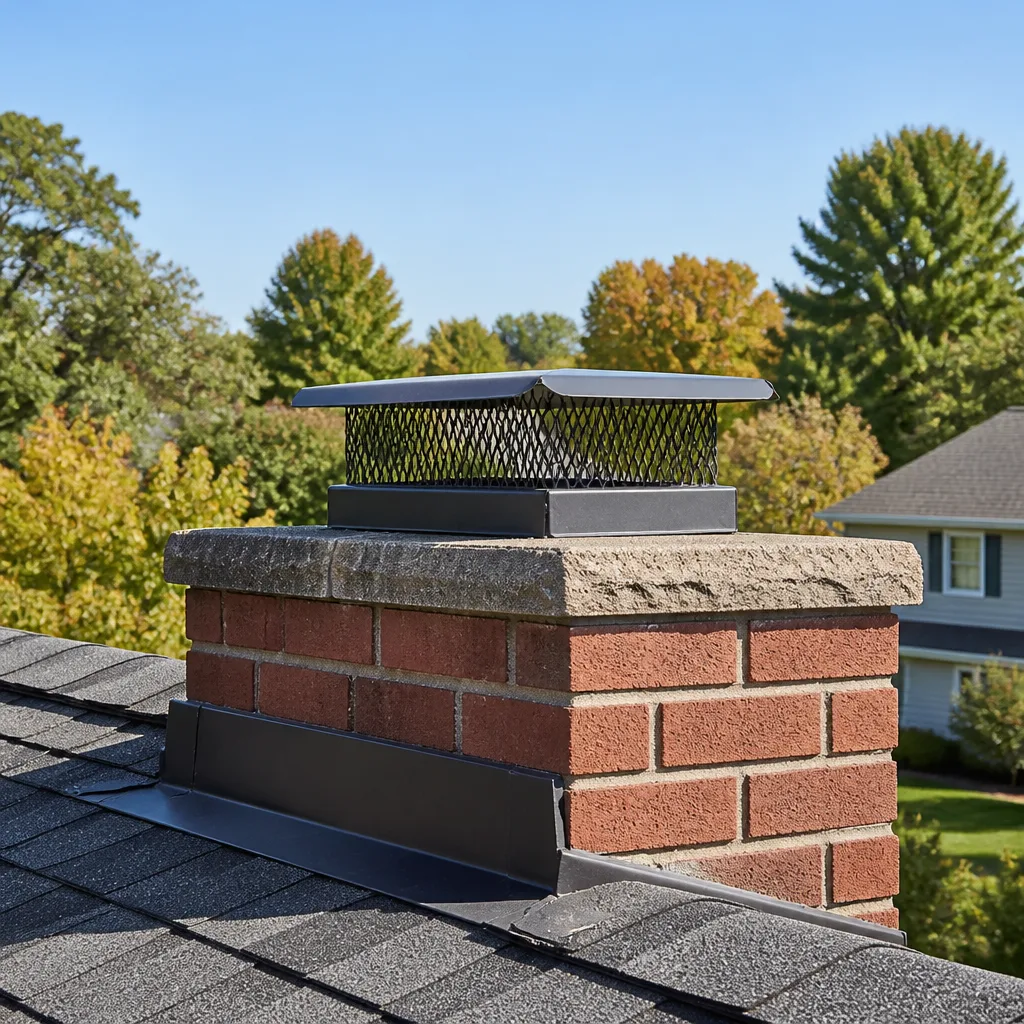 Sweep & inspection
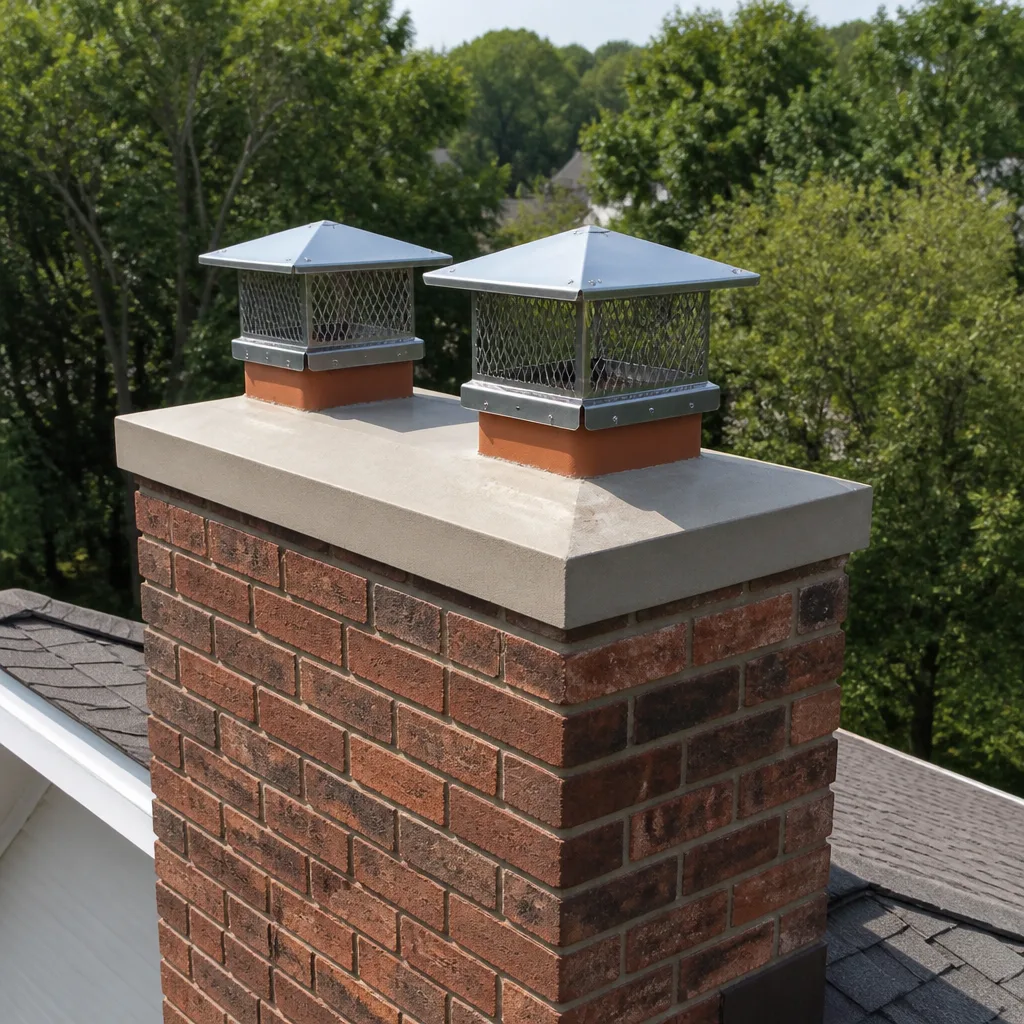 Caps & crowns
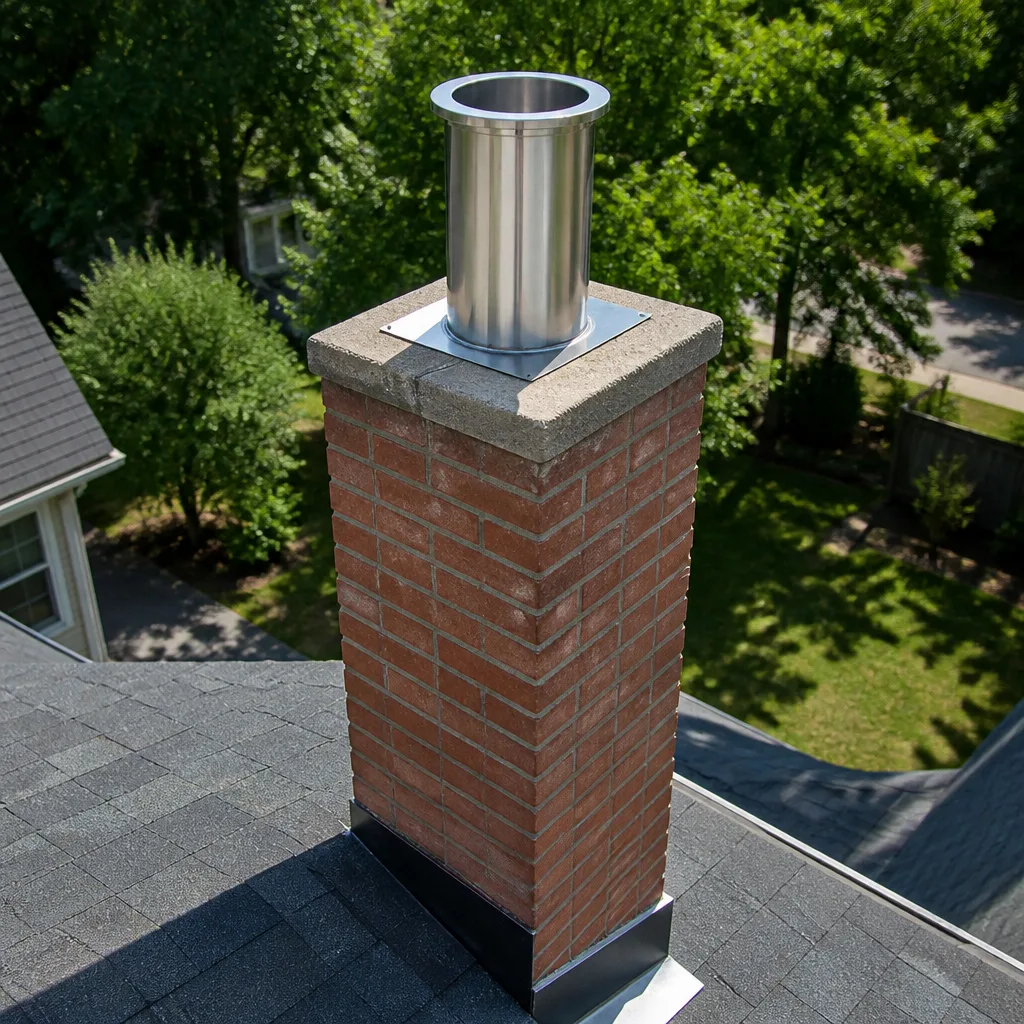 Flue relining
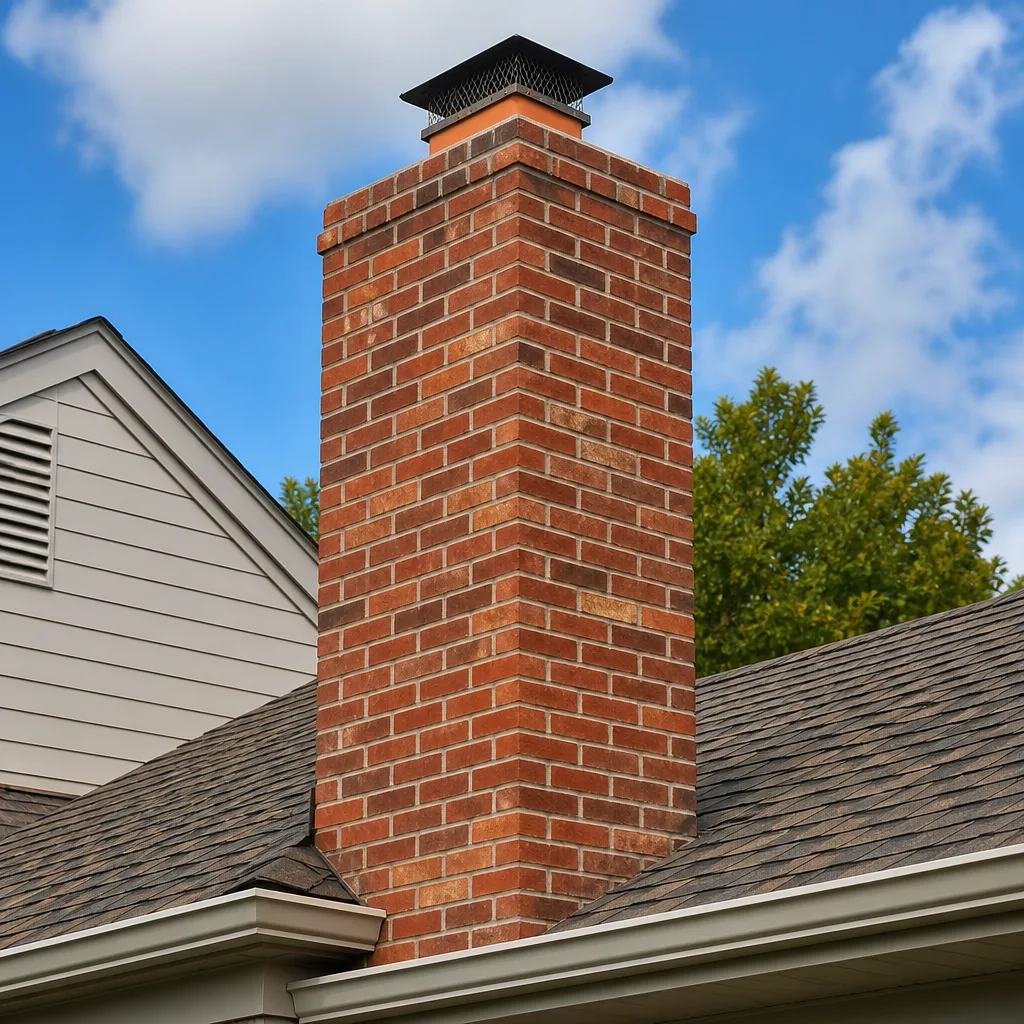 Masonry repair
 Gas fireplace service
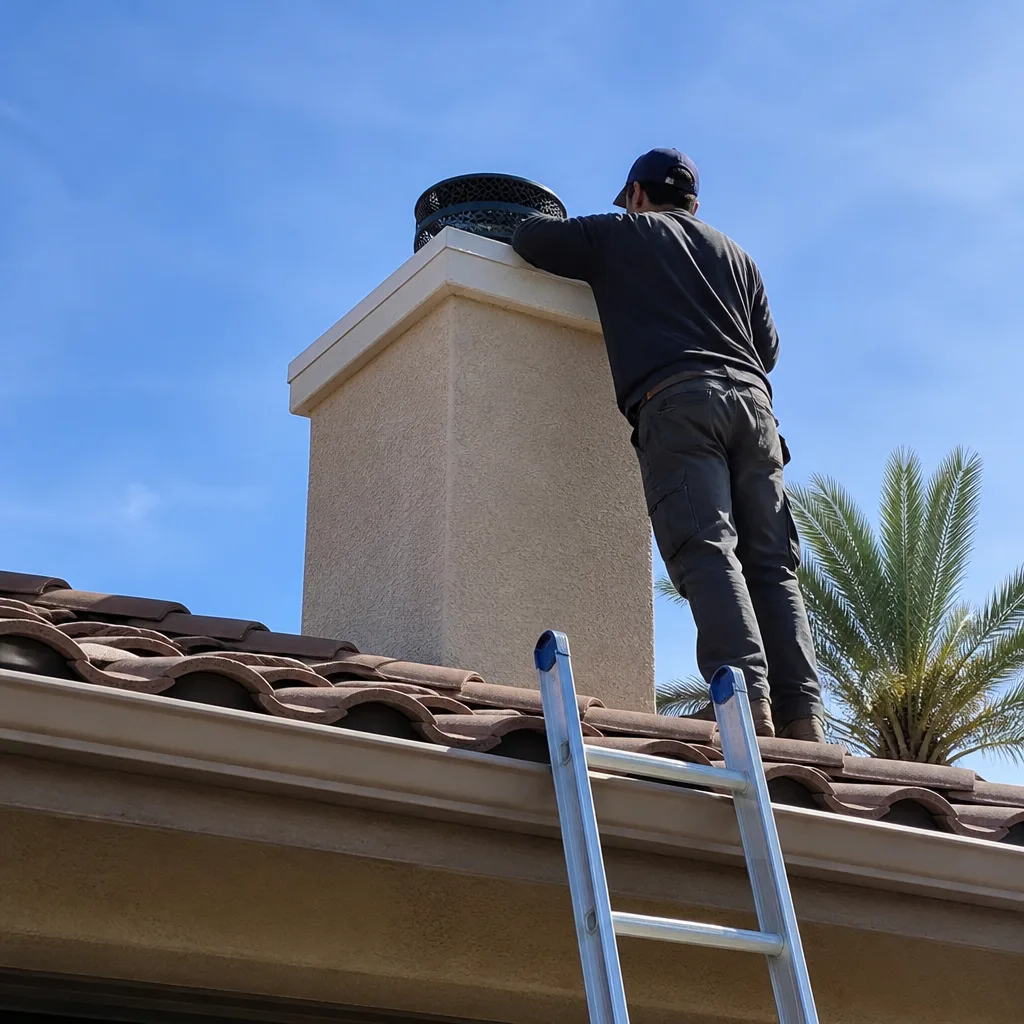
Level 1 sweep and inspection to the NFPA 211 annual standard - flue, crown, cap, and flashing checked and photographed
Chimney sweep logs do not sweep chimneys. They loosen some creosote - which then falls where a brush and vacuum still have to collect it.
DIY vs Professional Chimney Cleaning: The Indio Homeowner’s Decision Guide
You can absolutely sweep your own chimney. The brushes cost $40, rotary kits are on Amazon, and YouTube makes it look like a Saturday morning project. What you can’t do from the firebox or the roof is assess liner integrity, stage 2 creosote deposits in the upper flue, or a deteriorating smoke shelf that a flashlight won’t reveal. The real question for Indio homeowners isn’t whether you’re capable of running a brush up the flue. It’s whether a partial clean creates a false sense of safety that’s worse than doing nothing. This guide breaks down exactly where DIY chimney work is reasonable, where it goes wrong, and what it actually costs either way.
Styles & brands we work with
- Sweep & inspection
- Caps & crowns
- Flue relining
- Masonry repair
- Gas fireplace service
Quick Answer
DIY chimney cleaning is reasonable for light soot removal and firebox debris when you have a straight flue, a recent professional inspection record, and the right tools. It becomes a liability when creosote has moved beyond stage 1, when the liner is older or unlined, or when you can’t verify what the upper flue and smoke shelf actually look like. In Indio, where chimneys often sit dormant through scorching summers and then get pushed hard in the short cool season, most homes fall into the professional-evaluation category at least every other year.
Table of Contents
- What DIY Can Reasonably Cover
- Where DIY Goes Wrong: Creosote Stages and What They Mean
- Equipment Cost Reality Check: The DIY Kit Breakdown
- The Insurance and Liability Angle
- Indio-Specific Factors: Climate, Code, and Usage Patterns
- The Decision Matrix: When DIY Makes Sense and When It Doesn’t
- What Professional Service Actually Involves
- Common Mistakes to Avoid
- When to Call a Professional
- Frequently Asked Questions
- The Bottom Line
What DIY Can Reasonably Cover
Let’s be straight about this: there are tasks a mechanically capable homeowner can handle safely and effectively. The key word is safely. We’re not talking about running a brush 25 feet up a flue from a rooftop ladder in the Indio wind. We’re talking about ground-level or firebox-level work that doesn’t require chimney-specific expertise.
Here’s what falls into the reasonable DIY category:
- Firebox debris removal: Ash, soot, and small debris that accumulates at the base of the firebox. A shop vac with a HEPA filter, a dust mask, and gloves handle this fine. Wait 24-48 hours after the last fire so you’re not dealing with live embers.
- Damper operation check: Open and close the damper a few times. Listen for grinding, check that it seats fully, and note any visible rust or warping. A homeowner can identify obvious problems here without special training.
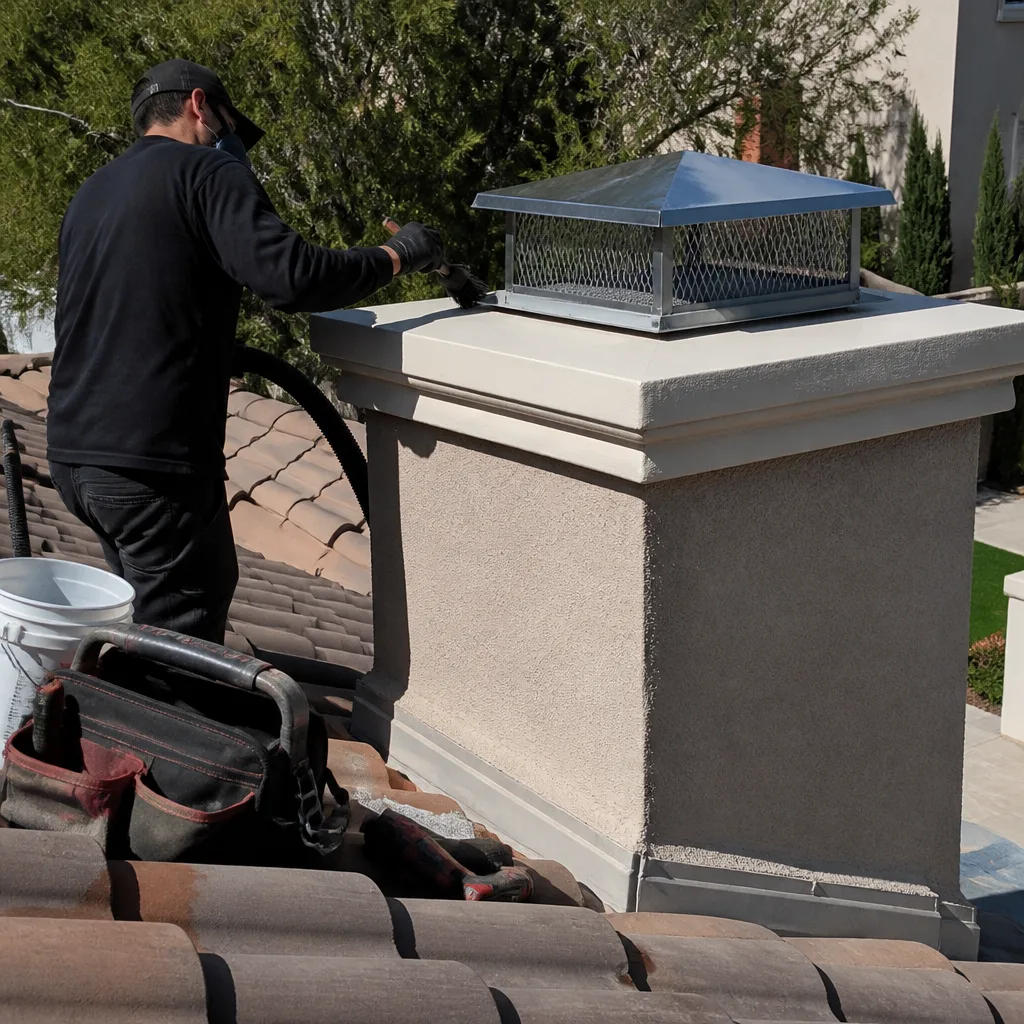
- Cap and spark arrestor visual inspection: From the ground with binoculars, you can spot a missing cap, a badly rusted spark arrestor, or obvious animal nesting material at the top of the flue. What you can’t do from the ground is assess the condition of the flue liner itself.
- Smoke test basics: On a cool day with no wind, light a small piece of newspaper in the firebox and watch how the smoke draws. Poor draw, smoke backing into the room, or smoke seeping from unexpected places tells you something’s wrong. Diagnosing what’s wrong is the professional part.
- Exterior masonry visual check: Walk around the chimney and look for obvious cracks, spalling brick, or deteriorating mortar. In Indio’s heat, mortar joints expand and contract aggressively. Visible damage means water has a path in.
None of these tasks require specialized tools or training. They’re things every homeowner should do regularly anyway, just like checking gutter drainage or testing smoke alarms. But notice what’s missing from this list: anything that involves the upper flue, the smoke shelf, the liner interior, or creosote removal beyond loose surface soot. That’s where the line gets drawn, and it’s drawn there for a reason.
Where DIY Goes Wrong: Creosote Stages and What They Mean
Creosote is not one substance. It forms in three distinct stages, and knowing the difference is the single most important factor in the DIY decision. Most homeowners have never heard of creosote stages. Most chimney fires happen because someone didn’t know what they were looking at.
Stage 1 creosote is a fine, dusty soot that brushes off easily. It looks like black powder or soft flakes. A homeowner with a chimney brush can remove this effectively. If this is what you have, DIY sweeping is genuinely viable.
Stage 2 creosote is where things change. It’s a hard, shiny, glazed deposit that looks like black glass or tar. It forms when combustion temperatures fluctuate, which happens constantly in Indio where a chimney might go from 90-degree ambient heat to a hot fire in the same evening. Stage 2 creosote does not brush off. It requires rotary cleaning with chains or specialized abrasives, and if it’s not fully removed, the remaining glaze actually provides a better surface for new creosote to bond to. Here’s the counterintuitive part: a homeowner running a rotary brush over stage 2 creosote without the means to verify full removal can dislodge some of it while leaving the rest, creating an uneven surface that catches more debris. The partial clean can leave the flue in worse condition than if nothing had been done at all.
Stage 3 creosote is a thick, hardened, tar-like layer that often appears as a series of drips or a lava-like coating. This is an active fire hazard. Stage 3 removal requires chemical treatment, professional rotary equipment, and in some cases liner replacement rather than cleaning. No homeowner should attempt stage 3 creosote removal. Full stop.
The problem is identifying what stage you’re looking at. Stage 1 and stage 2 can look similar to an untrained eye from the firebox looking up. A flashlight doesn’t reveal the upper third of the flue. A smartphone camera taped to a stick doesn’t either, at least not well enough to make a fire-safety decision. In our experience, Indio homeowners who burn unseasoned wood from big-box stores or who use their fireplaces intermittently through inconsistent winter weather are exactly the profile for stage 2 deposits in the upper flue, where the smoke has already cooled and condensed.
Equipment Cost Reality Check: The DIY Kit Breakdown
People say a chimney sweep costs $200 and the DIY kit costs $40, so DIY saves $160. That math only works if you already own most of the supporting equipment and you’re dealing exclusively with stage 1 soot. Here’s what a proper DIY chimney cleaning setup actually costs, item by item, for a single-story Indio home with a masonry chimney:
- Chimney brush (correct size): $35-$60. Getting the size wrong means the brush either jams or doesn’t contact the walls. Both are problems.
- Fiberglass rods (enough for full flue length): $45-$90. You need enough rod sections to reach the full height of the flue from the top down or bottom up. A 15-foot flue means at least 4 rod sections plus a connector for the brush.
- Drop cloths and plastic sheeting: $15-$30. Soot gets everywhere. It’s fine particulate, it’s statically charged, and it doesn’t stay where you put it.
- HEPA-filtered shop vac: $80-$200 if you don’t already own one. A standard shop vac blows fine soot back into the room through the exhaust. A HEPA filter for your existing vac runs $25-$50.
- Dust mask or respirator: $20-$40 for anything actually rated for fine particulate. COVID-era cloth masks don’t count.
- Safety glasses and work gloves: $15-$30.
- Ladder (if roof access is needed): $100-$250 if you don’t own one rated for the height. Indio homes with standard pitch roofs and single-story construction usually need at least a 16-foot extension ladder.
- Tarp and rope for material handling: $15-$25.
Realistic total for a first-time DIYer without existing equipment: $360 to $725. And that’s before you account for the four to six hours of labor, the cleanup, the disposal of creosote-laden debris, and the fact that you still haven’t inspected the liner or the smoke shelf.
A professional chimney sweep in Indio runs roughly $180 to $300 for a standard cleaning and inspection, depending on chimney height, creosote condition, and whether it’s a masonry or prefab system. That price includes the tools, the expertise, the inspection, the cleanup, and the documentation. The DIY savings argument starts to look thin once the real numbers are on the table. This is where most homeowners land: the equipment investment only pays off if you’re going to sweep every year or two for the next decade, and you’re confident the creosote never progresses past stage 1. Most people aren’t confident about that. And they shouldn’t be.
The Insurance and Liability Angle
Here’s the part most DIY chimney cleaning guides never mention: what happens to your fire insurance claim if a chimney fire occurs and there’s no professional inspection record.
Homeowners insurance policies generally cover fire damage, including chimney fires. But coverage depends on the fire being accidental and unpreventable. If your insurance company investigates a chimney fire and finds evidence of long-term creosote accumulation that should have been addressed, they can argue contributory negligence. That argument gets a lot easier when there’s no record of professional inspection or cleaning.
A professional chimney sweep in Indio provides documentation: a dated service record, a condition assessment, and often photo documentation of the flue before and after cleaning. That record matters. If a fire occurs six months after a professional cleaning, the homeowner has evidence they took reasonable preventative action. The insurance company’s contributory negligence argument gets much harder to make.
If a fire occurs after years of DIY-only maintenance, the homeowner has nothing but their own word that the chimney was cleaned properly. Insurance companies don’t take your word for it. They take receipts, service records, and professional assessments.
There’s also the liability angle for the DIY work itself. If you damage your own chimney during a DIY clean, that’s on you. If you’re on the roof and fall, that’s a personal injury with potential long-term consequences. If you dislodge creosote and it ignites, that’s a structure fire. These aren’t hypotheticals. Chimney fires happen every year in the Coachella Valley, and a meaningful percentage originate from chimneys that were “cleaned” by the homeowner.
Indio-Specific Factors: Climate, Code, and Usage Patterns
Indio’s climate creates a specific set of chimney conditions that homeowners in other regions don’t deal with. Understanding these matters because they affect both the rate of creosote buildup and the condition of the chimney structure between cleanings.
Extreme temperature swings. Indio regularly sees 100-plus degree summer days and near-freezing winter nights in the same chimney system. That thermal cycling expands and contracts mortar joints, clay tile liners, and flashing. A chimney that was structurally sound two years ago can develop cracks that let heat reach combustible framing. This is a condition inspection issue, not a cleaning issue. A brush doesn’t find cracks. A camera does.
Intermittent usage patterns. Indio homeowners use fireplaces for maybe three to four months out of the year, often irregularly. A chimney that sits unused for eight months, then gets fired up three nights in a row, then sits again, builds creosote differently than one used consistently. The heating and cooling cycles between uses cause creosote to contract, crack, and create uneven layers. Stage 2 formation is faster under these conditions because early-season fires are often lower-temperature, smokier fires with wood that’s absorbed ambient moisture through the hot season.
Wood availability and quality. The wood Indio homeowners buy from grocery store parking lots and big-box retailers is often kiln-dried but then stored outdoors in the desert sun and exposed to whatever winter moisture arrives. Unseasoned or inconsistently seasoned wood is the single biggest contributor to accelerated creosote buildup. You can’t control the moisture content of the wood you’re buying unless you have a moisture meter and know how to use it.
Local building codes. Indio follows California building code, which incorporates the International Residential Code with state amendments. The relevant section for chimneys is R1003: masonry chimneys must be lined, the liner must be code-compliant, and any repair must restore the chimney to code condition. That last part matters: if you have an older Indio home with an unlined or clay-tile-lined chimney that’s cracked, patching it with surface mortaring doesn’t meet code. The repair has to actually fix the condition. This is where products like DuraFlex liner systems and HeatShield resurfacing come into play. They’re not optional upgrades for fancy homes. They’re the code-compliant repair pathway for chimneys that can’t be safely cleaned because the liner has failed.
The Decision Matrix: When DIY Makes Sense and When It Doesn’t
Here’s a plain-language decision matrix. No gray areas. If you check the boxes on the left, DIY cleaning is a defensible choice. If anything on the right applies, call a professional. We’ve structured this for Indio homeowners specifically, factoring in the climate and usage patterns described above.
DIY is reasonable when:
- You have a professional inspection report from the last 18 months showing stage 1 creosote only and a sound liner.
- You burned fewer than 15 fires since that last professional cleaning, using seasoned hardwood with moisture content below 20%.
- Your chimney is a straight vertical flue with no offsets, and you can access it safely from the roof with proper ladder setup or from the firebox bottom-up.
- You own the correct brush size, enough fiberglass rods, a HEPA-filtered vac, and proper PPE.
- You can visually verify the full flue interior after cleaning, and you know what a clean flue actually looks like.
Professional service is the only defensible choice when:
- You’ve never had the chimney professionally inspected, or it’s been more than 3 years.
- Your home in Indio was built before 1990 and may have an original clay tile liner that’s never been evaluated.
- You see any shiny, glazed, or tar-like deposits anywhere in the firebox, damper, or lower flue.
- You smell a campfire-like odor in the house during humid periods or after rain.
- You’ve had birds, squirrels, or other animals in or near the chimney.
- Your fireplace smokes back into the room, draws poorly, or produces visible smoke from the chimney top after the fire is established.
- You’re buying or selling a home in Indio and need documented chimney condition for the transaction.
- It’s been more than 2 years since the last cleaning regardless of usage, because Indio’s thermal cycling degrades mortar and liner materials even without fires.
If you’re in the left column, do the DIY clean. We’re not going to tell you it’s dangerous when it isn’t. But be honest about which column you’re actually in. Most Indio homeowners we talk to want to be in the left column and are actually in the right one. The cost of being wrong isn’t the cost of a professional sweep. It’s the cost of a chimney fire, a carbon monoxide event, or a smoke-damaged living room.
One more thing worth saying: you can do both. There’s no rule that says DIY and professional service are mutually exclusive. Clean the firebox yourself after every few uses. Inspect the damper regularly. Keep the cap clear of debris. And bring in a professional every other year for the full interior evaluation and cleaning that actually verifies the system is sound. That’s the approach we recommend for most Indio homeowners, and it’s the one that balances cost with actual fire safety. Our full Chimney Sweep in Indio page covers what a professional cleaning includes step by step.
What Professional Service Actually Involves
You’ve read this far, so it’s fair to ask: what does a professional sweep actually do that justifies the cost? The honest answer is that sweeping is maybe a third of the job. Here’s what a proper professional chimney service in Indio includes:
- Full system inspection before any cleaning. This means evaluating the firebox, damper, smoke shelf, flue liner, cap, crown, and exterior masonry. A camera inspection of the flue interior is standard for any chimney that hasn’t been professionally evaluated recently. This is the part that finds the cracks, gaps, and deterioration that a brush never will.
- Creosote stage assessment. The technician identifies what stage of creosote is present and selects the appropriate cleaning method. Brushing for stage 1, rotary cleaning with chains or abrasives for stage 2, chemical treatment and specialty equipment for stage 3.
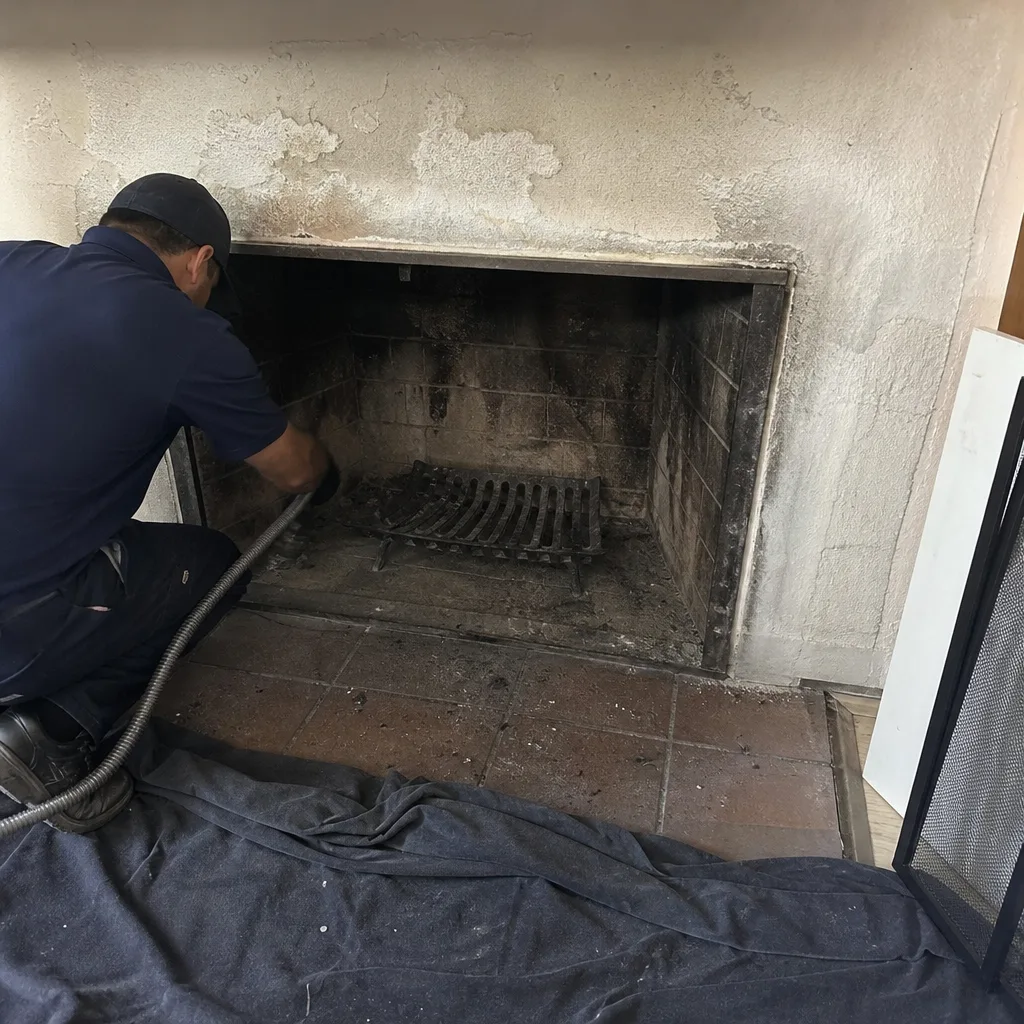
- The actual sweep. This is the brushing or rotary cleaning process, done from the top down or bottom up depending on the chimney type and access. Professionals use drop cloths, HEPA filtration, and containment methods that keep soot out of the living space.
- Post-clean verification. A second camera pass or visual check to confirm the flue is actually clean, not just brushed. This verification step is what separates a real service from a guy with a brush.
- Condition report and recommendations. You get a documented assessment of what was found and what, if anything, needs attention. If the liner is cracked, you’ll see the camera footage. If the smoke shelf needs repair, you’ll get a photo and an explanation. Nothing is recommended without evidence you can look at yourself.
- Documentation for your records. For insurance purposes, for home sale transactions, and for your own annual maintenance tracking.
When we find something that needs repair, we show the homeowner the camera footage and explain exactly what it means. If a liner is shot, the conversation is about DuraFlex relining or HeatShield resurfacing, not about running a brush harder. If the repair can wait a season, we say so. If it can’t, we explain why with the specific failure mode identified. The brands we carry aren’t incidental. DuraFlex, HeatShield, and Olympia Chimney are what professionals specify when a liner replacement or resurfacing is the code-compliant fix. A generalist handyman can’t access HeatShield materials at all. That’s not marketing language. That’s a structural difference in what a specialist can actually do. For more detail on what repair work looks like in practice, our Chimney Repair in Indio page breaks down the common failure modes and fixes.
Common Mistakes to Avoid
- Assuming the chimney is clean because the firebox looks clean. The firebox is where the fire burns. The flue is where the smoke goes. They’re different parts of the system, and a clean firebox has zero correlation with a clean flue. In Indio homes with tall chimney structures, stage 2 creosote can sit in the upper flue for years while the firebox below looks fine.
- Using a standard shop vac for soot removal. A regular shop vac exhausts fine particulate back into the air. You’ll spread soot through the house and breathe it in. If you’re going to do any DIY chimney work, a HEPA-filtered vac is non-negotiable.
- Burning a “creosote log” and calling it a sweep. Those chemical logs can loosen some creosote, but they don’t remove it. They also can’t inspect the liner, evaluate the smoke shelf, or document the chimney condition. They’re a supplement, not a service.
- Ignoring the dryer vent because it’s a separate system. A clogged dryer vent is a fire hazard that operates on the same combustion-risk principle as a dirty chimney. Indio homes with long dryer vent runs to exterior walls are especially prone to lint accumulation that reduces dryer efficiency and creates fire risk. Dryer vent cleaning is part of the same safety conversation, which is why we handle it alongside chimney work rather than treating it as an afterthought. Our Dryer Vent Cleaning in Indio page covers what this involves.
- Waiting until you see smoke to call someone. By the time a chimney is smoking back into the living room, you’ve had an airflow problem for a while. The creosote has been building, the damper has been failing, or the liner has been deteriorating. Early intervention is always cheaper, and it’s always safer.
- Trusting a home inspection as a chimney evaluation. A standard home inspection includes a visual chimney check, but it doesn’t include a camera inspection of the flue interior or a creosote stage assessment. If you bought an Indio home with an older chimney, the home inspection didn’t tell you what you actually need to know about the chimney condition.
When to Call a Professional
Call a professional chimney service in Indio if you haven’t had a documented inspection in the last three years, if you see shiny or glazed deposits anywhere in the firebox or flue, if your fireplace smokes back into the room, if you smell campfire odors when the fireplace isn’t in use, or if you’ve had any evidence of animal activity in the chimney. Also call if you’re buying or selling a home and need chimney documentation for the transaction, or if your insurance company has asked for verification of chimney maintenance. These aren’t optional scenarios. They’re the situations where the risk calculation changes from “should I spend the money” to “what happens if I don’t.” Chimney Sweep Indio offers free estimates in Indio. Call (877) 378-2419 and we’ll tell you honestly whether your chimney even needs cleaning this year, or whether it can wait. No scare tactics. Just a straight answer.
Frequently Asked Questions
A standard chimney sweep in Indio runs $180 to $300 for a masonry chimney with typical creosote buildup, depending on flue height, access difficulty, and whether it’s a first-time inspection or a routine maintenance visit. This price includes the full system inspection, the cleaning, and documentation. Prefab chimneys run on the lower end; older masonry chimneys with taller flues run higher. Call (877) 378-2419 for an exact quote. Estimates are free.
You can clean a straight flue with stage 1 creosote using a properly sized brush and fiberglass rods, and most mechanically capable homeowners can do this safely with the right PPE and ladder setup. What you can’t do with that brush is inspect the liner, evaluate the smoke shelf, identify stage 2 creosote in the upper flue, or document the chimney condition for insurance purposes. The brush handles the surface soot. It doesn’t handle the safety verification.
For a fireplace used regularly during the Indio cool season, an annual inspection at minimum with cleaning every one to two years depending on creosote stage analysis. Homes with intermittent usage and older clay tile liners should be inspected at least every other year even if the fireplace gets minimal use, because Indio’s thermal cycling degrades liners and mortar regardless of fire frequency. A chimney that sits unused for eight months can still develop structural issues that need to be found before the next fire.
Creosote accumulates in layers, and each layer provides a better bonding surface for the next. Eventually the creosote reaches a thickness and temperature where it ignites. A chimney fire burns at up to 2,000 degrees Fahrenheit, which is hot enough to crack clay tile liners, warp metal liners, and transfer enough heat through the masonry to ignite structural framing. Even if a chimney fire doesn’t burn the house down, it often damages the chimney beyond the point where simple cleaning is possible. The repair after a chimney fire costs thousands. The cleaning before one costs a few hundred. Call (877) 378-2419 if you’re not sure where you stand.
You need a new liner if the existing one is cracked, separated, or deteriorated to the point where it can’t contain heat and combustion gases. This isn’t a judgment call you should have to take on faith. A proper chimney service shows you the camera footage. You’ll see the cracks, the gaps, the missing tile sections. If a company recommends a liner replacement and won’t show you visual evidence, get a second opinion. If you see the damage yourself, the question isn’t whether to repair. It’s whether to do it now or after a fire. Chimney repair is an investment in a system that protects the entire structure.
Both systems handle the byproducts of combustion: a chimney vents fireplace smoke, and a dryer vent exhausts heated air carrying lint, which is combustible material. A clogged dryer vent is a fire hazard for the same reason a creosote-coated chimney is: accumulated fuel in an enclosed space that reaches ignition temperature. Chimney Sweep Indio handles both systems because the underlying safety principle is identical. You don’t need two separate contractors for the same category of problem. We cover this in depth on our dryer vent cleaning page.
The Bottom Line
DIY chimney cleaning is reasonable when you have a straight flue, a recent professional inspection showing stage 1 creosote only, and the right equipment. It becomes a liability when creosote has progressed, when the liner is older or unlined, or when you can’t verify what the upper flue and smoke shelf actually look like. Indio’s climate makes professional evaluation more important than in milder regions because thermal cycling degrades chimney structures even during periods of light use. Most homeowners in the Coachella Valley fall into the every-other-year professional category, with DIY firebox maintenance in between. The smartest approach combines both: handle the simple stuff yourself, and get a professional inspection and full-system evaluation on a regular schedule. Chimney sweep, repair, and dryer vent: one call covers all three. Call (877) 378-2419 for a free estimate and a straight answer about what your chimney actually needs.
Written by the team at Chimney Sweep Indio, serving Indio since 2015.
See the difference
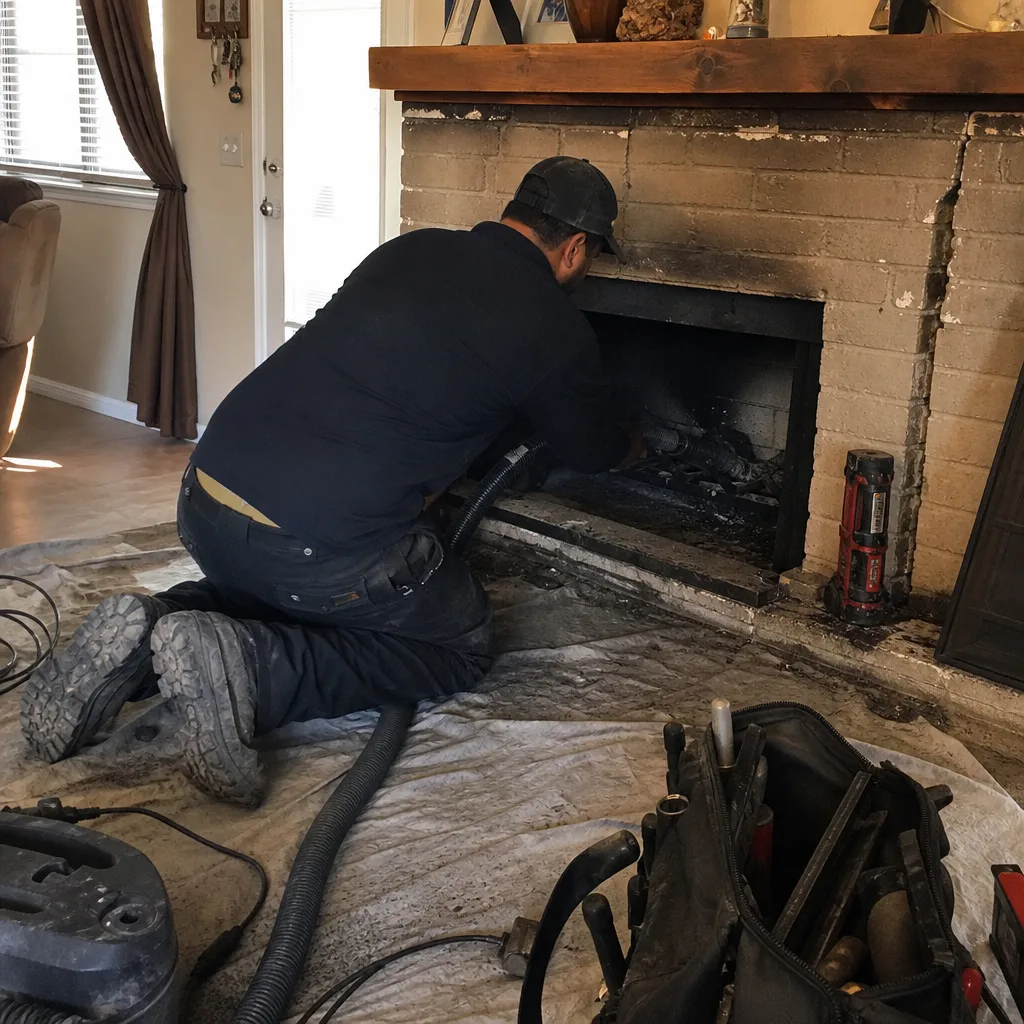 Before
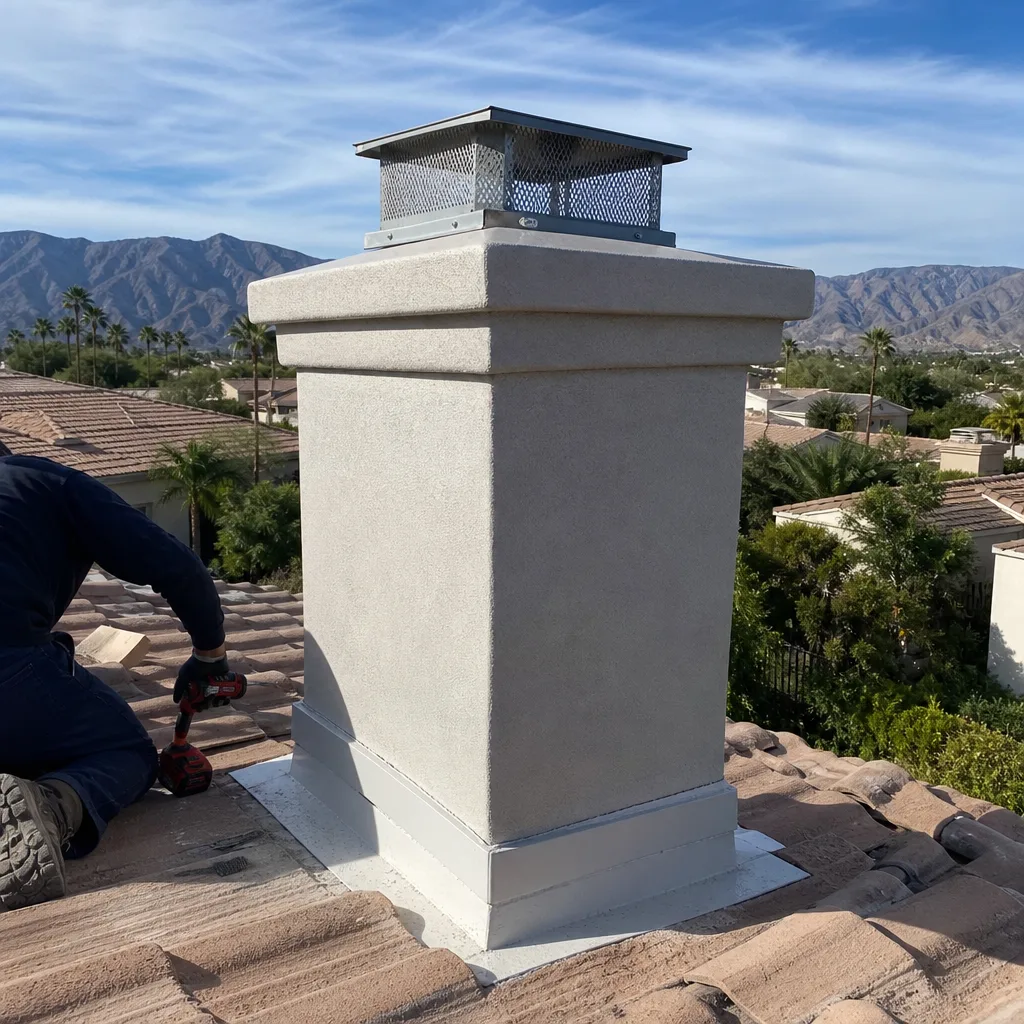 After
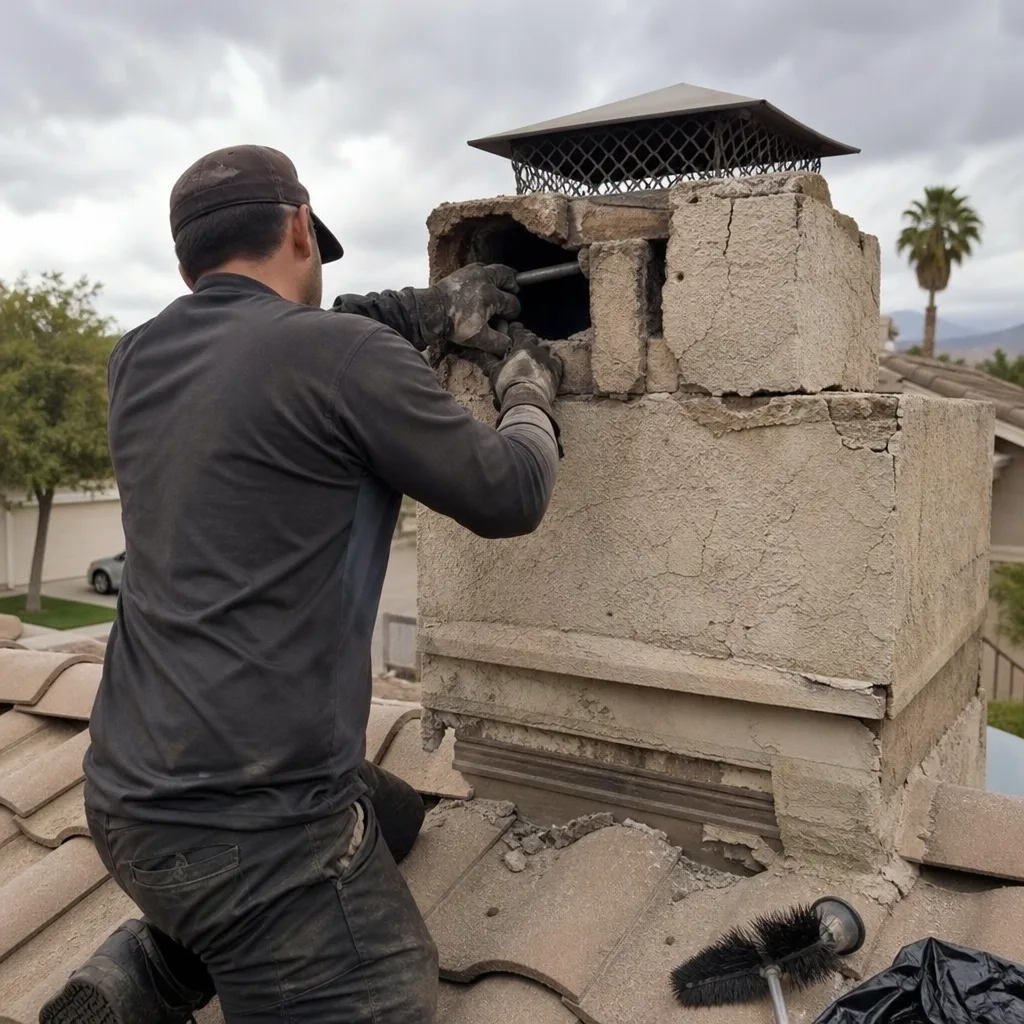 Before
 After
 Before
 After