
Last updated November 2, 2026
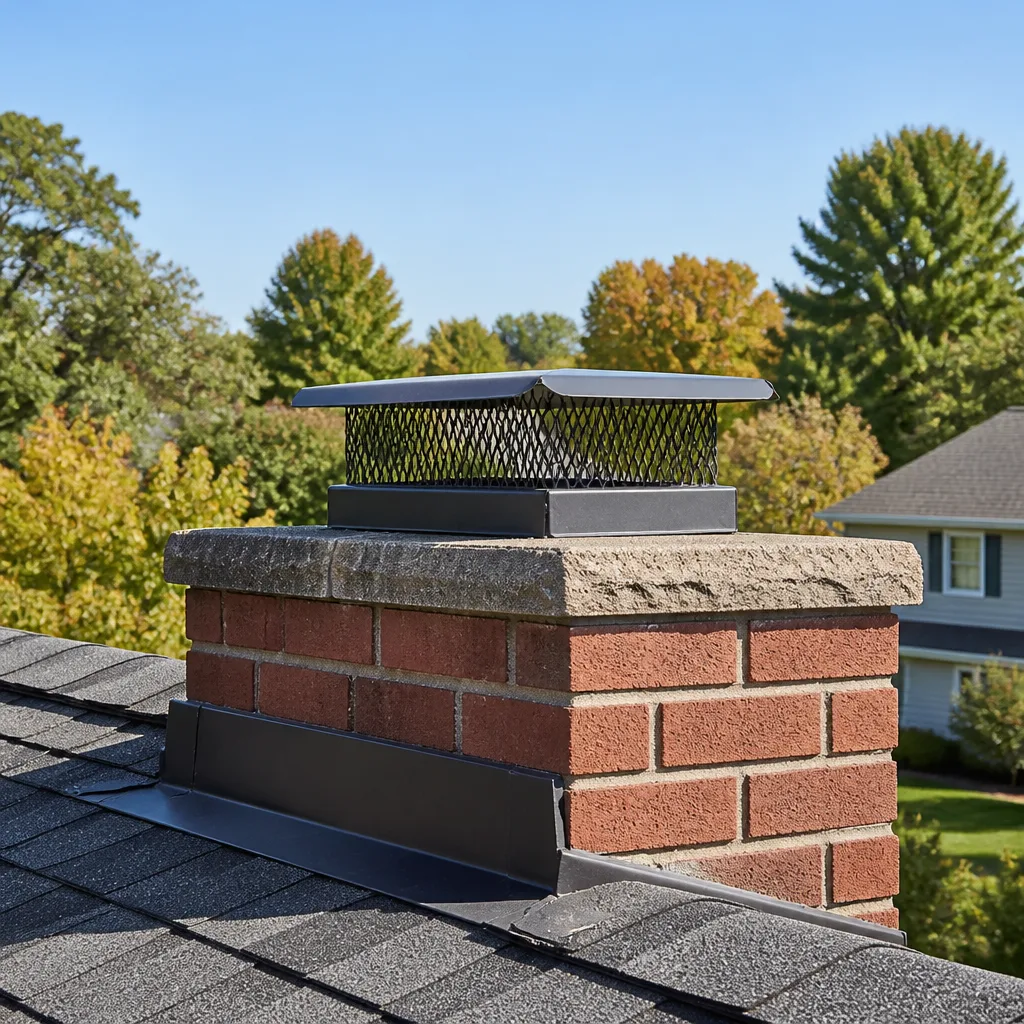 Sweep & inspection
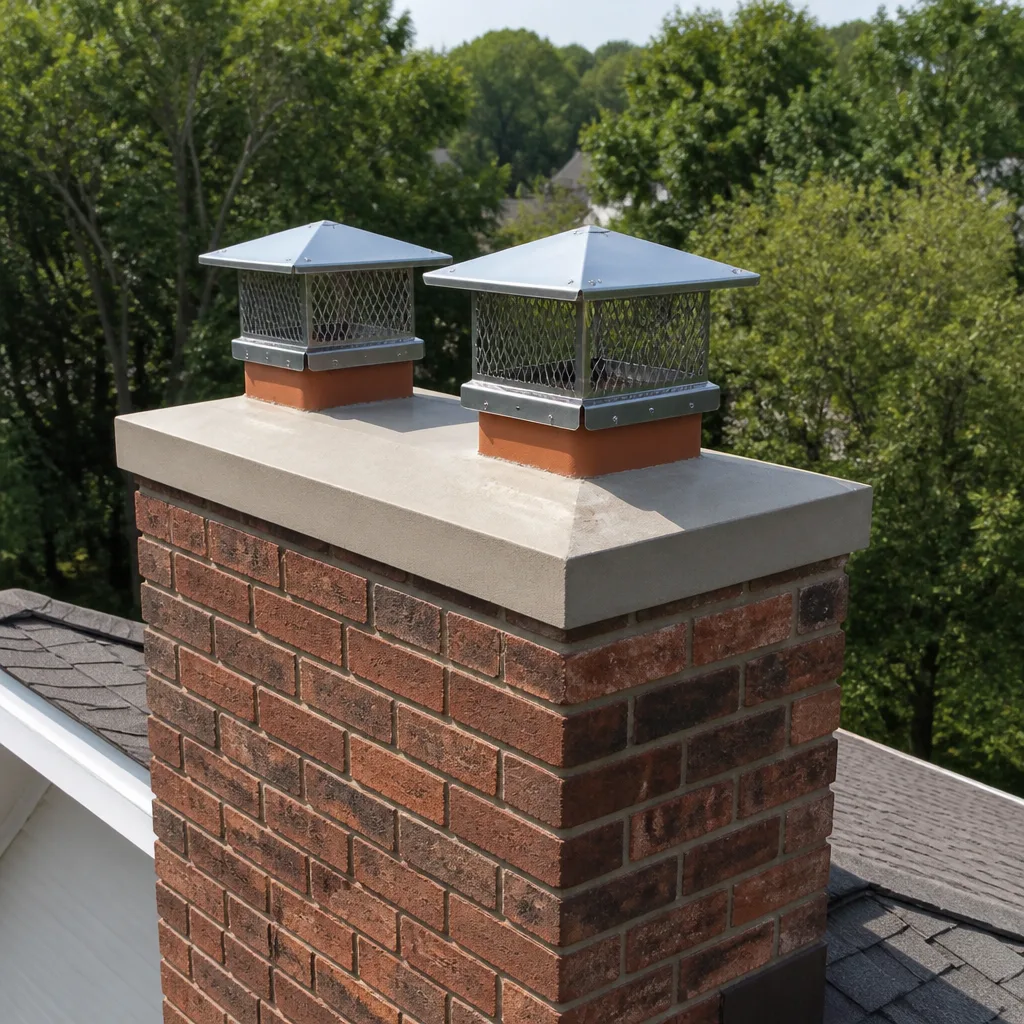 Caps & crowns
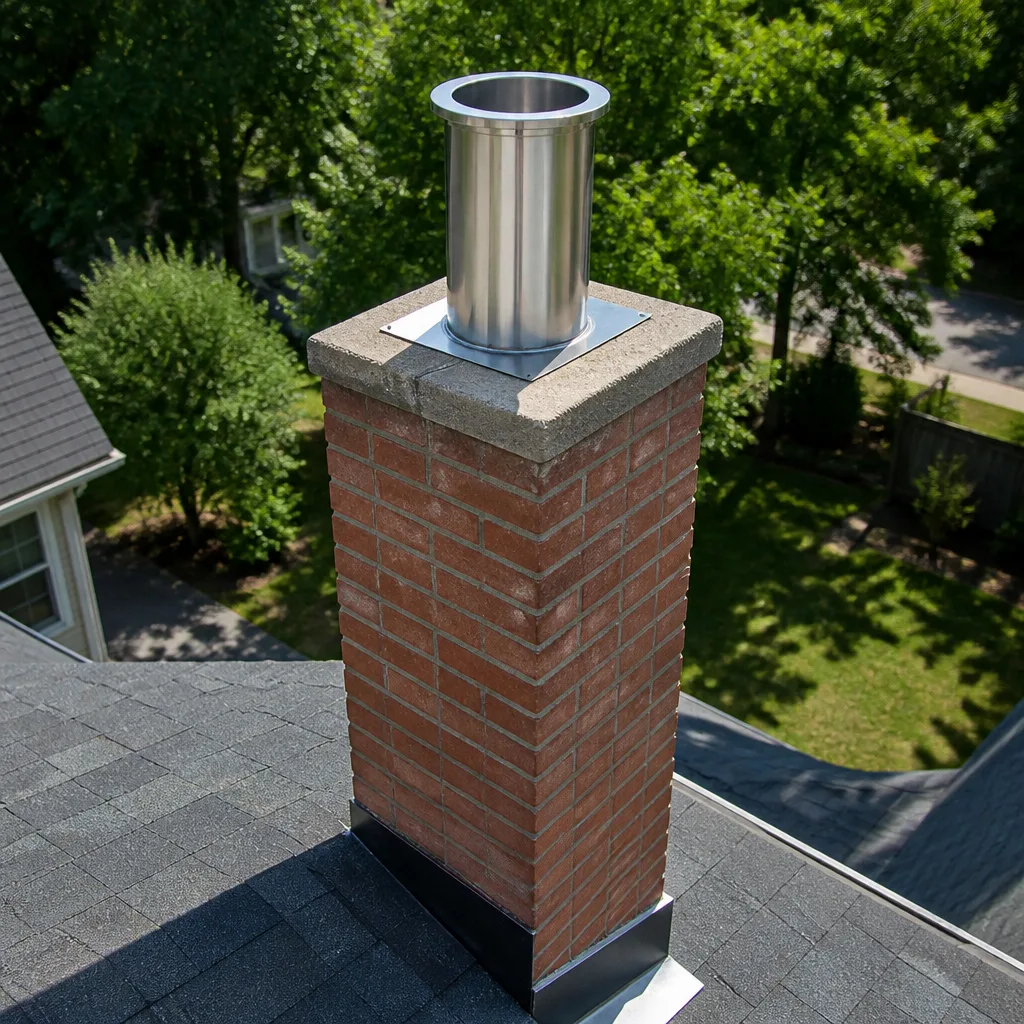 Flue relining
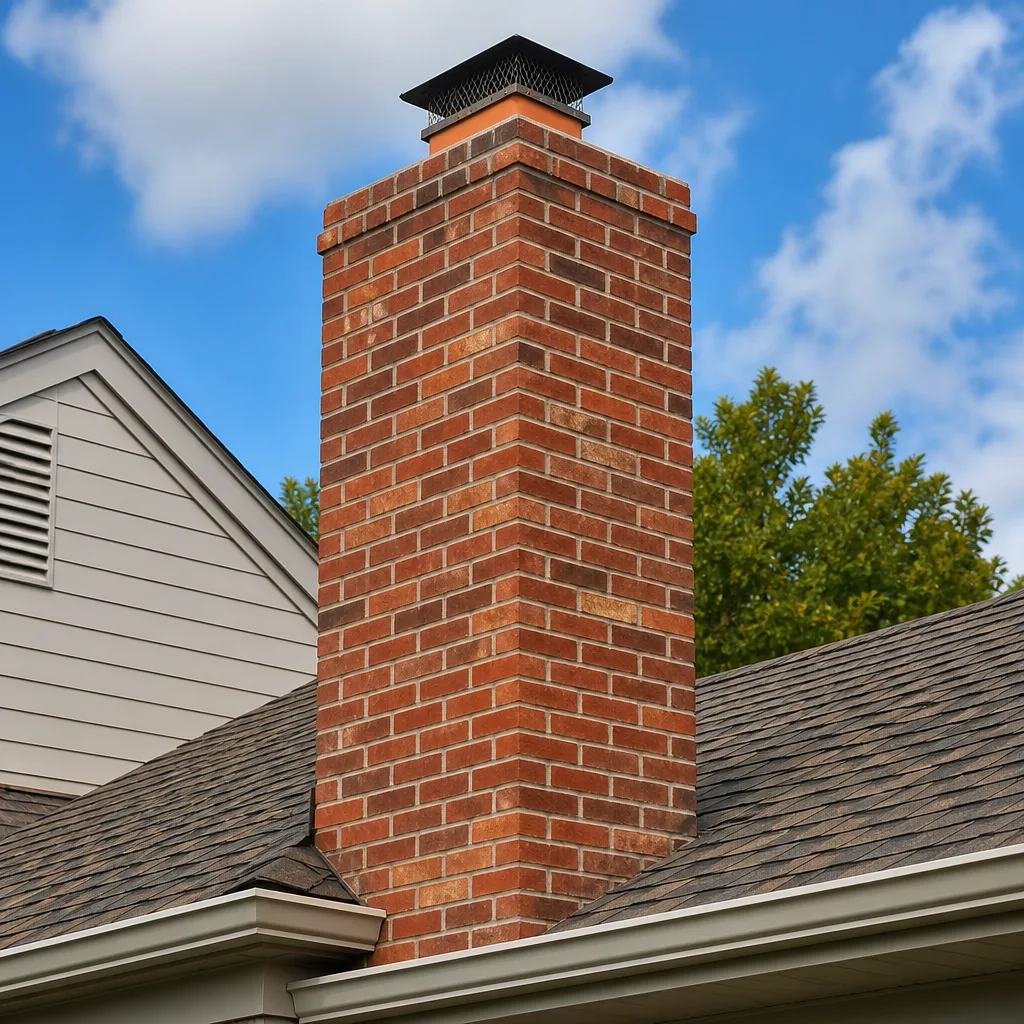 Masonry repair
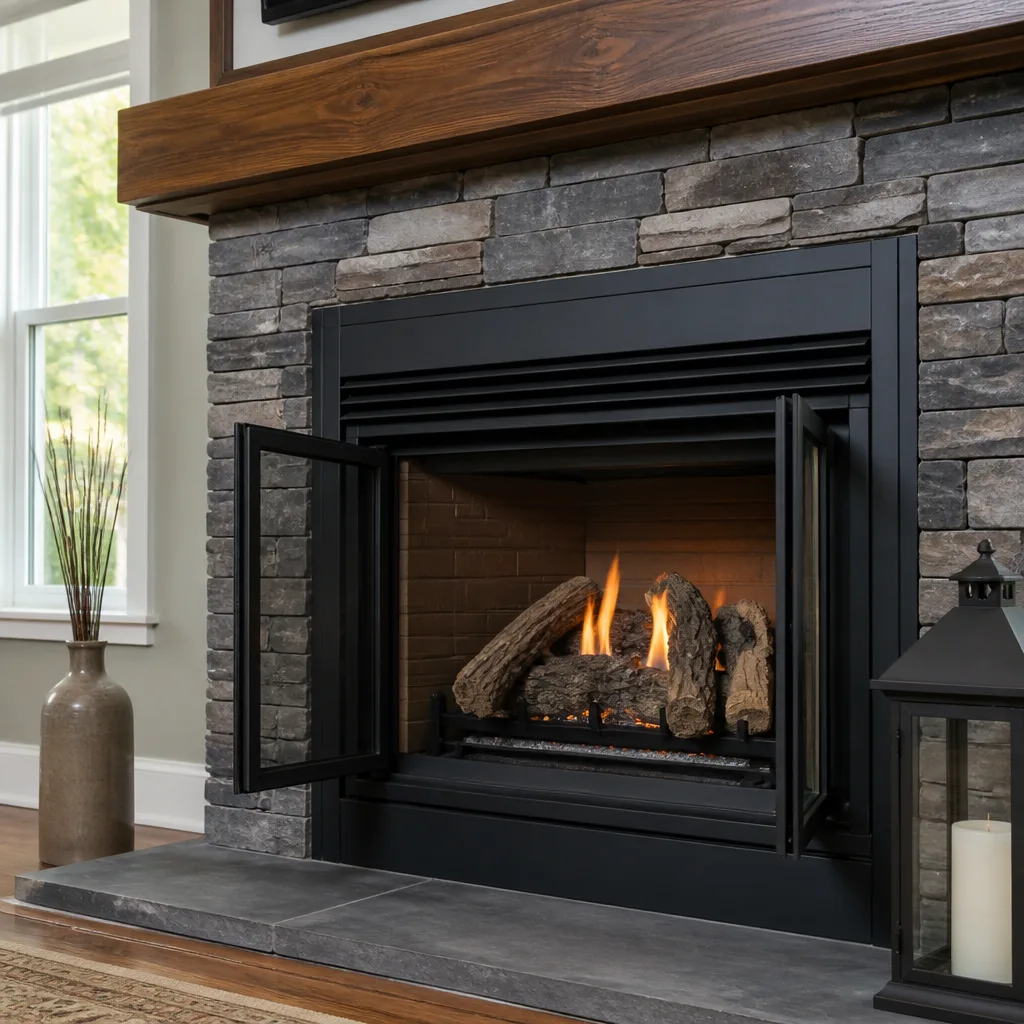 Gas fireplace service
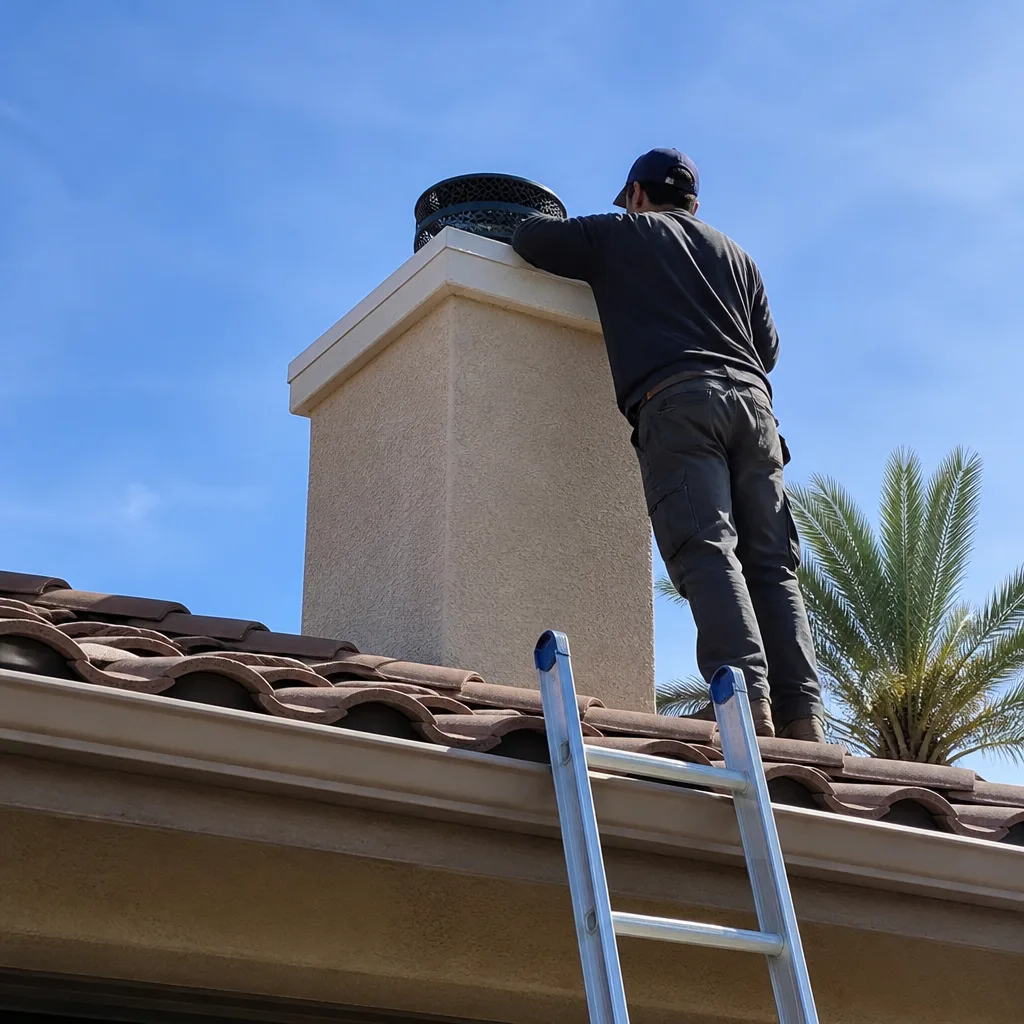
Level 1 sweep and inspection to the NFPA 211 annual standard - flue, crown, cap, and flashing checked and photographed
Chimney sweep logs do not sweep chimneys. They loosen some creosote - which then falls where a brush and vacuum still have to collect it.
Chimney Sweep Maintenance Checklist for Indio Homeowners
A homeowner in Portland needs to clean their chimney after every cord of wood burned. A homeowner in Indio who lights their fireplace six times a year has a completely different maintenance calendar, and following the wrong one either leaves real hazards unaddressed or wastes money on unnecessary service calls. The Coachella Valley doesn’t rot chimney crowns with freeze-thaw cycles the way the Pacific Northwest does. What it does instead is bake mortar joints under 110-degree sun, blast flashing with sand during Santa Ana wind events, and let creosote sit undisturbed for months in flues that rarely get hot enough to burn it off. This guide is a month-by-month maintenance reference built specifically for Indio’s desert climate, low-frequency fireplace use, and the specific failure points we see on chimneys from Bermuda Dunes to La Quinta. You’ll learn what to check after wind events, how to test your damper before the first burn, which exterior masonry cracks actually matter, and how to document your chimney’s condition so you catch problems before they become four-figure repairs.
Quick Answer
A chimney maintenance checklist for Indio homeowners centers on two annual professional sweeps (one before burning season in October, one after it ends in March), plus monthly exterior checks during monsoon and Santa Ana wind seasons, a damper operation test before the first fire, and a documented inspection of the firebox floor and smoke shelf for creosote buildup or debris regardless of how few fires were burned. The desert climate degrades chimney masonry through UV exposure and thermal expansion, not moisture cycling, so your inspection points differ from national checklists. Chimney Sweep services in Indio include free estimates for any condition that needs professional attention.
Styles & brands we work with
- Sweep & inspection
- Caps & crowns
- Flue relining
- Masonry repair
- Gas fireplace service
Table of Contents
- The Month-by-Month Maintenance Calendar for Indio
- Exterior Masonry Inspection: What Degrades First in the Coachella Valley
- Damper Operation Check: A Safe Pre-Season Procedure
- Firebox Floor and Smoke Shelf Inspection: What Signals a Sweep Is Overdue
- Post-Wind Event Checks: Santa Ana and Monsoon Season Protocols
- Documenting Chimney Condition Year Over Year
- Common Mistakes to Avoid
- When to Call a Professional
- Frequently Asked Questions
The Month-by-Month Maintenance Calendar for Indio
Your chimney’s maintenance needs follow Indio’s climate calendar, not a generic four-seasons template. Here’s what we recommend, month by month, based on what the actual conditions do to a chimney system in the Coachella Valley.
October: Pre-Burn Season Sweep and Inspection
This is the non-negotiable appointment. Before the first fire of the season, schedule a professional Chimney Sweep in Indio. Even if you burned only a handful of fires the previous winter, creosote doesn’t disappear on its own, and the summer’s dust storms deposit fine particulate that adheres to creosote residue and can restrict airflow. A sweep at this point gives you a clean flue and a documented baseline for the season.
What happens during this appointment:
- Full flue brushing to remove creosote and soot deposits from the previous season.
- Visual inspection of the flue liner, firebox, smoke chamber, and damper assembly.
- Chimney cap and spark arrestor check, especially after monsoon and wind season.
- Dryer vent inspection if you’re having us out anyway, since it’s the same service call and the same category of combustion risk.
November Through February: Monthly Visual Checks During Burning Season
Once you’re burning regularly (or occasionally, as is typical in Indio), set a recurring calendar reminder for the first weekend of each month. You’re looking for changes, not deep cleaning. Ten minutes with a flashlight covers it.
- Check the firebox floor for accumulating ash that reduces airflow to the grate. Clear ash when it exceeds one inch.
- Look up the flue from inside the firebox with a bright flashlight. You’re looking for shiny, tar-like creosote. Any visible glossy patches mean a sweep is needed sooner than your spring appointment.
- Inspect the exterior chimney from the ground. New cracks, missing mortar, or displaced flashing after a wind event should be photographed and monitored.
- Test the damper operation once a month. It should open and close smoothly without grinding.
March: End-of-Season Sweep and Condition Assessment
We recommend a second professional sweep after the last fire of the season, for a reason most national checklists miss: creosote that sits through a Coachella Valley summer bakes in 120-degree attic heat and becomes harder to remove the following fall. Fresh creosote brushes out in minutes. Six-month-aged creosote requires scraping and chemical treatment. The end-of-season sweep is the cheaper appointment.
April Through June: Pre-Summer Inspection and Cap Verification
Before the heat hits, do one thorough exterior inspection from the ground and, if safe, from a ladder with a spotter. Confirm the chimney cap is secure and the spark arrestor mesh is intact. Birds look for nesting sites in spring, and an open flue is an invitation. Check that the damper closes completely and stays closed. An open damper through summer lets hot attic air draw conditioned air up and out of the house, and it lets dust and insects in.
July Through September: Monsoon Season Monitoring
Monsoon storms in Indio bring sudden, intense wind and localized rain, often after months of zero precipitation. The concern isn’t sustained moisture exposure; it’s wind-driven debris, airborne sand abrasion, and the rare heavy downpour that overwhelms flashing that has been baking and contracting in the heat for months. After any monsoon event with wind over 25 mph, walk around the house and look at the chimney. Check for displaced cap, visible debris in the flue from the firebox, and any water staining on the ceiling near the chimney chase.
This calendar, followed consistently, catches about 90% of chimney problems before they affect performance or safety. The remaining 10% are what professional inspections are for.
Exterior Masonry Inspection: What Degrades First in the Coachella Valley
The Coachella Valley doesn’t have freeze-thaw cycles, so you won’t see the spalling brick that plagues Midwest chimneys. What Indio does have is extreme UV exposure, daily temperature swings of 30 to 40 degrees, and periodic wind-driven sand. These three forces attack specific points on your chimney, and they do it in a predictable order.
Here are the inspection points that degrade fastest, in priority order:
- The crown (top concrete cap). This is the flat concrete surface at the very top of the chimney, and it takes direct sun all day, every day. Hairline cracks appear first, usually within five to ten years of the original pour in this climate. Those cracks expand through thermal cycling and eventually allow water into the chimney structure. Check the crown from the ground with binoculars before climbing anything.
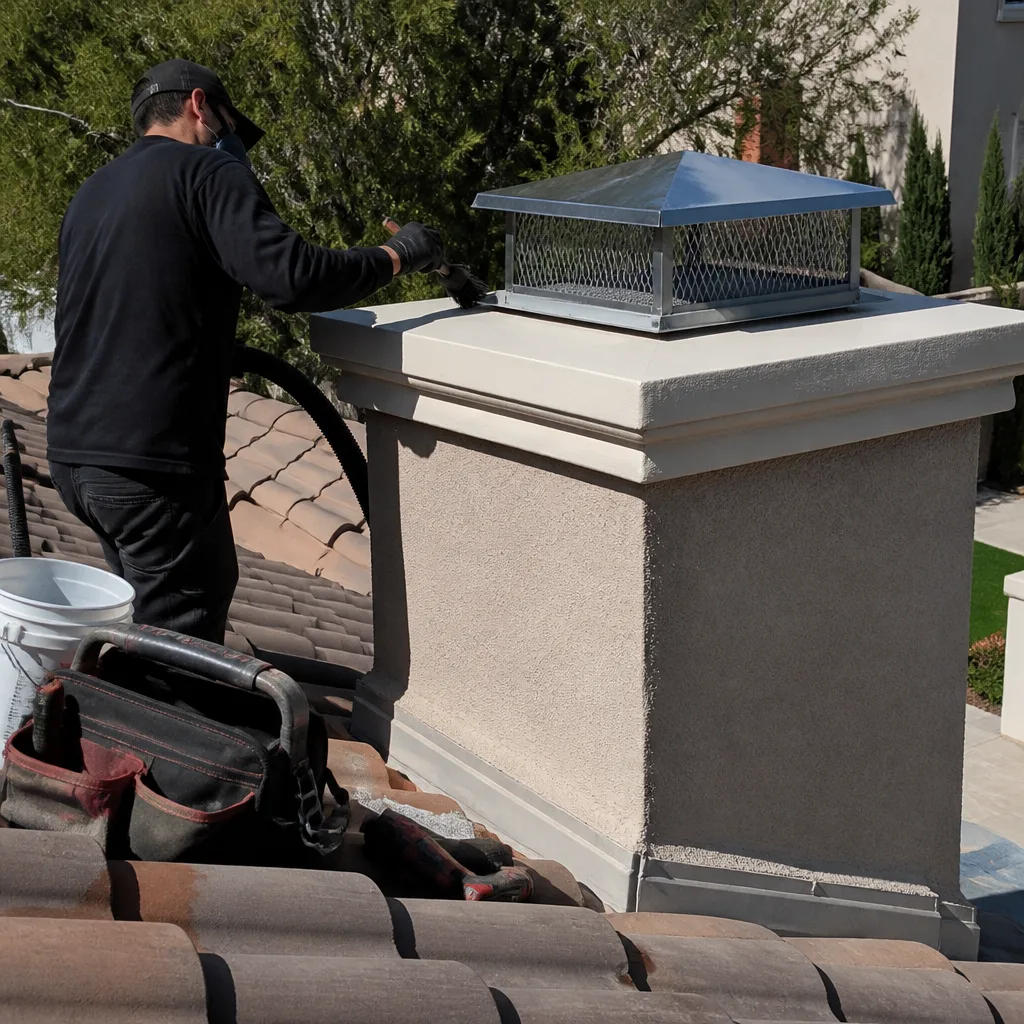
- The cap and spark arrestor. Wind-driven sand abrades galvanized steel caps over time. Look for rust at welded joints and gaps where the cap meets the flue. A cap that has shifted or separated from its base is an open channel for embers and rain.
- Flashing at the roofline. The metal where the chimney meets the roof expands and contracts with daily temperature swings. In Indio, that’s a 30-degree oscillation most days and a 50-degree swing during heat waves. Over years, the sealant fails and the metal pulls away from the masonry. Look for visible gaps, lifted edges, or dried caulk lines.
- Vertical mortar joints on the south and west faces. These get the most direct afternoon sun. Mortar in the Coachella Valley dries and crumbles from the outside in. Run your hand (with a glove) over accessible joints. If you feel loose sand or see raking that’s more than a quarter-inch deep, repointing is in your near future.
- Brick faces on the sun-exposed side. Brick that faces south or west can develop surface flaking called spalling, not from moisture but from thermal stress. It looks like the brick face has peeled away in thin sheets. Catch it early and you’re repointing. Miss it and you’re rebuilding sections of the chimney.
What doesn’t matter as much in Indio: the interior flue liner from a moisture perspective. Homes here simply don’t see the sustained rain and humidity that corrode clay tile liners in other climates. If your liner is deteriorating in Indio, it’s almost always from creosote acidity or age, not weather. That’s a separate maintenance conversation, covered in our guide on Choosing the Right Chimney Cleaning Brand: A Buyer’s Guide for Indio, and it’s one we handle with brands like Copperfield and Olympia Chimney when relining is needed.
Seasonal Timing for Exterior Inspection
Do a full exterior inspection twice a year: once in October before burning season and once in March after the last fire. Add a third check in August if monsoon season has been active. The August check is specifically for wind damage and cap displacement. The October check is for any cracks or deterioration that developed over the summer.
For a deeper look at structural issues specific to this area, see our guide to Chimney Repair in Indio.
Damper Operation Check: A Safe Pre-Season Procedure
The damper is the metal plate inside the throat of the fireplace that opens and closes the flue passage. In Indio, dampers frequently stick because they sit unused for eight months at a time, and the metal components oxidize in the dry heat. A damper that won’t close means conditioned air escapes all summer. A damper that won’t open means smoke rolls into the living room on the first fire. Both are avoidable with a simple pre-season check.
Here’s the safe homeowner procedure:
- Work with a cold fireplace. Never attempt damper inspection within 24 hours of a fire. The metal holds heat.
- Put on safety glasses and a dust mask. Soot and creosote fall when the damper is disturbed.
- Open the damper fully using the handle or lever. It should move smoothly through its full range. If it’s grinding, scraping, or feels gritty, do not force it. The mechanism may have rust buildup or misalignment.
- Shine a bright flashlight up through the open damper. Check that the opening is clear and the damper plate is not warped or cracked.
- Close the damper completely. It should seat firmly with no visible gaps around the edges. A small gap of even a quarter inch is a year-round energy loss in Indio’s climate.
- Repeat the open-close cycle three times. If the damper sticks at any point, note where. A damper that binds in the open position is a safety hazard. A damper that binds closed is an inconvenience that becomes a smoky fireplace.
If the damper doesn’t operate smoothly through three cycles, have it repaired before burning season. A damaged or inoperable damper is not something to defer, because the first cold evening in Indio is when you’ll discover the problem, and then you’re either burning with a partially open damper or not burning at all.
Firebox Floor and Smoke Shelf Inspection: What Signals a Sweep Is Overdue
Here’s the counterintuitive part of chimney maintenance in Indio: you can go an entire winter burning only five or six fires and still need a professional sweep before the next season. The reason is that creosote formation isn’t linear with fire count. It’s linear with burn temperature and flue conditions, and the small, short fires typical in a mild desert climate produce more creosote per fire than long, hot burns.
Here’s what to check on the firebox floor and the smoke shelf, the area just above the damper where smoke gathers before entering the flue:
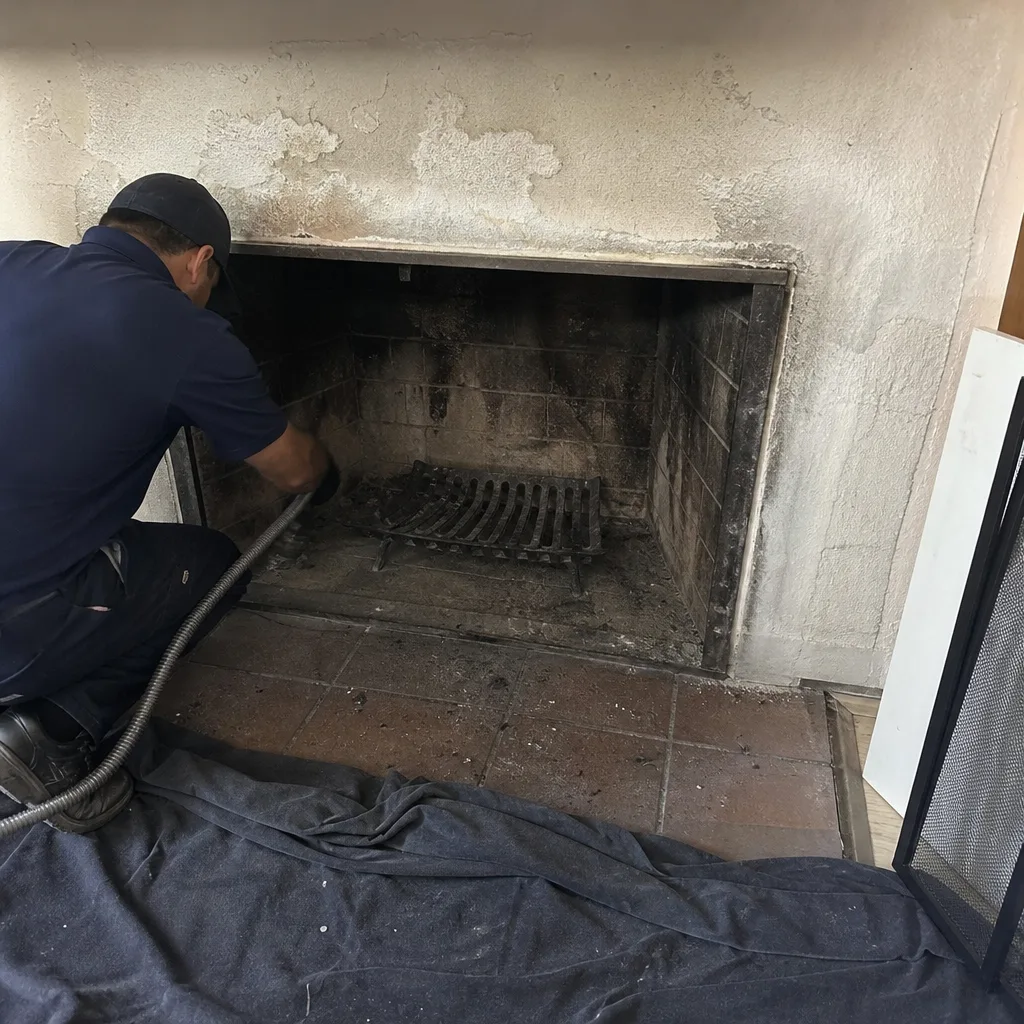
- Look at the firebox floor for creosote pooling. Ash is gray and powdery. Creosote is black, shiny, or tar-like. If you scrape the floor with the edge of a metal tool and come up with anything that smears rather than crumbles, that’s stage-two creosote and it’s time for a sweep.
- Check the back wall of the firebox above the lintel. This is where smoke rolls over into the smoke chamber. A dark, glossy coating here is a signal that creosote is accumulating in the smoke shelf too.
- Look for fallen debris on the smoke shelf. Dust a flashlight beam across the shelf through the open damper. You’re looking for accumulated fine sand, small pieces of mortar, or nesting material. Coachella Valley wind finds its way into chimneys with damaged caps.
- Examine the firebox floor for cracks in the refractory panels. The firebox floor takes direct heat, and hairline cracks in the firebrick are normal after years of use. But any crack wider than the edge of a credit card, or any panel that has shifted inward, needs professional assessment.
- Sniff test. On a day when the fireplace hasn’t been used for at least a week, lean in and smell. A strong campfire or tar odor means creosote deposits are off-gassing, which only happens when buildup is significant.
If any of these five checks comes back positive, book a sweep regardless of how few fires you’ve burned; see our Chimney Sweep Troubleshooting: Common Problems and How to Fix Them for what to expect. The cost of a sweep in Indio is a fraction of what a chimney fire or smoke damage restoration runs, and a sweep is the only way to clear the smoke shelf properly. We use professional-grade equipment for this work, and when liner resurfacing is needed, we specify HeatShield because it’s what the job actually requires, not because it’s what’s on the truck.
Post-Wind Event Checks: Santa Ana and Monsoon Season Protocols
Indio gets two distinct wind seasons, and they affect chimneys differently. Santa Ana winds generally come from October through March, arriving as dry, sustained winds from the northeast. Monsoon season, July through September, brings shorter but more intense bursts of wind with sudden rain from the southeast. Each leaves a different signature on your chimney.
After a Santa Ana Wind Event
Santa Ana winds are dry, so the risk isn’t water intrusion; it’s ember carry and cap displacement. During a high-wind event, a chimney with a compromised spark arrestor can draw embers from your fire up and out onto the roof. That’s not a maintenance note; that’s a fire hazard. Walk the roof line after any Santa Ana event with sustained winds over 40 mph and look for:
- Chimney cap that has rotated on the flue or lifted at one corner.
- Spark arrestor mesh that has been torn or pushed inward.
- Missing mortar chips on the windward face of the chimney.
- Debris accumulation at the base of the chimney on the roof.
After a Monsoon Wind Event
Monsoon winds carry moisture and often precede a sudden downpour. The check after a monsoon event is for water intrusion and wind-blown debris:
- Water staining on the ceiling near the chimney chase inside the house.
- Damp or crumbling mortar joints on the exterior of the chimney.
- Nesting material or vegetation debris visible in the flue from the firebox side.
- Flashing that appears lifted or bent, especially on the prevailing storm side.
If you find cap displacement or flashing damage after any wind event, it’s a straightforward repair now and a structural problem later if left. The flashing and cap are the cheapest parts of the chimney system and the most common failure points in Indio’s wind profile. We handle these repairs regularly, and we use Famco caps and Copperfield flashing materials specifically because they hold up to Coachella Valley conditions.
Documenting Chimney Condition Year Over Year
The most useful thing any Indio homeowner can do for their chimney is something almost nobody does: keep a dated photo and note record of its condition over time. Chimney deterioration in this climate is slow enough that you won’t notice it week to week. You will notice it when comparing photos taken twelve months apart. And catching a mortar joint that has widened from an eighth of an inch to a quarter of an inch in a year is the difference between repointing and rebuilding.
Here’s a simple documentation system that works:
- Take the same six photos, twice a year. Same positions every time: full chimney from the front yard, south face close-up, west face close-up, crown from roofline (or the best angle you can safely get), flashing close-up, and firebox interior from a fixed position.
- Name the files by date and position. March-2026-south-face.jpg. October-2026-south-face.jpg. Store them in one folder on your phone.
- Write a two-line note with each photo set. Date, number of fires burned since last photo set, any weather events since last set, and one sentence about anything you noticed: “Mortar joint above the third brick from top on south face looks wider.”
- Compare the new set to the previous set side by side. This takes five minutes and catches everything that matters.
- Attach the photo set when booking a sweep. If we’re coming out for a sweep, seeing twelve months of photos before we arrive helps us focus the inspection and saves you money on diagnostic time.
In our experience, homeowners who keep this record catch chimney problems an average of two to three years earlier than homeowners who rely on memory. That early catch routinely saves $1,500 to $4,000 in structural repair costs in the Indio market, because the fix when a problem is caught early is usually repointing or sealing, not rebuilding.
This documentation habit pairs naturally with the seasonal sweep schedule. The photo set happens on the same day as the sweep. You pay for one professional visit, get a clean flue, and build your condition record on the same trip.
For homeowners whose documentation reveals ongoing structural concerns, we can assess whether a liner resurfacing or full relining project makes sense. Brands like DuraFlex and Olympia Chimney produce liner systems that are code-compliant for this region’s specific requirements, and we carry them for a reason: they are what professionals specify when a flue has deteriorated past the point that cleaning alone addresses.
Common Mistakes to Avoid
- Following a national checklist that includes freeze-thaw inspection. Indio doesn’t have freeze-thaw cycles. Checking for frost damage wastes your time and leads you to overlook the UV and thermal stress points that actually matter here.
- Skipping the end-of-season sweep because “I barely used it.” Those five or six small fires produce disproportionate creosote because they burn cool. Letting that creosote bake through a 120-degree summer makes the fall cleaning harder and more expensive.
- Using the fireplace as a trash incinerator. Burning wrapping paper, cardboard, or treated wood produces dense, sticky creosote and increases chimney fire risk dramatically. Burn only seasoned hardwoods.
- Leaving the damper open all summer. An open damper is a two-inch hole in your thermal envelope. In Indio’s climate, that’s conditioned air escaping all summer long, making your air conditioner work harder for no reason.
- Paying for a sweep without a video inspection. A brush-only sweep misses what’s happening in the smoke chamber and upper flue. If your sweep doesn’t include a camera inspection, ask for one. We do camera inspections on every chimney sweep in Indio because it’s the only way to document liner condition and show you what we found.
- Ignoring the chimney cap because “we don’t get much rain.” The cap isn’t just for water. It’s also for ember control, bird exclusion, and wind-driven debris. A missing or damaged cap in Indio is a fire safety issue even in a drought year.
- Deferring flashing repair because the roof isn’t leaking. Flashing that is separating from the chimney lets water into the chase slowly, and in a house that sees rain only a handful of days a year, you won’t see the leak until the damage is extensive inside the wall cavity.
When to Call a Professional
Some chimney maintenance is homeowner-appropriate. The inspection points and documentation in this guide are designed to be done without special equipment. But there are specific conditions that mean it’s time to stop checking and start making phone calls. Call a professional when you see glossy or tar-like creosote in the flue, when the damper won’t operate smoothly through a full cycle, when exterior masonry has cracks wider than a credit card edge, when the cap is displaced or the spark arrestor is torn, or when you smell strong creosote odor from a cold fireplace. These are not progressive conditions that get better with monitoring; they are active deterioration or fire hazards that need professional equipment and trained eyes. Chimney Sweep Indio home services all of the Coachella Valley, and we provide free estimates throughout the Indio area. Call (877) 378-2419 to schedule a sweep or inspection.
Frequently Asked Questions
We recommend twice per year for any home in Indio where the fireplace is used at all: once in October before burning season and once in March after the last fire. If you truly never burn, one annual inspection is sufficient to check for wind damage, cap displacement, and pest intrusion, but you’d be surprised how many homeowners in the Coachella Valley discover significant creosote from “just a few fires.” Call (877) 378-2419 for an exact recommendation based on your usage patterns.
A standard chimney sweep in the Indio market typically runs between $180 and $350, depending on the chimney’s height, the level of creosote buildup, and whether any animal or debris removal is needed. Chimney Sweep Indio provides free estimates, so you’ll know the exact number before we do any work.
Yes, and it’s arguably more important in Indio than in rainy climates. The cap controls ember release during Santa Ana wind events, keeps birds and rodents out during the long non-burning season, and blocks wind-driven sand from accumulating in the flue. A home in Indio without a functional chimney cap is operating with an open channel to the roof during some of the highest fire-risk weather conditions in the country.
The progression is predictable: creosote accumulates from limited burns, bakes into deposits through the summer, restricts airflow, and eventually either ignites as a chimney fire or forces smoke into the house during the next burn. Meanwhile, the exterior masonry continues to deteriorate from UV and thermal stress, the flashing separates, and water intrusion begins during the rare heavy rain. By the time a homeowner notices, the repair is structural rather than routine. The sweep that would have cost $250 in October becomes a $3,500 rebuild by the following October. That’s the real cost of skipping maintenance in the Coachella Valley. Call (877) 378-2419 to get on the schedule before burning season.
We don’t recommend it. A professional chimney sweep involves brushes sized to the flue, a camera inspection to document condition, and a trained eye for safety issues like cracked liners, failed mortar, or improper clearances. Homeowner DIY chimney cleaning misses all of that and puts you on a ladder with equipment you don’t use every day. The inspection is where the value actually is; the brushing is just the part everyone thinks about.
Yes. We handle Dryer Vent Cleaning in Indio as part of the same service company. A clogged dryer vent and a dirty chimney are the same category of problem: combustion risk from an exhaust system that has accumulated flammable material. If we’re out for a chimney sweep, we can check the dryer vent on the same trip.
The Bottom Line
Chimney maintenance in Indio is not a version of chimney maintenance in Seattle or Chicago with different dates. It’s a fundamentally different task, because the forces degrading your chimney are fundamentally different. UV baking, thermal expansion, wind-driven sand, and long idle periods between burns create a specific failure profile that demands specific inspection points and a specific scheduling rhythm. Sweep twice a year, check after wind events, document your condition with photos, know your damper, and learn what the firebox floor is telling you. For more guides & resources on desert chimney care, explore our blog. The homeowners who follow this checklist in the Coachella Valley catch problems early, spend less money over the life of the home, and burn with confidence on the handful of evenings when a fire actually makes sense in the desert.
Written by the team at Chimney Sweep Indio, serving Indio since 2015.
See the difference
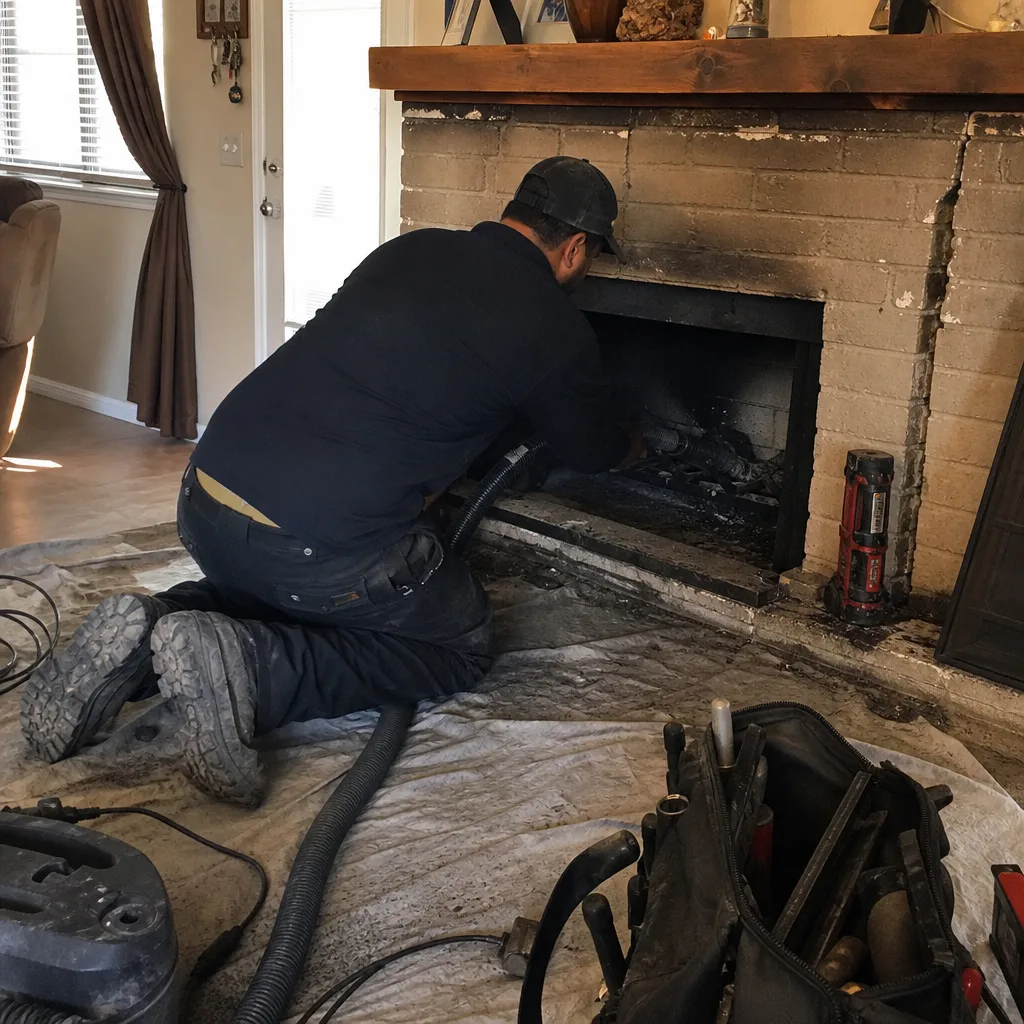 Before
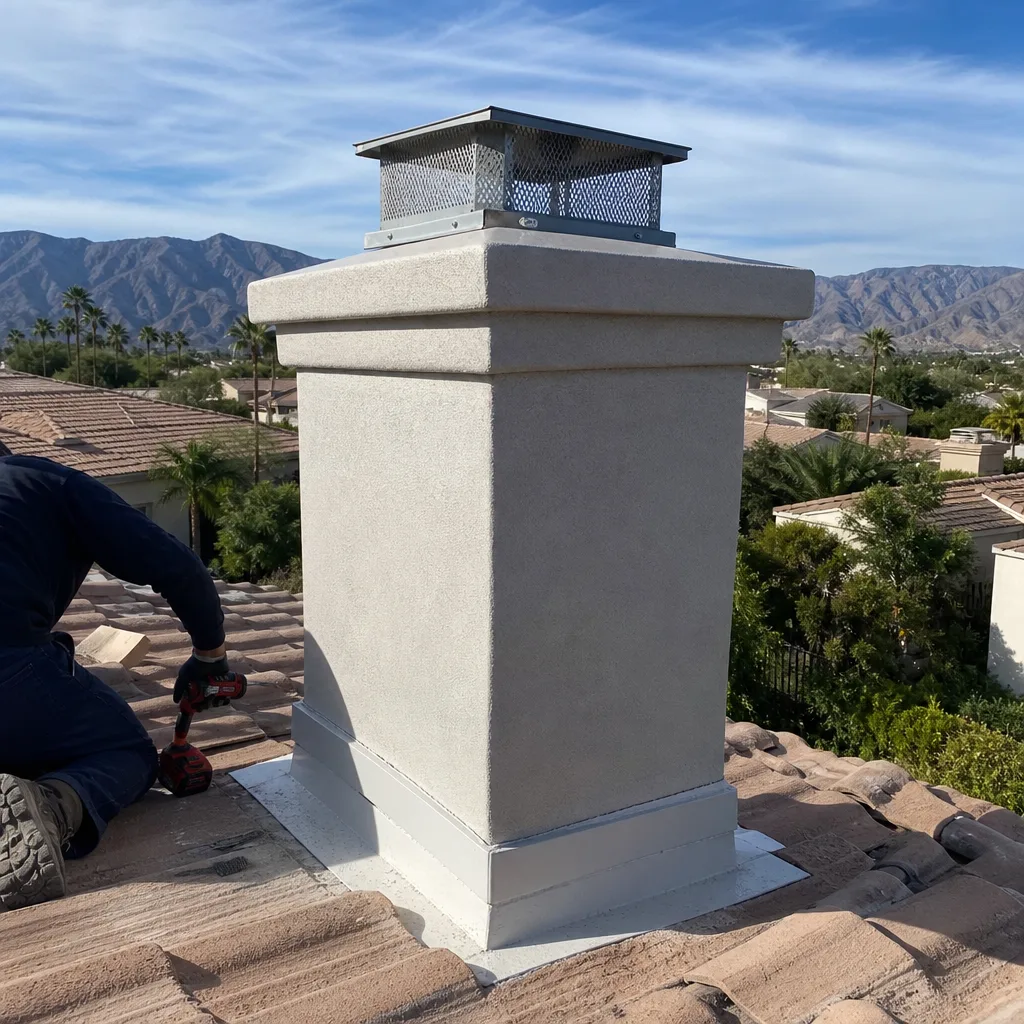 After
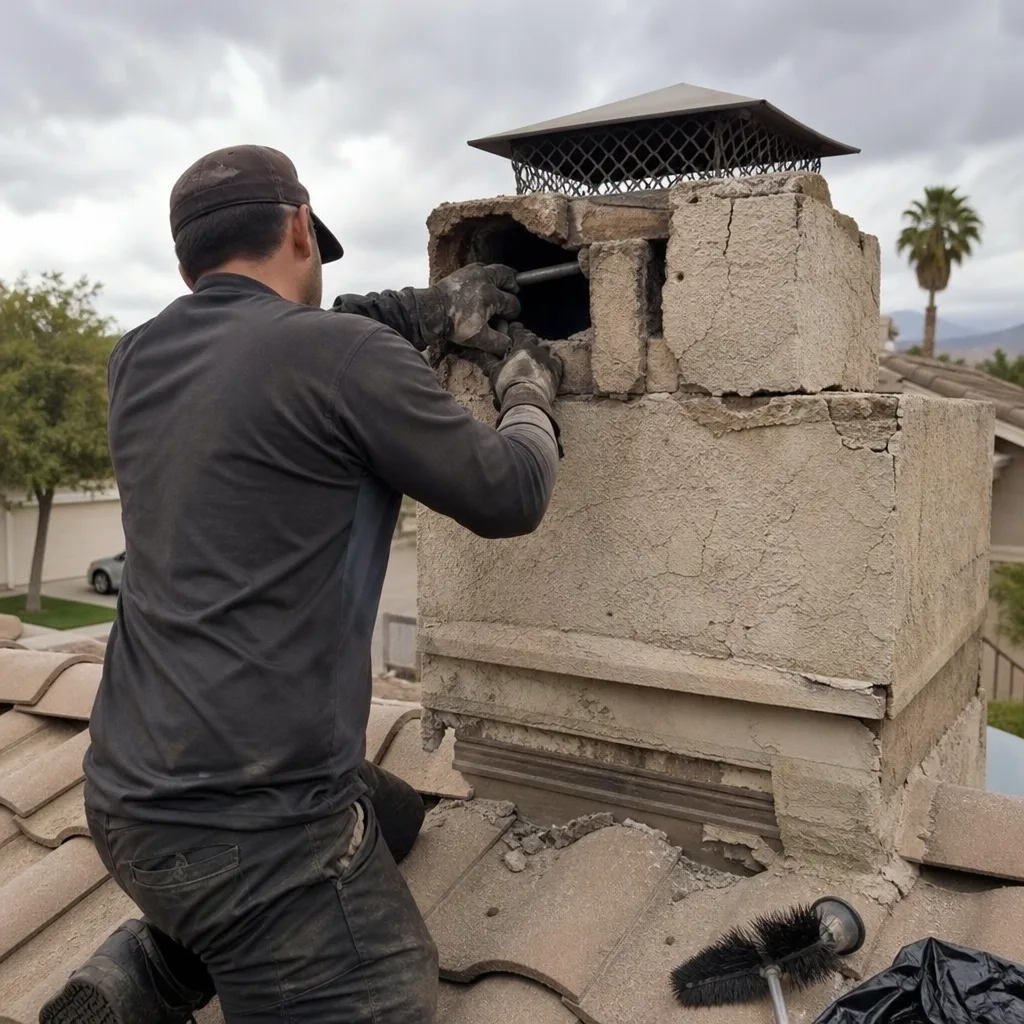 Before
 After
 Before
 After