
Last updated November 2, 2026
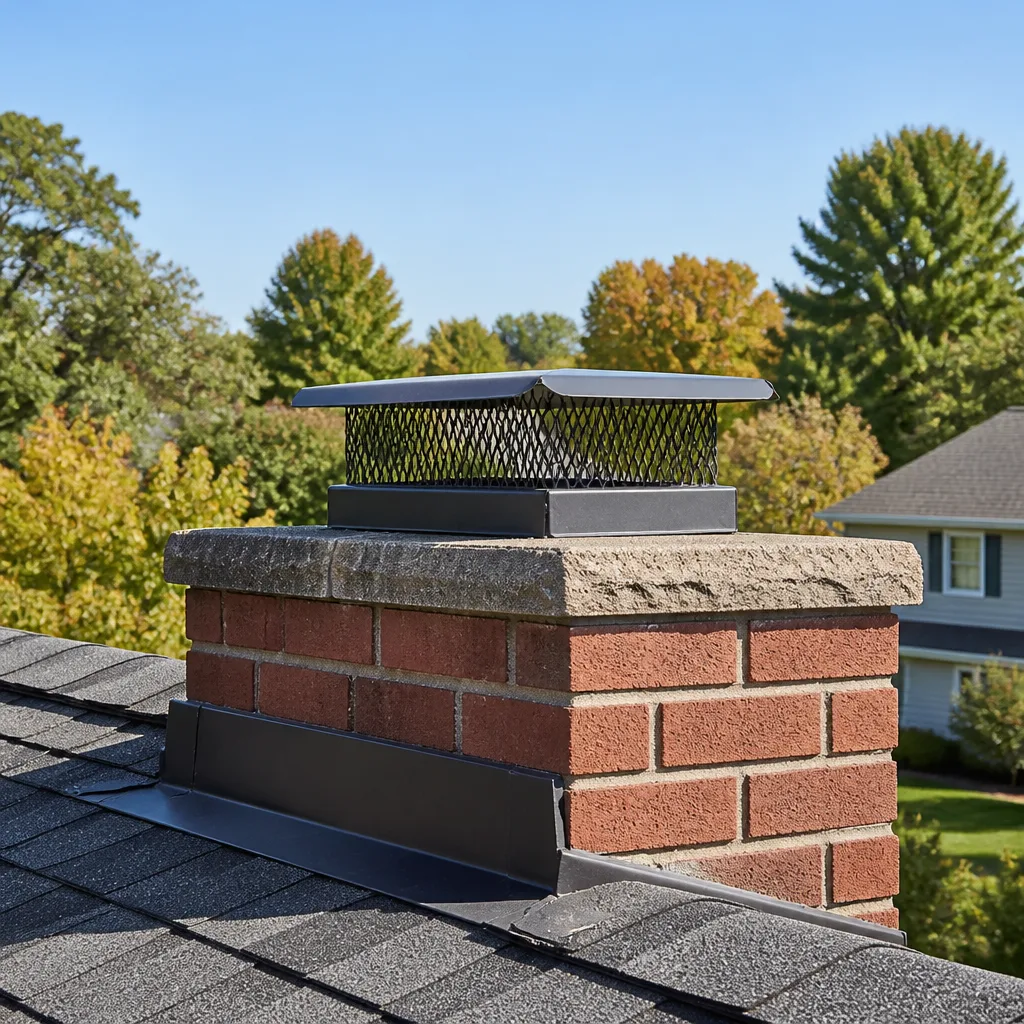 Sweep & inspection
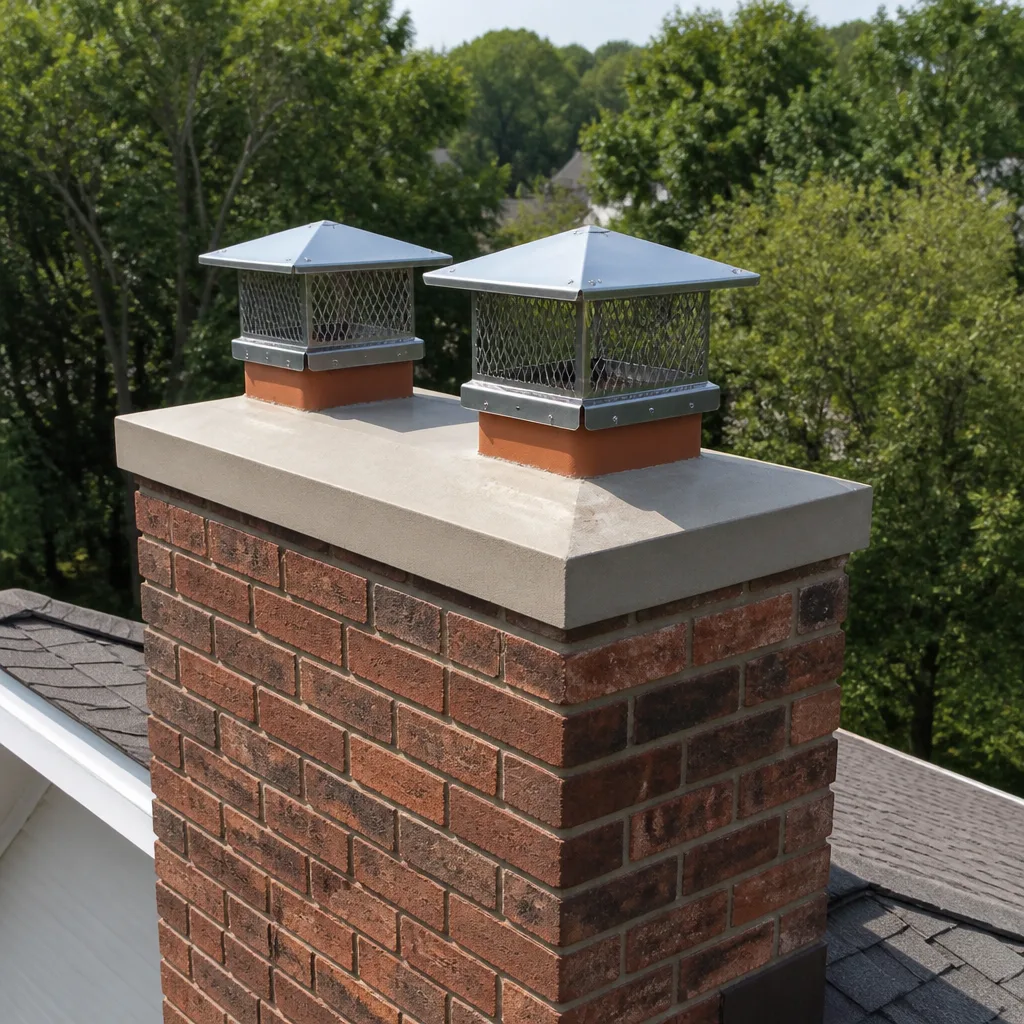 Caps & crowns
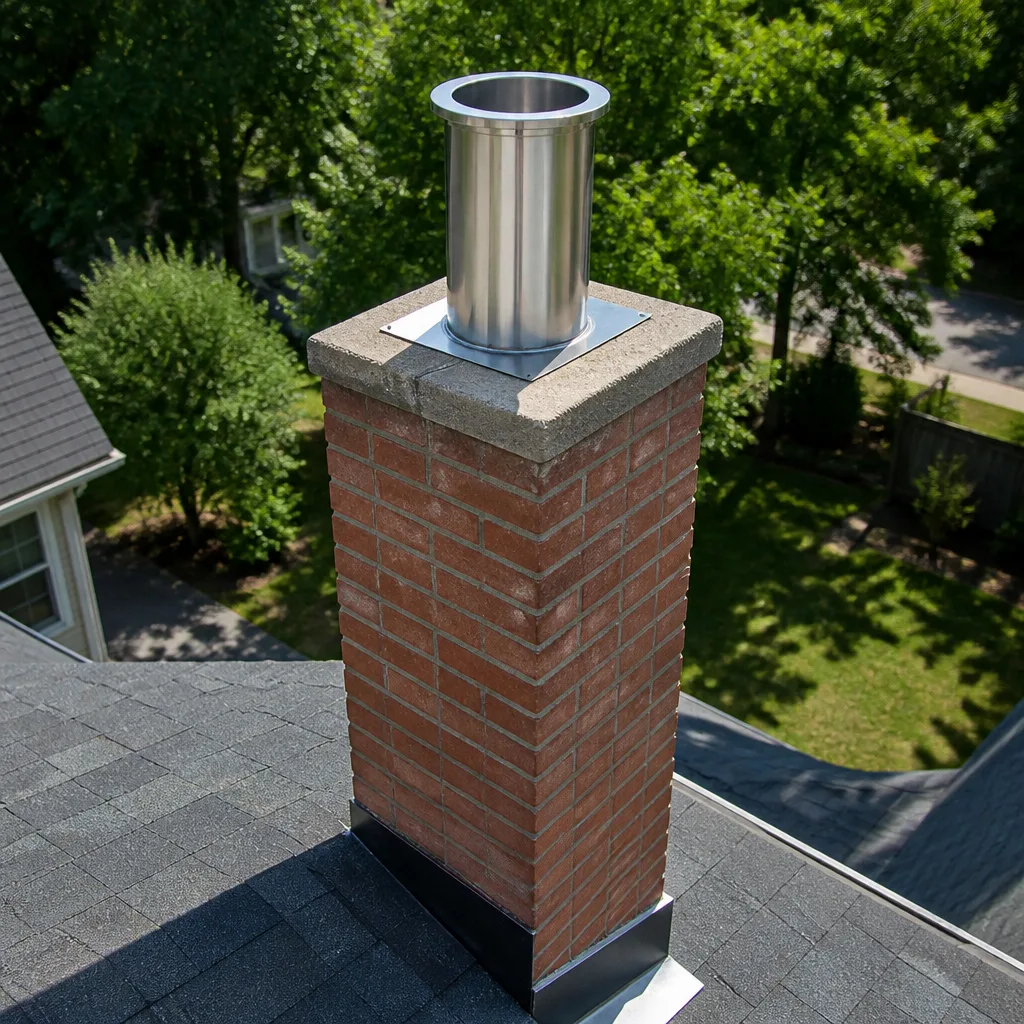 Flue relining
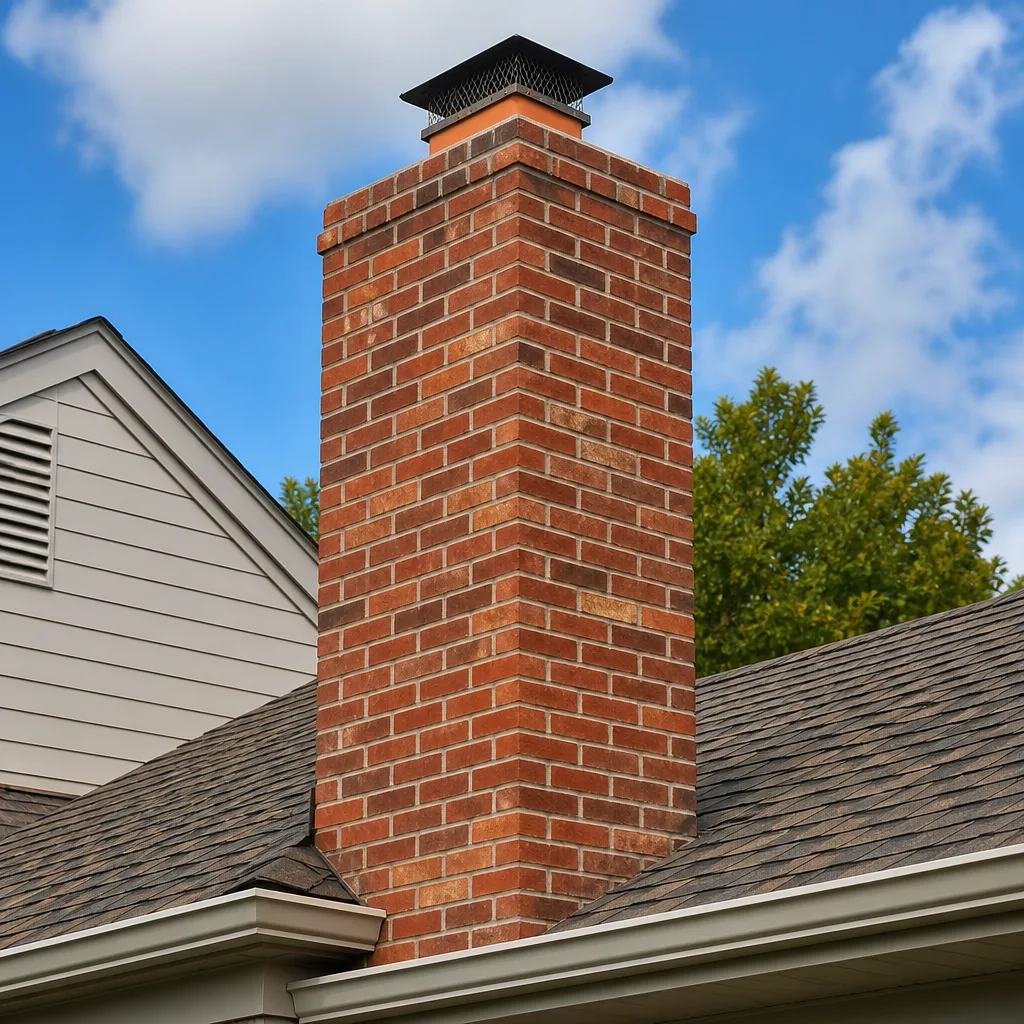 Masonry repair
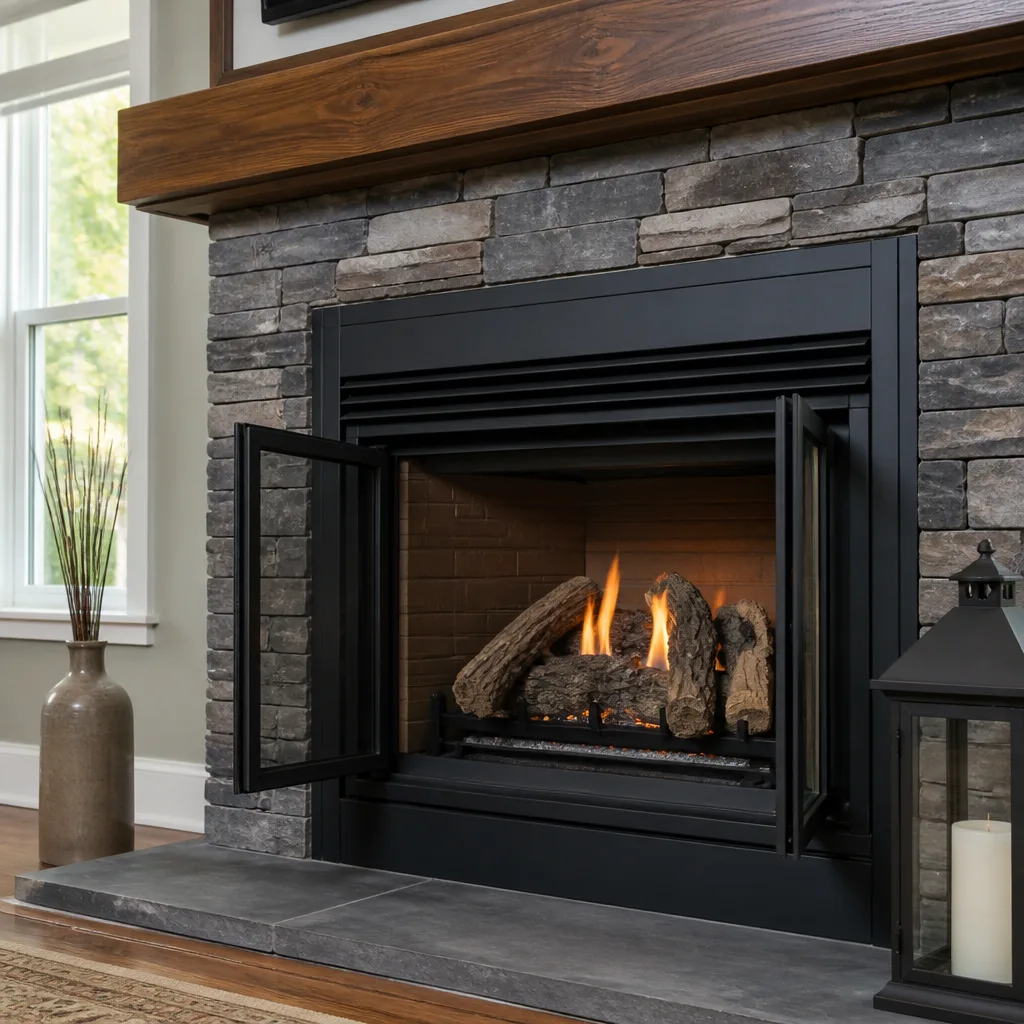 Gas fireplace service
Level 1 sweep and inspection to the NFPA 211 annual standard - flue, crown, cap, and flashing checked and photographed
Chimney sweep logs do not sweep chimneys. They loosen some creosote - which then falls where a brush and vacuum still have to collect it.
Chimney Sweep Troubleshooting: Common Problems and How to Fix Them
Smoke pouring into your living room isn’t always a dirty chimney. In fact, one of the most common service calls we get in Indio starts with a homeowner who’s already swept the flue, replaced the cap, and still can’t figure out why the fireplace won’t draw. The real culprit is often a pressure problem: a new kitchen exhaust fan, weatherstripping installed last fall, or a house sealed tight enough that the fire can’t get the makeup air it needs. This guide walks through chimney problems the way a sweep actually diagnoses them on-site: symptom first, then causes ruled out in order, then the fix that matches the evidence. You’ll learn how to tell a draft problem from a creosote problem, which at-home tests are actually worth doing, and when a troubleshooting call has crossed into code-compliance territory.
Quick Answer
Most chimney problems fall into four symptom categories: smoke backdraft, persistent odor, slow or weak draw, and visible debris or deterioration. Each traces to different root causes – air pressure imbalances, creosote buildup, flue obstructions, or structural damage – and guessing wrong leads to expensive misdiagnosis. Start by identifying the exact symptom, rule out the simplest causes first (cap obstruction, closed damper, negative pressure), and only then escalate to cleaning or repair. If you’re seeing cracked tiles, spalling mortar, or a rusted damper, stop troubleshooting and get a professional inspection.
Styles & brands we work with
- Sweep & inspection
- Caps & crowns
- Flue relining
- Masonry repair
- Gas fireplace service
Table of Contents
- The Symptom-First Diagnostic Tree
- Smoke Backdraft: Draft Problems vs. Creosote Problems
- Persistent Odor: What That Smell Actually Means
- Slow Draw: Restricted Flue Area and What Causes It
- Visible Debris: When What You See Tells You the Problem
- Three DIY Fixes That Create New Problems
- When Troubleshooting Becomes a Code Issue
- Common Mistakes to Avoid
- When to Call a Professional
- Frequently Asked Questions
The Symptom-First Diagnostic Tree
Most chimney guides start with “clean your chimney.” That’s backwards. A sweep starts with the symptom because the symptom tells you which system is failing. Here’s the diagnostic tree we work through on every troubleshooting call in Indio, in order:
- Smoke entering the room during a fire – This is either a draft failure (air pressure, flue sizing, cap obstruction) or a restriction (creosote, debris, closed damper). Rule out the mechanical issues first: is the damper fully open? Is the cap clear?
- Chimney smell when the fireplace isn’t in use – Usually creosote off-gassing in heat or humidity, sometimes a dead animal, occasionally a failed damper. Deodorizers make this worse by adding fragrance to the gases rather than removing the source.
- Weak or lazy flame, fire won’t get going – Almost always an air supply problem. The fire can’t get oxygen, or the flue can’t pull combustion gases out fast enough.
- Debris falling into the firebox, or visible exterior damage – This is structural: a failing liner, a deteriorating crown, or a cap that’s come loose. Not a cleaning issue.
The order matters because each branch rules out causes that would make further troubleshooting pointless. You don’t clean a flue to fix a pressure problem. You don’t replace a damper to fix creosote odor. In our experience, homeowners in Indio who call after trying three or four DIY fixes have usually skipped the mechanical checks and gone straight to cleaning – which is the most expensive miss.
For a broader look at how sweeping fits into the overall maintenance picture, see our Chimney Sweep in Indio page.
Smoke Backdraft: Draft Problems vs. Creosote Problems
Backdraft means smoke flows into the room instead of up the flue. The cause is either insufficient draft (the chimney can’t pull) or excessive restriction (the chimney can’t pull enough). These are different problems with different fixes, and treating one like the other is the most expensive mistake we see.
Step 1: Is the damper actually open?
It sounds obvious, but damper linkages break, chains come loose, and top-sealing dampers sometimes fail in the closed position. If you have a throat damper, shine a flashlight up from the firebox. You should see daylight or feel resistance when the handle moves through its full range. If the damper plate is cracked or rusted through, that’s a Chimney Repair in Indio issue, not a troubleshooting one.
Step 2: Rule out negative pressure
Modern homes in Indio are often sealed tighter than older construction – new weatherstripping, double-pane windows, high-efficiency doors. That’s good for cooling bills, but it starves a fireplace of makeup air. When you run a kitchen exhaust fan, a bathroom fan, or even a clothes dryer in a tight house, you create negative pressure that pulls air down the chimney instead of letting smoke go up.
Here’s the test: open a window or door in the same room as the fireplace, wait 30 seconds, then light the fire. If the backdraft disappears with the window open, you have a pressure problem, not a chimney problem. The permanent fix is a dedicated makeup air vent to the firebox, which a qualified sweep can install. Sweeping the flue won’t touch this.
Step 3: Check the cap and flue for obstruction
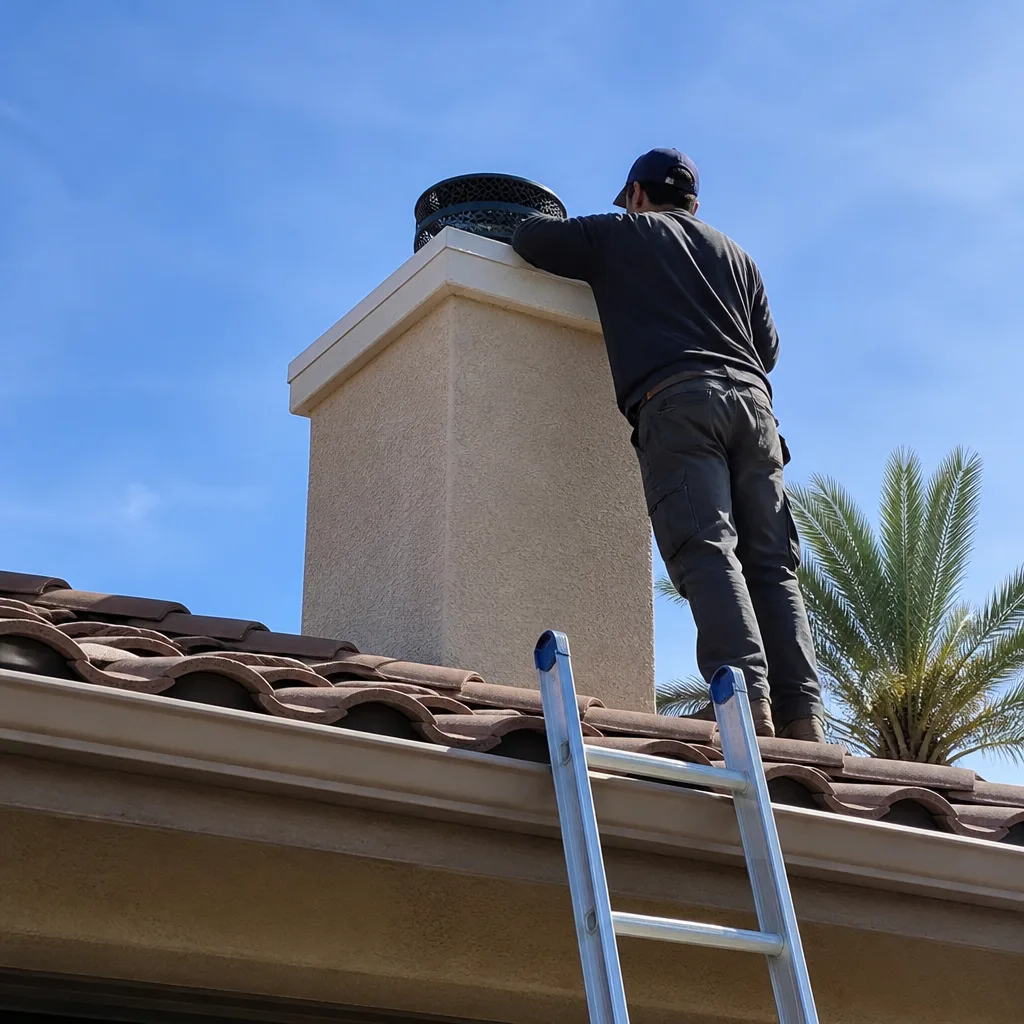
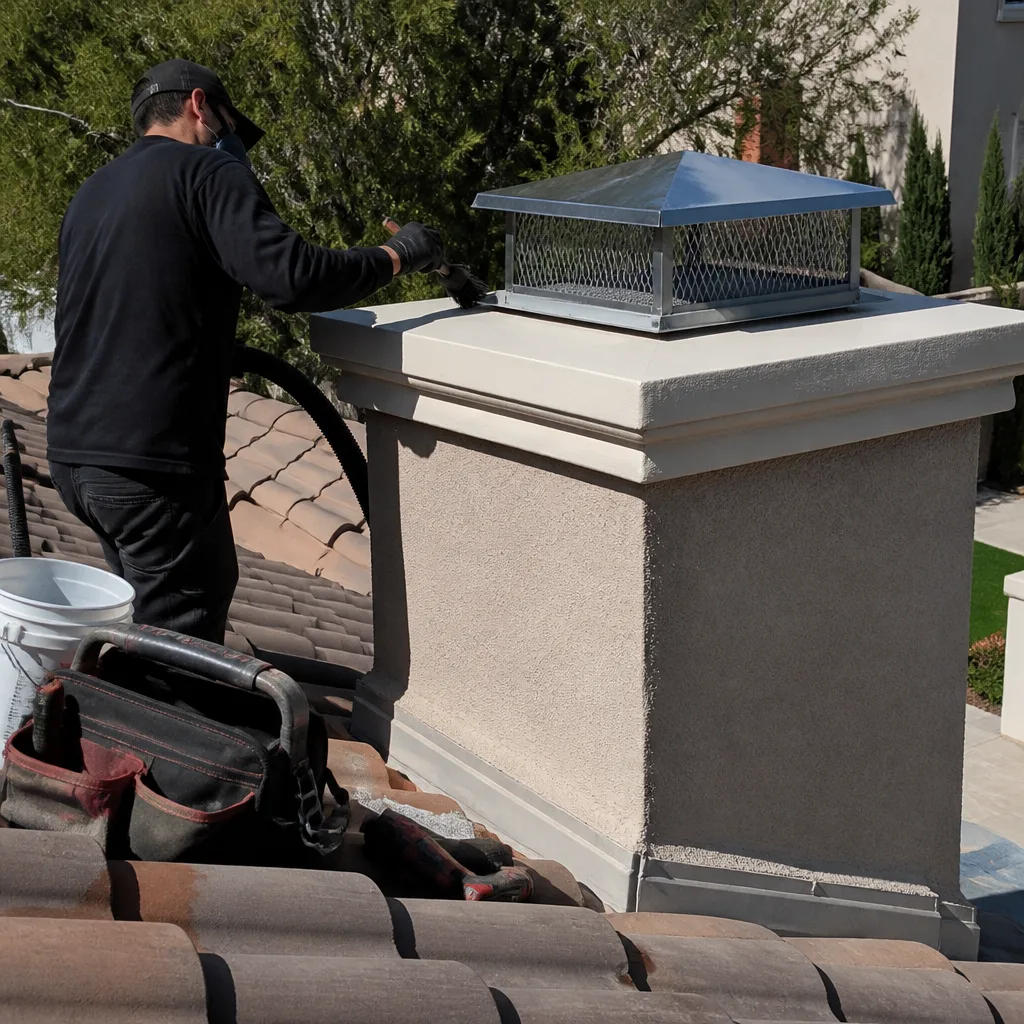
Bird nests, squirrel nests, and wind-blown debris across the cap opening are common in Indio, especially after the windy season. A cap with spark arrestor mesh can clog with creosote or nesting material and restrict the flue’s exit. From the ground, look for visible material on the cap or around the flue opening. If you can’t see clearly, a quick roof-inspection with a camera confirms it. This is where most DIY troubleshooting stops being safe: working on a roof near a flue opening is a fall hazard, and we recommend a trained professional for anything requiring roof access.
Once mechanical and pressure causes are ruled out, what remains is usually creosote: heavy deposits narrowing the flue, or glazed (Stage 3) creosote that has hardened into a tar-like layer. This is a cleaning and evaluation problem. In Indio’s dry climate, creosote tends to form as flaky, ignitable deposits rather than the sticky variety common in humid regions – but both restrict draft, and both are combustible.
Persistent Odor: What That Smell Actually Means
The smell that comes out of a chimney when the fireplace isn’t in use is one of the most misdiagnosed symptoms in the field. A strong odor after rain, or during summer heat, is usually not a structural problem. It’s creosote off-gassing: the volatile compounds in creosote deposits releasing into the home as temperature and humidity shift.
Think of it this way. When you burn a fire, creosote condenses on the flue walls. That creosote contains hundreds of organic compounds. When the chimney gets hot, those compounds stay put. When the weather changes – a rainstorm raising humidity, or a hot Indio afternoon heating the flue – those same compounds vaporize and drift down into the house. The smell ranges from asphalt-like to acrid, and it’s worst in homes where the damper doesn’t seal completely.
Why masking it makes it worse: commercial chimney deodorizers add fragrance on top of the off-gassing. You don’t remove the creosote, you just layer perfume over the pyrolysis gases. The result is a worse smell, and often a false sense of security about the condition of the flue.
The actual fix is to remove the source. A mechanical sweep removes the bulk of the creosote that’s off-gassing. If the damper is warped or doesn’t seal, that’s a repair issue: a top-sealing damper, or a properly adjusted throat damper, blocks the path for those gases to enter the living space. In homes with repeated odor problems, we’ve found the solution is almost always a combination of a proper sweep and a damper that actually closes tightly.
One more thing worth knowing: if the odor is distinctly ammonia-like or dead-animal, that’s a different problem entirely. Birds, squirrels, and raccoons can enter the flue and die. The fix is removal and a properly fitted cap with spark-arrestor mesh to keep them out permanently.
Slow Draw: Restricted Flue Area and What Causes It
Slow draw means the fire burns, but lazily. Flames stay low, logs char rather than burn, and smoke rises slowly or lingers at the fireplace opening. The technical term is restricted flue area: the cross-sectional opening of the flue has been reduced below what the fire needs to vent properly.
Here’s what restricts a flue, in the order we look for them:
- Creosote buildup reducing the flue diameter – A chimney that’s gone two or three seasons without sweeping can lose 30-50% of its effective flue area, especially with softer woods or unseasoned fuel.
- Debris in the flue – Nesting material, fallen brick chips from a deteriorating liner, or even a dislodged chimney cap can partially block the path.
- Undersized flue for the fireplace opening – Some older Indio homes have fireplaces that were built or modified with flue tiles too small for the firebox dimensions. That’s a sizing problem, not a cleaning problem.
- Flue height below the roof line – If the chimney doesn’t extend far enough above the roofline, or if a nearby tree or addition has changed the wind pattern, draw suffers. The 3-foot/2-foot rule is a starting point, not a guarantee.
- Masonry deterioration reducing effective height – Spalling bricks or a crumbling crown can effectively shorten the flue and disrupt the draft.
At-home test for restriction: with the damper open and no fire lit, hold a lit match or lighter at the fireplace opening. The flame should lean into the fireplace, toward the flue. If it stands straight up or leans back into the room, you’re not getting draft. That confirms a restriction or a pressure problem – and you’ve already ruled out pressure with the window test above.
If the restriction is creosote or debris, a proper mechanical sweep restores the flue to its intended diameter. If the problem is flue sizing or structural, sweeping alone won’t fix it – that’s where a camera inspection tells you exactly what’s restricting and whether it’s a cleaning job or a Chimney Repair in Indio job.
Visible Debris: When What You See Tells You the Problem
Debris falling into the firebox, or visible on the roof around the chimney, is the one symptom that almost never responds to cleaning. It means something has physically failed: a liner has cracked and is shedding tiles, mortar joints have opened up and are dropping material, or the cap has come loose and allowed all of the above plus weather into the flue.
Here’s how to read what you’re seeing:
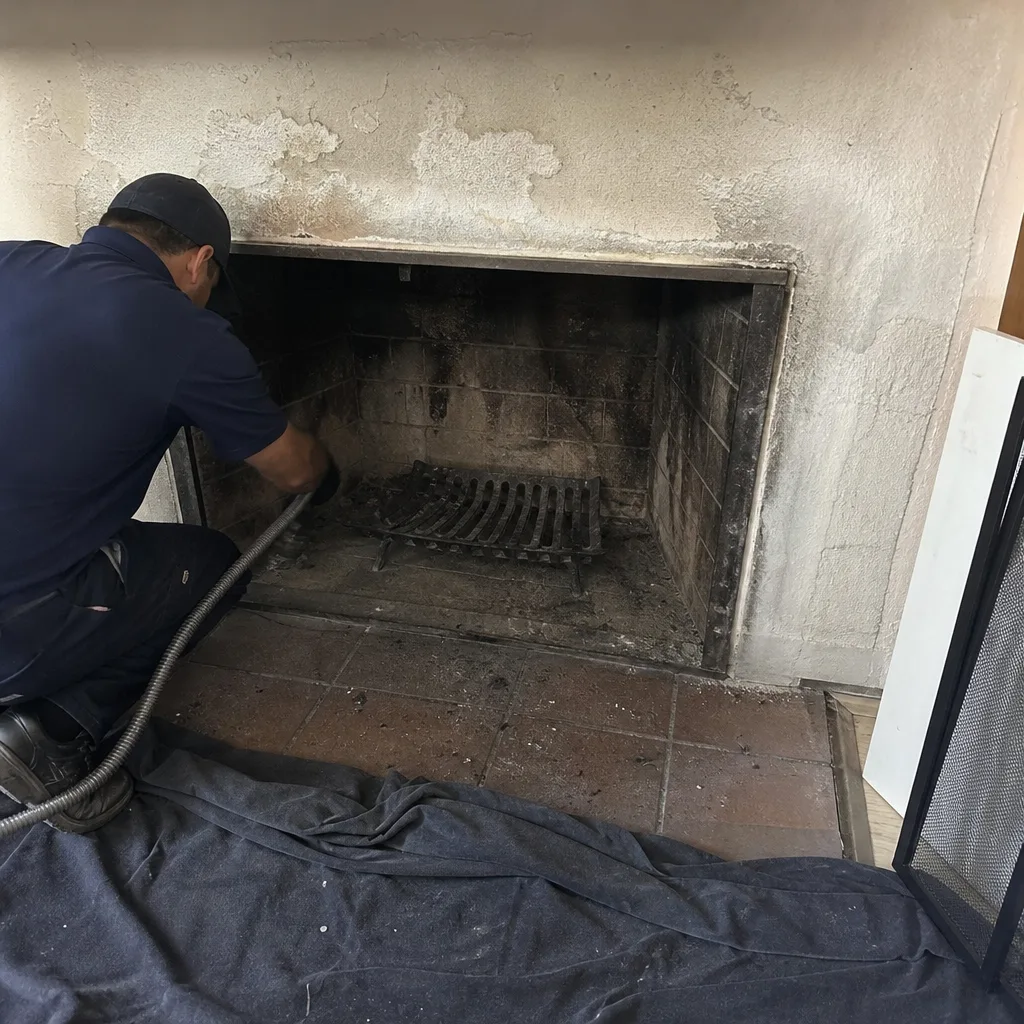
- Small terracotta flakes or tile shards in the firebox – The flue liner is cracking. This is not a cleaning issue. Left unaddressed, the gaps expose the surrounding masonry to heat and combustion gases. In some cases this becomes a code-compliance repair.
- Mortar chunks or sandy material at the base – The mortar joints in the firebox or smoke chamber are failing. This is common in older Indio homes where decades of heating and cooling cycles have taken their toll.
- Rust flakes or metal pieces – The damper assembly or the cap is corroding. If the damper fails in the closed position, it creates the backdraft and odor problems described above.
- Nesting material, twigs, or animal debris – The cap is missing, damaged, or the mesh has gaps. The immediate fix is removal; the permanent fix is a properly sized cap.
When we repair flue liners in Indio, we use DuraFlex flexible liner systems – the industry benchmark for relining deteriorated flues – or HeatShield resurfacing where the original liner is salvageable. These aren’t off-brand alternatives; they’re what the job actually requires when a terracotta liner has started shedding tiles into a firebox.
For dryer vents, the same diagnostic logic applies, by the way. If you’re seeing lint accumulation at the exterior vent cap, or the dryer is running long cycles and the exhaust feels weak, that’s a restricted vent – and it’s a combustion-safety issue in the same category as a dirty chimney. We handle that as a safety service, not an afterthought. See our Dryer Vent Cleaning in Indio page for specifics.
Three DIY Fixes That Create New Problems
Here’s the thing about chimney work: most of it looks simple, and some of it genuinely is. But there are three DIY fixes we see in Indio with enough regularity that we can describe exactly how each one fails.
1. Using the wrong chimney brush diameter
Poly brushes are sized to the flue. Use a brush that’s too small and you leave a layer of creosote on the flue walls – the fire risk remains. Use one that’s too large and you can lodge it in the flue, requiring a professional extraction, or you can crack older terracotta tiles by forcing it through. Flexible rods bend, but the brush head itself needs to match the flue dimensions. Most homeowners don’t know their flue size. We measure it before we quote.
2. Installing oversized chimney balloons
Chimney balloons are marketed as a draft-stopping solution: inflate one in the throat of the chimney and it blocks cold air from entering. The problem is sizing. An oversized balloon, or one left in place during humid weather, traps moisture inside the flue. That moisture accelerates creosote degradation, rusts dampers, and in some cases causes the balloon to become permanently stuck. The correct installation is a bladder sized to the flue dimensions and removed before each burning season. Get the sizing wrong and you’ve created a moisture problem inside a system that should stay dry.
3. Sealing the crown with standard exterior caulk
The crown is the concrete cap at the top of the chimney. It develops hairline cracks from thermal cycling, and water gets in. The DIY instinct is to caulk the cracks. But standard exterior caulk isn’t rated for the temperature swings a crown sees, and it doesn’t bond to the concrete long-term. The correct material is a flexible sealant specifically designed for masonry crowns, or a full crown repair with a proper crown-sealing product like those from Gelco or Copperfield. Caulk peels within a season, and the water intrusion continues underneath it.
The theme across all three: the fix looks straightforward, but the material or sizing matters more than the effort. That’s the difference between maintenance and repair.
When Troubleshooting Becomes a Code Issue
Some chimney problems are not maintenance issues. They’re code-compliance issues. In California, chimneys are subject to fire code requirements, and certain conditions trigger mandatory repair or replacement – not optional cleanup.
Here’s where the line gets crossed:
- Cracked terracotta flue tiles – Gaps in the liner allow heat and combustion gases to contact the surrounding masonry. Under California fire code, a compromised liner means the fireplace is not safe to operate. The fix is relining with a DuraFlex system or HeatShield resurfacing, not a sweep.
- Spalling or missing mortar on the exterior chimney – When masonry units are loose or missing, the chimney is structurally compromised. This is a repair issue, and it affects the entire system, not just the firebox.
- A damper that fails to seal or operate correctly – In some jurisdictions, a non-functional damper is a code violation for the fireplace. The fix is a replacement assembly, either throat-mounted or top-sealing.
- Improper clearances or modifications – If a previous owner modified the fireplace or chimney without a permit, or if an addition changed the clearance between the chimney and combustible materials, that’s a compliance problem that requires professional assessment.
This is where material selection becomes a code and safety issue, not a brand preference. We use Olympia Chimney and HeatShield products because they’re engineered for code-compliant repair work. A generalist handyman using off-brand or improvised materials can’t do this work to code, and the homeowner is left with a fireplace that still doesn’t pass inspection.
If you’re buying a home in Indio and a home inspector flagged anything in the chimney section of the report, that’s often the edge of this category: the inspector saw a condition that, left as-is, becomes a code issue. The fix isn’t a quick sweep. A Chimney Repair in Indio specialist can tell you exactly what’s code and what can wait.
Common Mistakes to Avoid
- Cleaning a draft problem instead of fixing the pressure issue. If the backdraft disappears when you open a window, the problem is negative pressure, not creosote. Sweeping the flue costs money and solves nothing.
- Masking chimney odor with deodorizers instead of removing the creosote. You’re layering fragrance over off-gassing compounds. The smell gets worse, and the fire risk remains.
- Using a standard exterior caulk on the crown. It won’t bond to concrete through thermal cycles. You need a masonry-specific crown sealant, and the crack needs proper prep.
- Forcing an oversized brush through an older terracotta flue. You can crack the tiles and turn a cleaning job into a relining job. Know your flue dimensions before you buy a brush.
- Ignoring debis in the firebox because “it’s just old.” Terracotta flakes and mortar chunks mean the liner or firebox is failing. Cleaning won’t stop the deterioration.
- Assuming a strong-smelling chimney is automatically dirty and nothing more. Smell can indicate creosote, a dead animal, or a damper leak. Each has a different fix, and treating them all as “dirty” wastes time and money.
- Waiting until burning season in Indio to address a known problem. If you noticed a drafting issue last winter, the summer is the time to diagnose and fix it. Fall appointments fill fast when temperatures drop.
When to Call a Professional
Some chimney problems you can identify yourself. The window-open test for negative pressure, the lighter test for draft, reading the debris in the firebox – those are all within reach. But the moment the diagnostic trail points to a restricted flue, a cracked liner, a failed damper, or anything requiring roof access, stop and call a professional. A trained sweep has the camera equipment to see exactly what’s inside the flue, the experience to distinguish a cleaning issue from a code issue, and the proper materials to fix what’s found. Chimney Sweep Indio offers free estimates in Indio – call (877) 378-2419.
Frequently Asked Questions
A standard chimney sweep in Indio typically costs between $150 and $300, depending on the fireplace type, the flue size, and the level of creosote buildup. If the sweep uncovers repair work – a cracked liner, a failed damper – that’s quoted separately, with camera evidence. Call (877) 378-2419 for an exact quote on your chimney.
Smoke backdraft is caused by either insufficient draft from the chimney – negative pressure in the house, an obstructed cap, or a flue that’s too short – or excessive restriction from creosote buildup or debris. Rule out mechanical issues first: open damper, open a window to test for negative pressure, then check the cap.
Summer chimney odor is usually creosote off-gassing: volatile compounds in creosote deposits vaporizing as the flue heats up in warm weather and drifting into the house. The fix is a proper sweep to remove the source and a damper that seals tightly. Deodorizers make the problem worse by adding fragrance to the gases.
The National Fire Protection Association recommends a chimney inspection at least once a year, with sweeping performed when creosote buildup reaches 1/8 inch or more. For homes in Indio that burn frequently during the cooler months, an annual sweep before burning season is the practical minimum. If you burn unseasoned wood or notice a strong odor, sweep more often.
If the flue tiles are cracked, the liner needs to be addressed with either relining or resurfacing. Sweeping removes creosote but does not repair structural gaps in the liner. A camera inspection shows you exactly what condition the liner is in. We use HeatShield for resurfacing salvageable liners and DuraFlex for full relining – and we’ll show you the camera footage before recommending either.
Creosote continues to accumulate and restrict the flue, reducing draft and increasing fire risk. Creosote is combustible, and a chimney fire can crack liners, damage masonry, and spread to the house. In Indio’s dry climate, even small amounts of flaky creosote ignite easily. If the chimney is unused, the risk shifts to moisture intrusion and structural deterioration – but it doesn’t go away.
The Bottom Line
Chimney troubleshooting works when you follow the symptom, not when you skip ahead to the most common fix. Backdraft might be a pressure problem, not a dirty flue. Odor might be creosote off-gassing, not a structural failure. Debris in the firebox tells you the liner is failing, and that’s a repair issue, not a cleaning one. The DIY fixes that fail – wrong brush size, oversized balloons, crown caulk – all fail because the material or the sizing matters more than the effort. When the diagnostic trail points to a restricted flue, a cracked liner, or anything requiring roof work, call a professional. Chimney sweep, repair, and dryer vent – one call covers all three.
Written by the team at Chimney Sweep Indio, serving Indio since 2015.
See the difference
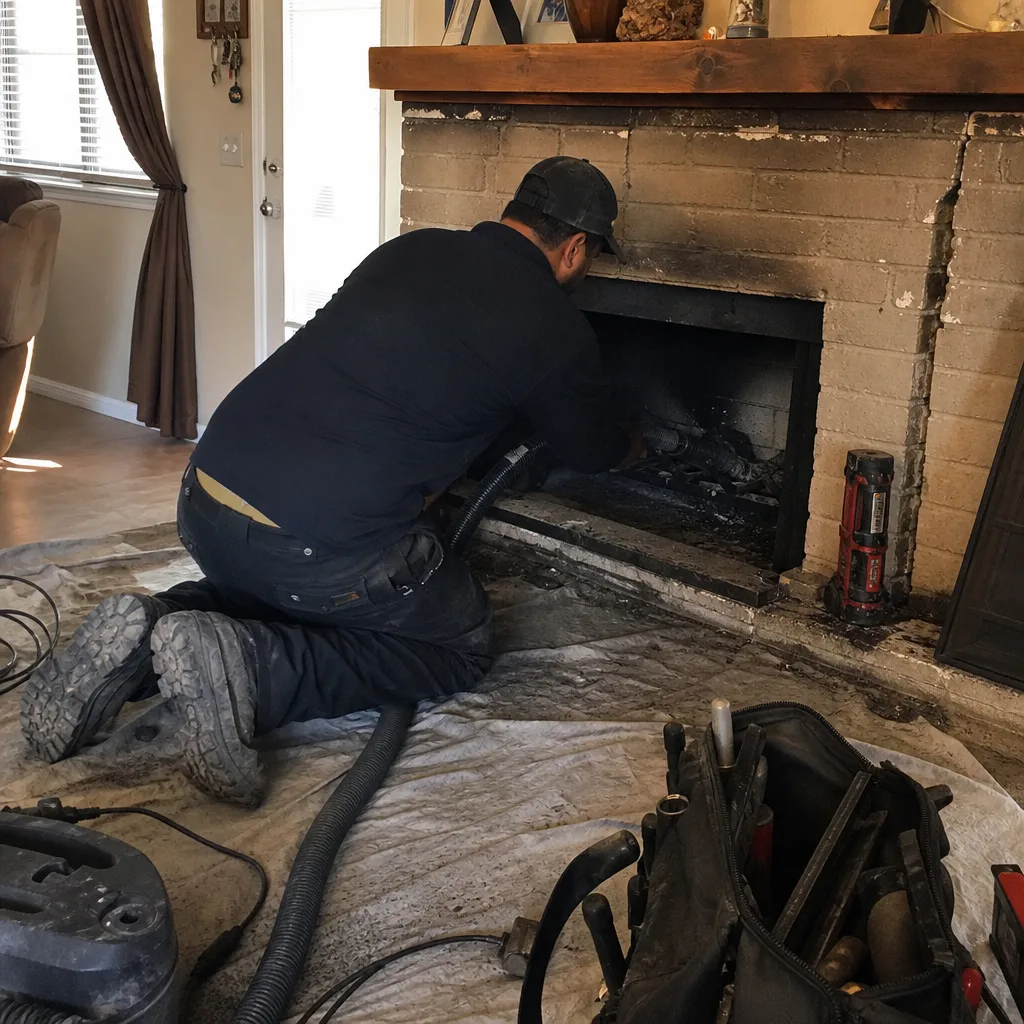 Before
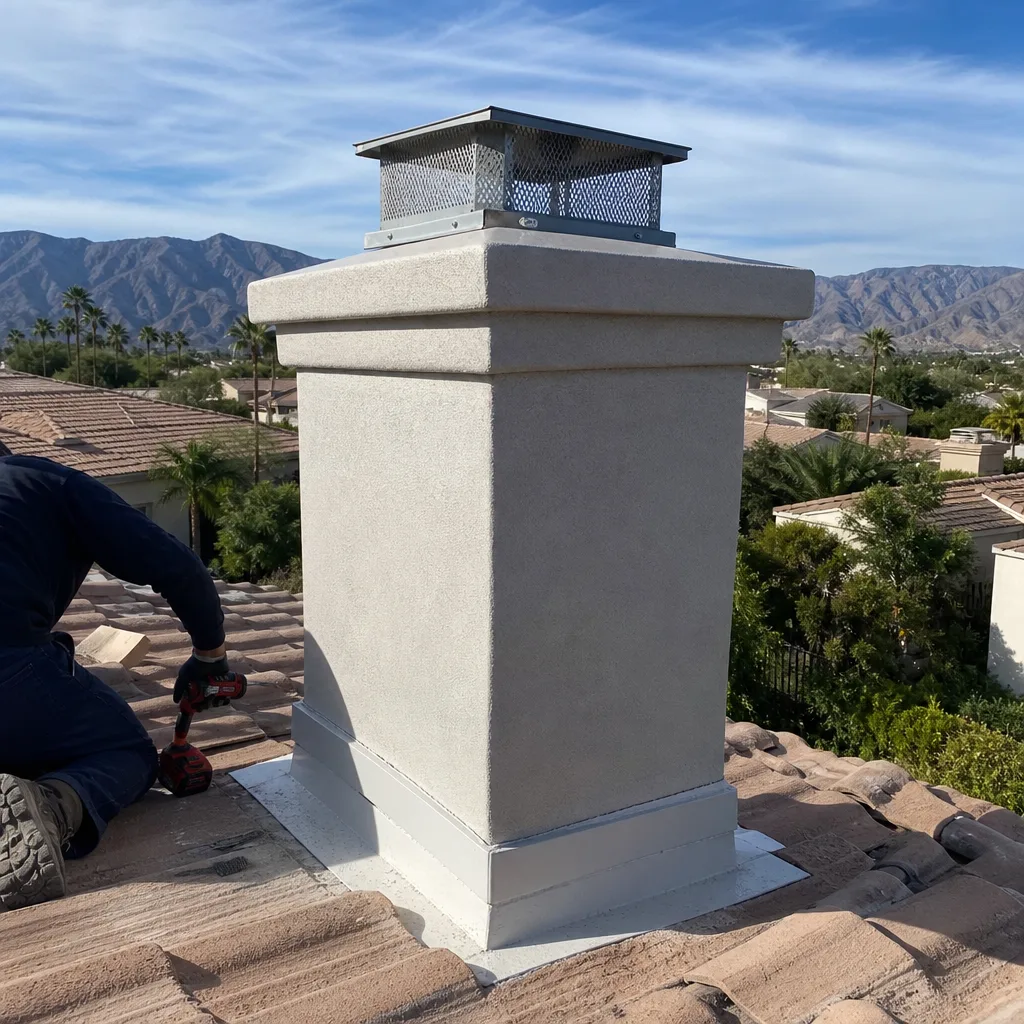 After
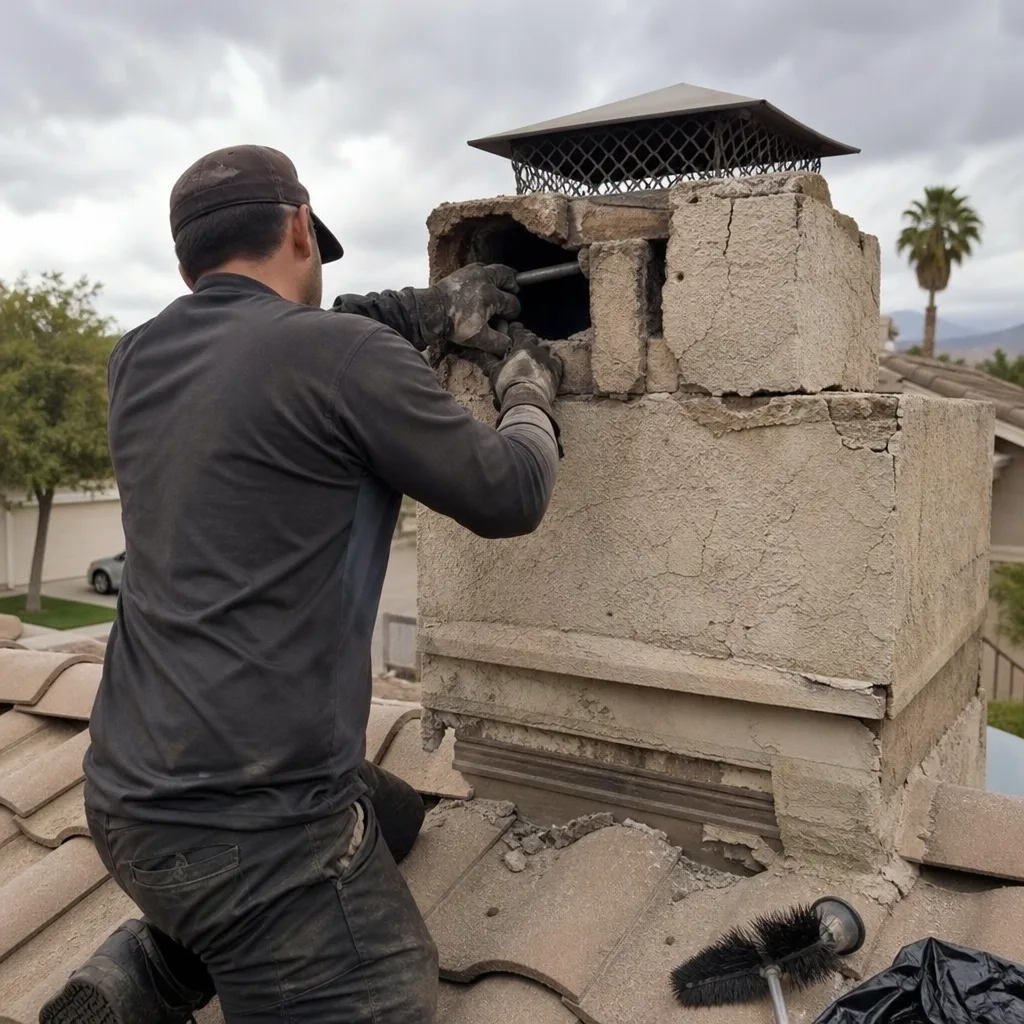 Before
 After
 Before
 After