
Last updated November 2, 2026
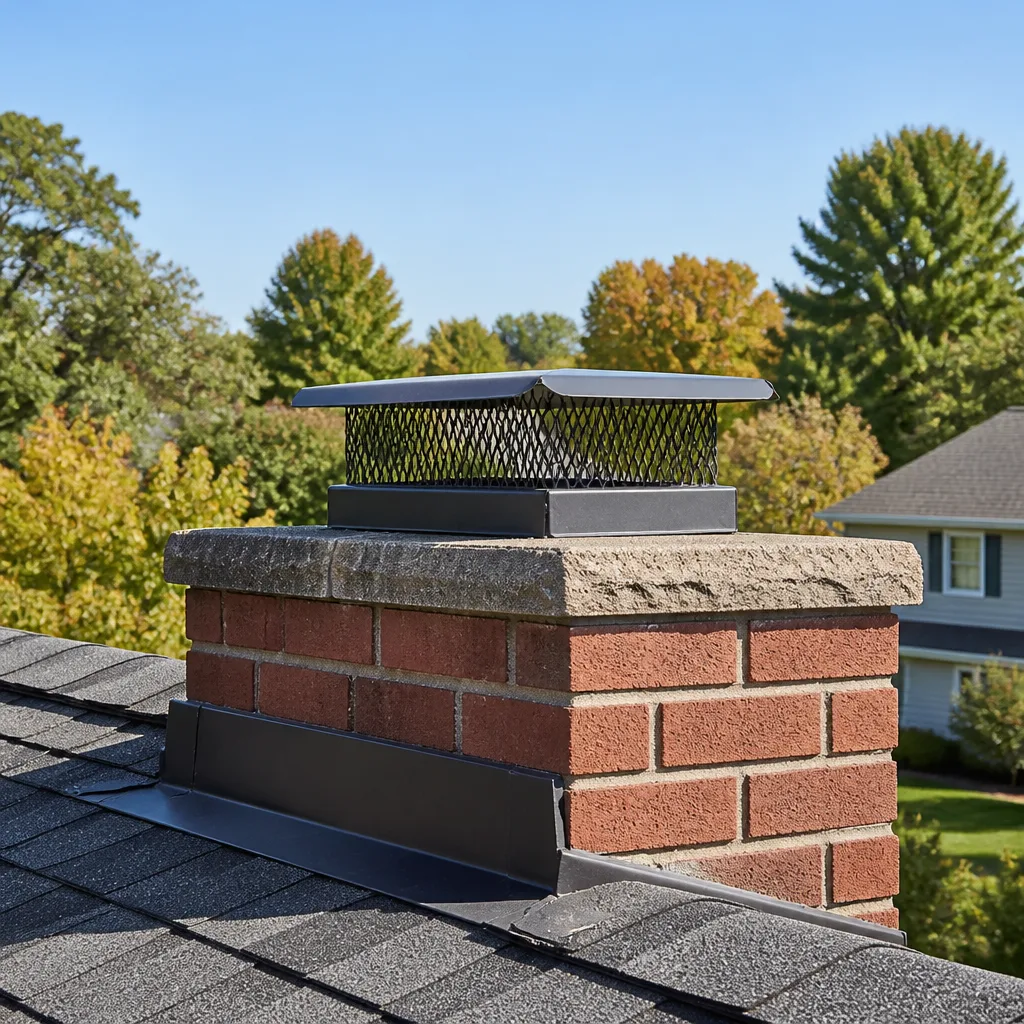 Sweep & inspection
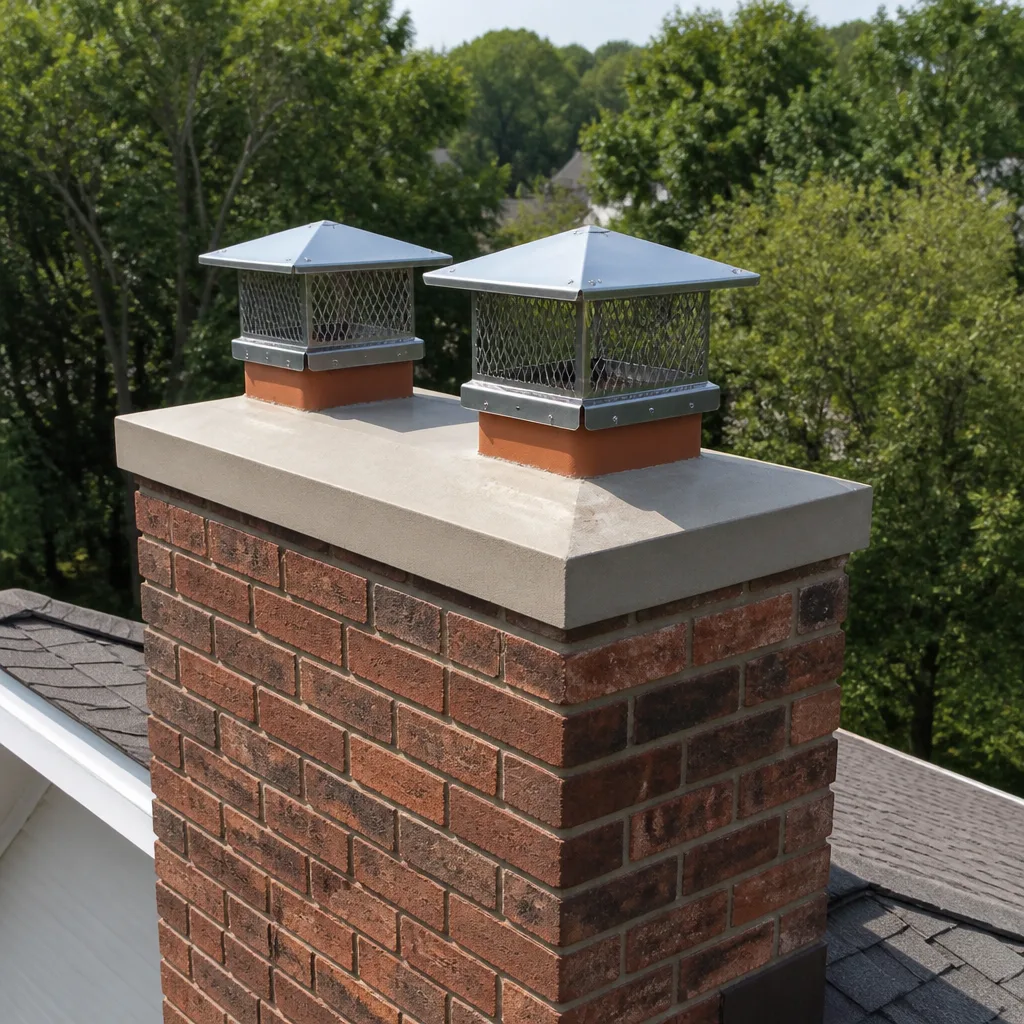 Caps & crowns
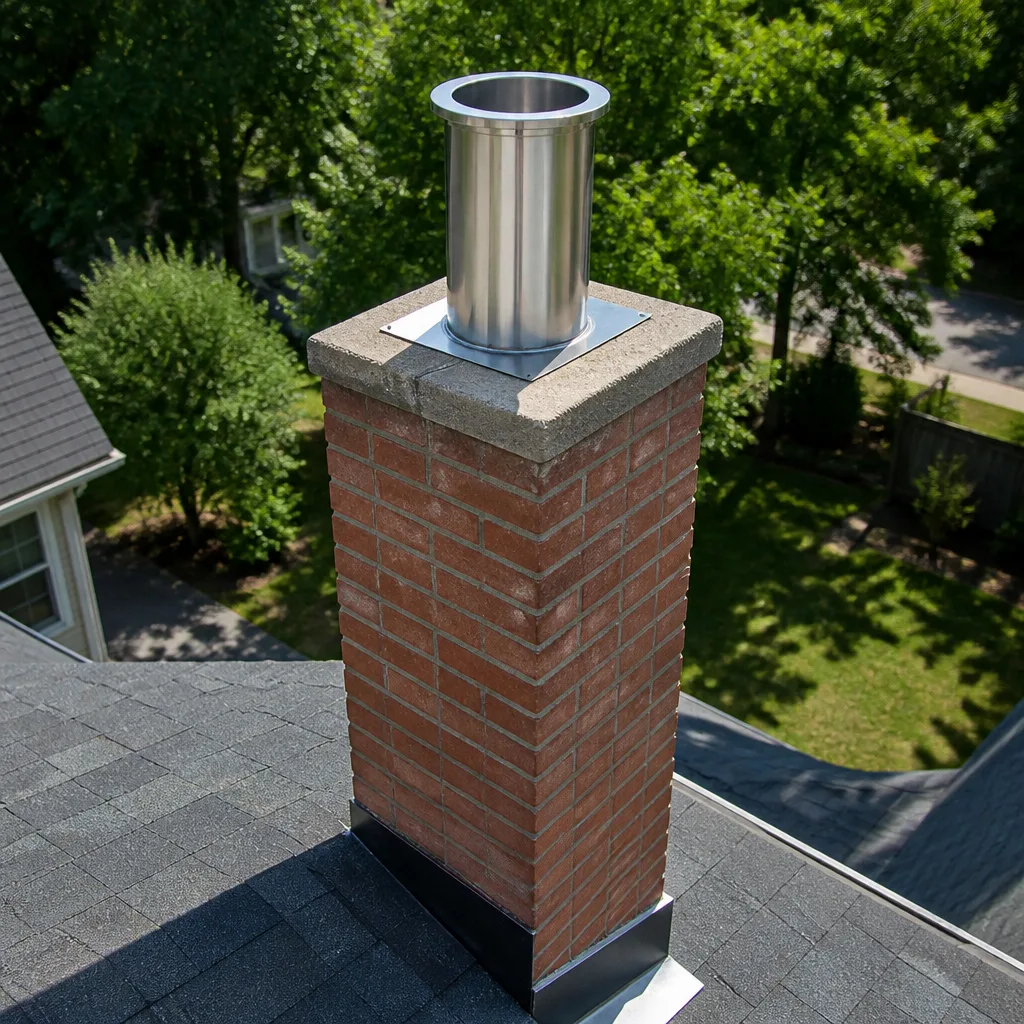 Flue relining
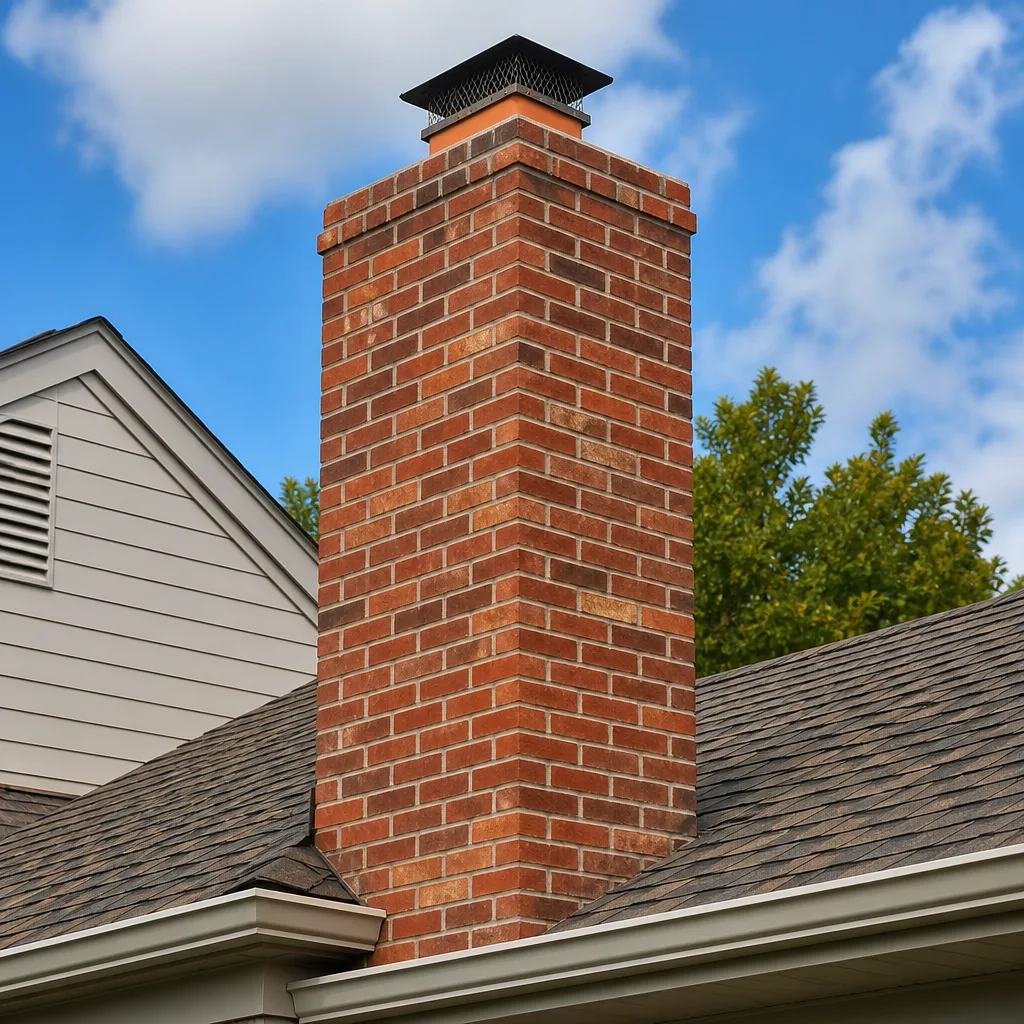 Masonry repair
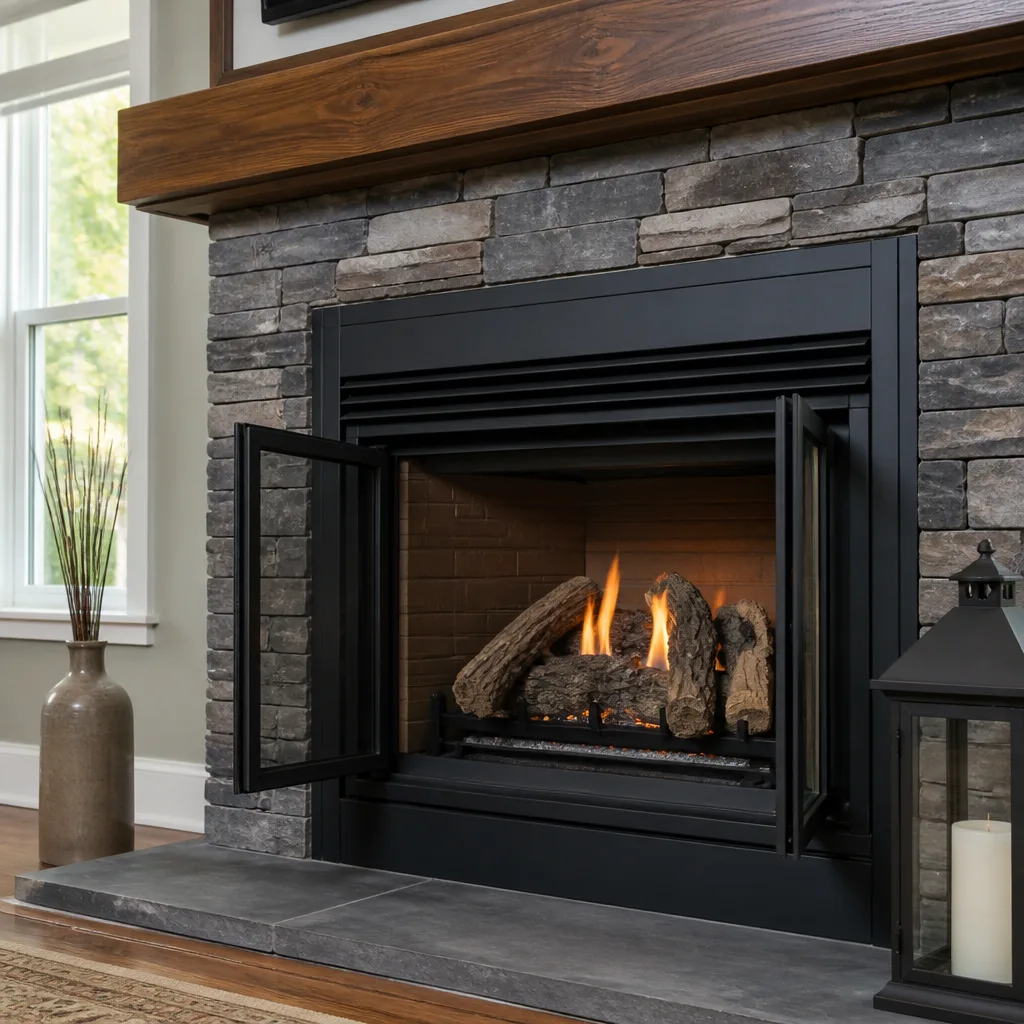 Gas fireplace service
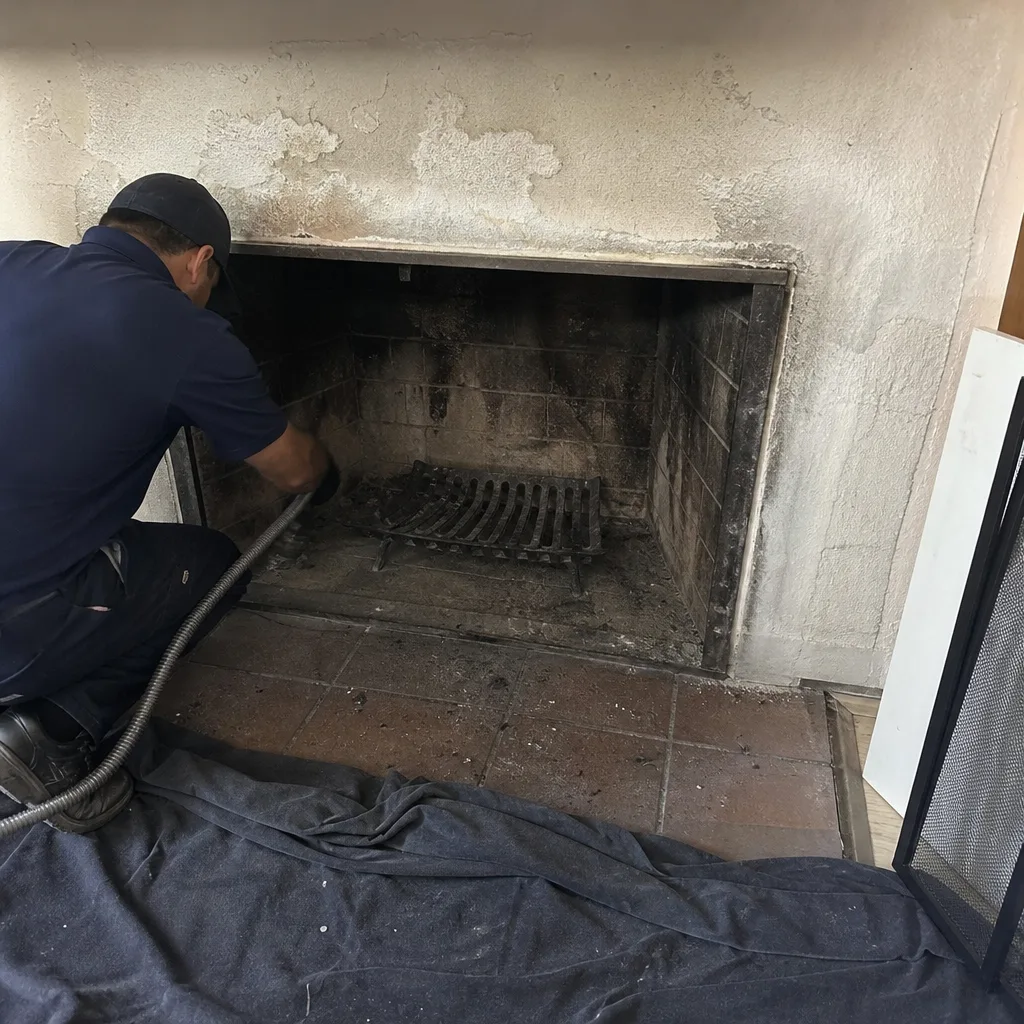
Level 1 sweep and inspection to the NFPA 211 annual standard - flue, crown, cap, and flashing checked and photographed
Chimney sweep logs do not sweep chimneys. They loosen some creosote - which then falls where a brush and vacuum still have to collect it.
Seasonal Chimney Cleaning Care for Indio: Year-Round Homeowner’s Guide
Every national guide says “schedule your chimney sweep before fall.” In Indio, fall starts at 85 degrees. The real seasonal driver for chimney care here isn’t temperature – it’s the August-September monsoon cycle dropping debris into flues and the spring wind events pushing particulate through any gap in the system. If you’ve been following advice written for New England or the Midwest, you’ve been optimizing for the wrong calendar. This guide replaces generic “fall and spring” recommendations with a maintenance rhythm that actually fits the Coachella Valley, and it will walk you through what to do, when to do it, and what can safely wait.
Styles & brands we work with
- Sweep & inspection
- Caps & crowns
- Flue relining
- Masonry repair
- Gas fireplace service
Quick Answer
Chimney care in Indio runs on two pressure points, not four seasons: a post-monsoon inspection in September or October before burning season, and a wind-season check in March or April after spring gusts die down. The single most important annual task is cleaning the flue to remove creosote and debris before you light the first fire of the year. Summer heat stress and monsoon moisture cause more chimney damage in Indio than winter cold ever will, so the timing that matters is tied to those events, not a calendar date.
Table of Contents
- Why Indio’s Chimney Calendar Is Different From Every National Guide
- The Post-Monsoon Inspection: Your Real “Fall Prep”
- Summer Heat Stress: The Season Nobody Talks About
- Wind Season Tasks: What Spring Actually Means in Indio
- The Low-Use Chimney: Maintenance When You Burn Fewer Than 10 Fires a Year
- How to Time Your Sweep Appointment Without Fighting the October Rush
- What Chimney Cleaning and Inspection Costs in Indio
- Common Mistakes to Avoid
- When to Call a Professional
- Frequently Asked Questions
- The Bottom Line
Why Indio’s Chimney Calendar Is Different From Every National Guide
Most chimney maintenance advice assumes a freeze-thaw cycle. Water gets into brick pores, freezes, expands, and spalls the masonry. That’s a real problem in Minneapolis. It’s not the problem in Indio. Here, the damaging force is thermal cycling – daytime highs above 110°F followed by overnight drops of 30 to 40 degrees. Clay flue tiles and mortar joints expand and contract with every cycle, and over a summer that’s roughly 120 cycles of stress. Hairline cracks form. Mortar crumbles at the edges. Caps loosen. None of this requires moisture to start.
Then comes the monsoon. In August and September, sudden downpours hit the Coachella Valley after months of zero rain. Dust that’s been collecting on your chimney cap and crown turns into slurry that runs down into the flue. Debris – palm fronds, tamarisk branches, dead insects – gets pushed into the system. If your cap has even a small gap from summer thermal cycling, that water and debris now has an entry point.
The Western fire season adds another layer. Burning restrictions in the Coachella Valley and surrounding areas mean that when you can burn, the window is narrower and often starts later than it does in colder climates. That compresses the inspection window. You don’t have from September to November to get ready – in practice, you have a few weeks between the last meaningful monsoon event and the first evening cool enough, and legal enough, to light a fire.
We see this pattern every year at Chimney Sweep Indio home: homeowners who scheduled their sweep for “fall” in early November, only to hit a burn day in late October and burn with a flue they haven’t inspected in nine months. The calendar that works here starts earlier and works backwards from weather events, not dates.
What This Means for Your Annual Schedule
- September: Post-monsoon inspection and cleaning, before burning restrictions lift.
- October through December: Burning season – monitor cap and crown performance during wind events.
- March through April: Wind season – check for loosened caps, bird nesting, and dust intrusion.
- May through August: Dormant period – but thermal cycling is actively stressing the system. Schedule any repairs before monsoon season starts.
The Post-Monsoon Inspection: Your Real “Fall Prep”
The most important chimney appointment in Indio is not a fall sweep. It’s a post-monsoon inspection that includes a sweep. After the last significant rain event of August or September, your flue has had months of wind-driven dust and at least one real soaking. What you check matters more than when you check it, but the sequence matters too.
Step-by-Step Post-Monsoon Inspection Protocol
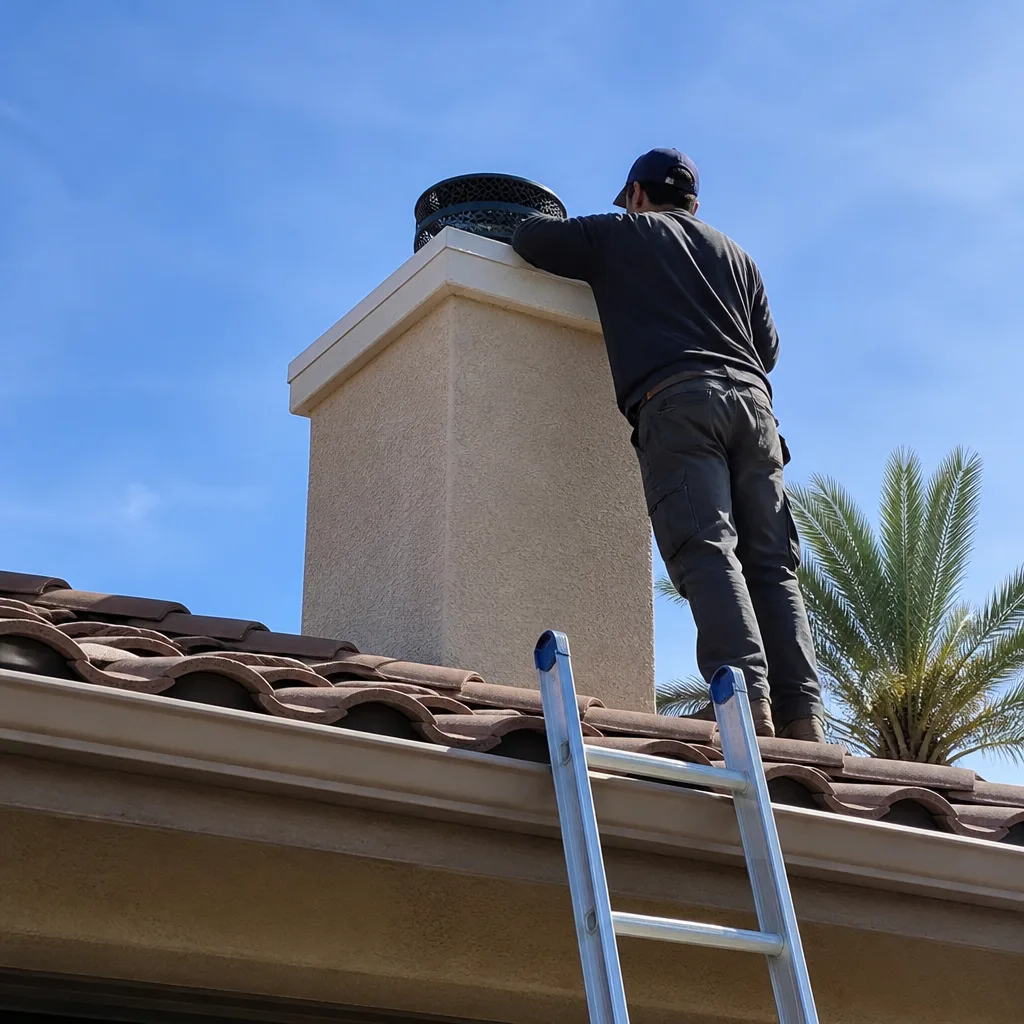
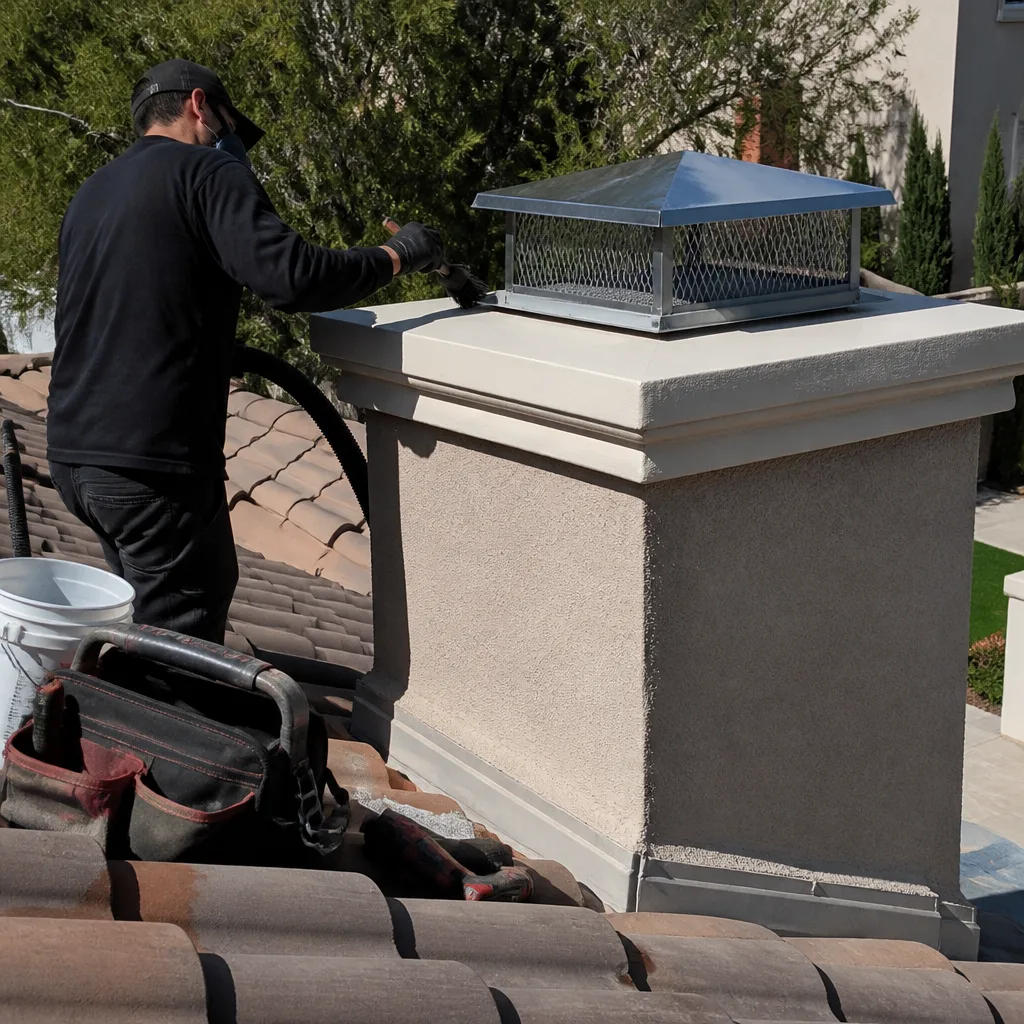
- Start at the cap. Look for dents, lifted edges, missing fasteners. Monsoon winds regularly reach 40 to 50 mph in Indio, which is enough to shift a worn cap. A shifted cap lets rain fall directly into the flue, and that rain carries the summer’s dust with it.
- Check the crown. The concrete slab at the top of the chimney takes direct sun for 12 hours a day. Look for hairline cracks radiating from the flue tile. Those cracks widen with thermal cycling and become water entry points during the next rain event.
- Look down the flue with a light. You’re checking for debris dams – clumps of wet or dry organic material caught on the flue walls. Palm debris and bird nesting material are the most common blockages we find in Indio chimneys after monsoon season.
- Check the firebox and damper. If rain has come down the flue, you’ll see water staining on the firebox floor or rust at the damper hinge. This tells you the cap or crown failed during the monsoon, even if the damage isn’t visible from ground level.
- Smell check. Stand inside the house near the fireplace. A damp, musty, or acrid smell after rain means water or creosote is sitting somewhere it shouldn’t be. That’s an immediate call, not an “add it to the list” item.
If your inspection turns up a damaged cap or crown, deal with it before burning season, not after. A compromised cap doesn’t fix itself, and the next wind event will drive more debris through the gap. Repair work on caps and crowns is exactly the kind of job that benefits from doing it during the October shoulder season, when demand hasn’t peaked. Our Chimney Sweep in Indio service includes a full cap and crown assessment as part of the standard sweep, so you get the inspection and the cleaning in one visit.
Summer Heat Stress: The Season Nobody Talks About
Here’s what we’ve learned from years of working on chimneys in Indio: summer is the highest-risk period for cap and crown damage in this climate, and most homeowners never check their chimney between May and September because they’re not burning. The fireplace sits unused, the chimney takes 120 days of direct desert sun, and the first sign of trouble is often water in the firebox during a September monsoon.
The Thermal Cycling Problem, Explained
Your chimney crown is a concrete slab that covers the top of the masonry stack. It’s designed to shed water away from the flue. But concrete and clay expand at different rates. The clay flue tile heats faster than the surrounding concrete. The concrete heats faster than the mortar beneath it. Every material is expanding and contracting at its own rate, all day, every day, for four straight months.
The result is predictable if you know what to look for. Hairline cracks appear at the crown perimeter first, where the concrete is thinnest. Those cracks widen. Rainwater from the first monsoon saturates the crack. The next day the temperature hits 105°F and the water flashes to vapor inside the concrete, creating internal pressure that spalls the surface. Within two seasons, what started as a hairline crack is a chunk of missing crown.
This is not a freeze-thaw problem. It’s a thermal cycling problem, and it’s the single most common structural chimney issue we see in Indio homes that are otherwise well maintained. The fix is straightforward when caught early – a crown sealer or limited crown repair. When caught late, it’s a full crown replacement and potential re-pointing of the top courses of masonry.
What To Do About Summer Heat Stress
- Visually inspect your crown in June. You can do this from the ground with binoculars. Look for visible cracks along the edge of the concrete, flaking, or discolored patches where water has penetrated.
- If you see cracks, schedule a repair before August. You want the crown sealed before monsoon moisture hits it. Every rain event after May widens whatever crack exists.
- Don’t assume a chimney cap protects the crown. The cap covers the flue opening. The crown is the slab around it. They fail independently and need to be checked separately.
- If you buy a home in Indio during the summer, add a chimney inspection to your due diligence. Summer sellers aren’t burning, so any damage from last winter or the previous monsoon is easy to miss during a normal home inspection.
Wind Season Tasks: What Spring Actually Means in Indio
Spring in Indio means wind. The late-winter through April period regularly produces sustained winds of 20 to 30 mph with gusts higher. That wind does two things to your chimney: it physically stresses the cap and crown, and it forces particulate – dust, sand, debris – into any gap in the system, including around the damper and through the firebox vents.
Spring is also when chimneys get occupied. Birds that nest in the Coachella Valley during the cooler months – house sparrows, starlings, and pigeons are the most common – seek out dark, protected cavities. An uncapped or poorly capped chimney is an ideal nesting site. We find active or abandoned nests in Indio chimneys more often between February and May than any other time of year.
Spring Checklist for Indio Chimneys
- Re-check the cap after the first major wind event of the year. Spring gusts can finish the job that a summer of thermal cycling started. A cap that was tight in October may be shifting by April.
- Look for nesting material. Twigs, grass, and debris protruding from the top of the flue, or accumulated at the base of the firebox, are signs of an active or abandoned nest. Baskets of nesting material can fully or partially block the flue.
- Test the damper operation. Dust and grit from spring winds can work into the damper mechanism, making it stiff or preventing a full seal. A damper that doesn’t close completely lets cooled air escape in summer and lets dust in during wind season.
- Check the firebox for wind-deposited dust. A fine layer of dust is normal in a desert climate. A significant accumulation, or dust that appears to have been carried down the flue rather than in through the house, suggests a gap in the cap or damper system.
- Inspect dryer vent terminations while you’re at it. Lint, debris, and wind-blown material collect at exterior vent hoods during spring. A blocked vent is a fire hazard and reduces dryer efficiency. Dryer Vent Cleaning in Indio is a service line we handle alongside chimney work, and spring is the right time to schedule it.
None of these spring tasks require a full chimney sweep. What they require is a visual check and a willingness to act on what you find. Most spring chimney problems are solved with a cap repair or replacement and a damper adjustment, not a flue cleaning. But you can’t fix what you don’t find, and most Indio homeowners never look at their chimney until they smell smoke inside the house.
The Low-Use Chimney: Maintenance When You Burn Fewer Than 10 Fires a Year
Plenty of Indio homeowners have a fireplace that gets lit five or six times between December and February, then sits dormant for ten months. The assumption is that a low-use chimney doesn’t need maintenance. The reality is that a low-use chimney often needs more attention than a heavily used one, because problems that would reveal themselves through regular use go unseen for years.
What Happens in an Idle Chimney
Creosote is not your primary concern when you burn infrequently. The problem is intrusion. Birds nest, rodents move in, dirt accumulates, and water finds its way through a failing cap or crown. None of this produces an immediate symptom, because nothing is being burned. Then, on the one evening in January when you light the fireplace, the flue is partially blocked and the smoke comes back into the house. Or worse, the accumulated material ignites.
There’s also the moisture problem. A chimney that never gets hot has no mechanism to evaporate accumulated moisture inside the flue. That moisture sits in contact with mortar joints and firebrick, gradually degrading them. In a climate like Indio’s, where ambient humidity is low most of the year, this isn’t as aggressive as it would be in a coastal environment, but the monsoon introduces enough water into an uncapped or poorly capped flue to keep the problem alive.
If You Burn Fewer Than 10 Fires Per Year, Do This
- One inspection per year, in the fall. You don’t need a full sweep if there’s no creosote buildup, but you do need a professional eye on the system. Our Chimney Sweep in Indio service includes a condition report at every visit.
- Focus on the cap and crown. Your flue may barely accumulate creosote, but your cap and crown are still exposed to full thermal cycling and wind stress every day of the year. These are the low-use chimney’s most common failure points.
- Check for pest entry in January and June. Two checks a year, both centered on the times when animals are looking for shelter. You’re looking for nesting material, droppings, or the sounds of activity inside the flue.
- If you haven’t burned in five years or more, get an inspection before the next burn. Long-dormant chimneys can have collapsed flue tiles, disconnected sections, or significant masonry damage that accumulated slowly without symptoms. Burning without knowing the condition is gamble.
The good news about low-use chimneys is that they rarely have deep creosote problems. The bad news is that they hide everything else. An annual inspection is cheap insurance, and it’s the only way to know a chimney is safe to light after a long idle period.
How to Time Your Sweep Appointment Without Fighting the October Rush
The October-November booking window for chimney sweeps in Indio is compressed and oversubscribed. Here’s the pattern we see: the first day the evening temperature drops below 60°F, phones start ringing. Everyone wants their sweep before Thanksgiving. The problem is that the actual work hasn’t changed since September – you could have had the cleaning done before burning season started, at a time when appointment availability is wide open.
The Smart Timing Strategy
Book your post-monsoon sweep in September. This is the last month of low demand before the burn-season rush. The monsoon has typically delivered its last meaningful rain by mid-September, so any water or debris intrusion has already happened. The flue has had all summer to accumulate whatever it’s going to accumulate. A September sweep gives you a clean, inspected chimney before the first burn day arrives in late October or November.
The alternative is to wait until early December, after the first wave of appointment demand has passed. The downside is that you miss the first several weeks of burning season, and if you have damage from the monsoon, you spend those weeks not knowing the condition of your flue. The upside is that December availability is better than late October, and a December sweep still covers you for the majority of the burning season.
Why Early Fall Is the Right Call in Indio
- You beat the demand curve. September is the quietest month between the summer lull and the burning-season peak.
- The monsoon is over. Inspecting after the last rain means you’re seeing the chimney in its worst possible condition, which is what you want to see before burning.
- Repairs can be scheduled before burning season. If the inspection finds a cracked cap or deteriorated crown, you have weeks to schedule the repair before you want to light a fire.
- You can coordinate with dryer vent work. Booking both your chimney sweep and your dryer vent cleaning in one September visit solves both fire-safety items before the holidays. One call covers all three of our service lines.
What Chimney Cleaning and Inspection Costs in Indio
Chimney sweeping in the Coachella Valley typically runs between $180 and $350 for a standard cleaning, depending on the condition of the flue and the level of creosote buildup. Inspection-only visits run $99 to $150. When we quote a job, the price is set before work begins – we don’t do add-on charges discovered mid-service. What we find during the sweep gets documented and photographed, and if repair work is recommended, you get to see the evidence before you decide.
Cost Factors Specific to Indio
- Creosote level. Heavier buildup takes longer to remove. Most low-use Indio chimneys have light to moderate creosote, but if the previous owner burned unseasoned or soft woods, you may be looking at a heavy accumulation that requires multiple passes.
- Debris removal. Monsoon debris and bird nesting material add time to a sweep. If we’re pulling a nest out of the flue before we start cleaning, that’s additional labor, and you should know that before we begin.
- Access. Two-story chimneys or steep roof pitches in certain Indio neighborhoods add time and complexity. The sweep price reflects the job as we find it, not a standardized flat rate that assumes a one-story home.
- Repairs found during the sweep. If the cleaning reveals a cracked cap, the flue cleaning is done and the repair is a separate conversation. You’re never obligated to have repair work done by us – but you will see the photos and get a straight answer about what the damage means.
For a complete breakdown of pricing and what’s included in a standard sweep, our Chimney Sweep in Indio page covers the service in detail. If you need repair or liner work, our Chimney Repair in Indio page explains what’s involved and why we use specific materials for the job rather than the cheapest available.
Common Mistakes to Avoid
- Waiting until October to schedule a sweep. In Indio, the smart window is September, after the last monsoon rain. October is when everyone else is calling, and appointment lead times stretch accordingly. You’ll still get served, but you’ll be competing with the entire valley for the same weeks.
- Assuming no burning means no maintenance. Low-use chimneys hide problems that never announce themselves because there’s no fire to make them obvious. Thermal cycling and monsoon moisture are working on your chimney whether you burn or not.
- Ignoring the chimney cap. The cap is the first line of defense against debris, rain, and pests. A $150 cap replacement that’s ignored becomes a $2,500 flue relining job when water damage and nesting compound over two or three seasons.
- Letting nests stay because the fireplace isn’t used. Bird nesting material is dry, fibrous, and sits directly above your firebox. It’s the most combustible material that can be inside your flue. Even a small chimney fire can ignite it.
- Burning before inspecting. If the chimney has sat unused since last winter and you haven’t inspected it, that first fire of the season is a test you’re running in an uncontrolled environment. The smoke will tell you there’s a problem, but by then it’s in your living room.
- Skipping the dryer vent while focusing on the chimney. Lint accumulation in the dryer vent is a combustion risk with a similar profile to a dirty chimney – it’s just located on the other side of the wall. Dryer Vent Cleaning in Indio is part of the same fire-safety picture.
- Doing masonry repairs yourself on a lived-in flue. Vertical masonry work near the top of a chimney is not a ladder job, and chimney repair compounds quickly when done wrong. The materials matter too – the brands we use, including Olympia Chimney and Gelco products, are specified because the job requires materials that actually hold up in desert conditions.
When to Call a Professional
Call a chimney professional if you see water in the firebox, smoke backing into the house, visible cracks in the crown, a shifted or missing cap, or nesting material protruding from the flue. Call if your damper won’t close completely, if you smell something musty or acrid near the fireplace after rain, or if you’re buying a home in Indio and the inspection report flags anything chimney-related. Call if you haven’t had the chimney looked at in three years or more, regardless of how little you burn. These are conditions where guessing costs more than a professional assessment, and several of them are fire or carbon monoxide risks. Chimney Sweep Indio offers free estimates in Indio – call (877) 378-2419.
Frequently Asked Questions
Once per year is the standard recommendation for any chimney that gets used, even lightly. In Indio, the practical answer is once per year in September, after the monsoon season, so the flue is clean and inspected before burning season. If you burn more than two dozen fires per season, or burn soft woods like pine, you may need a mid-season sweep in January. Call (877) 378-2419 to schedule your annual sweep or to talk through your specific usage pattern.
What a low-use chimney needs is an annual inspection, with a sweep performed as needed based on creosote levels. If you burn fewer than ten fires a year, you may not need a full sweep every year, but you cannot know that without looking inside the flue. The inspection is where cap, crown, and water intrusion problems get caught before they become structural repairs.
Monsoon season introduces the year’s only meaningful moisture into a chimney system that has spent months dry and heat-stressed. Dust that collected all summer turns to mud inside the flue, and rain water enters through any gap in the cap or crown created by thermal cycling. This is why the post-monsoon inspection is the most important chimney check of the year in Indio.
Cleaning a chimney from the roof involves ladder work, vertical heights, and tools most homeowners don’t own, and it’s work that saves you money only if you do it correctly. More importantly, a professional sweep in Indio includes an inspection of the entire system – cap, crown, flue, damper, and firebox – that a DIY cleaning misses. The cleaning is the easy part. Knowing what you’re looking at is the value.
Not automatically. A liner needs replacement or resurfacing when it has cracks, gaps, or deterioration that allows heat and combustion gases to escape the flue, which is a fire and carbon monoxide risk. We use HeatShield liner resurfacing systems when the damage can be repaired without a full relining, and DuraFlex flexible liner systems when full relining is required. You should never accept a liner recommendation without seeing the internal camera evidence first, and we show it to every customer before quoting.
The cost of an annual sweep – typically $180 to $350 in Indio – is measured against the cost of repairing a damaged flue, relining a chimney, or recovering from a chimney fire. Those repairs run into the thousands. The sweep is the cheapest way to know the system is safe, and it’s priced that way for exactly that reason.
The Bottom Line
Indio’s chimney care calendar runs on two real events, not four seasons: the monsoon cycle that ends in September and the wind season that peaks in March and April. Book your sweep after the last monsoon rain, before burning season demand kicks in, and you’ve covered the year’s most important maintenance event. Check your cap and crown in June for thermal stress damage, and re-check after spring winds for nesting and loosening. A low-use chimney is not a no-maintenance chimney – it’s a chimney where problems hide until they’re expensive. Chimney Sweep Indio home handles chimney sweeping, repair, and dryer vent cleaning under one roof, with a straight answer about what’s actually needed. Call (877) 378-2419 for a free estimate.
Written by the team at Chimney Sweep Indio, serving Indio since 2015.
See the difference
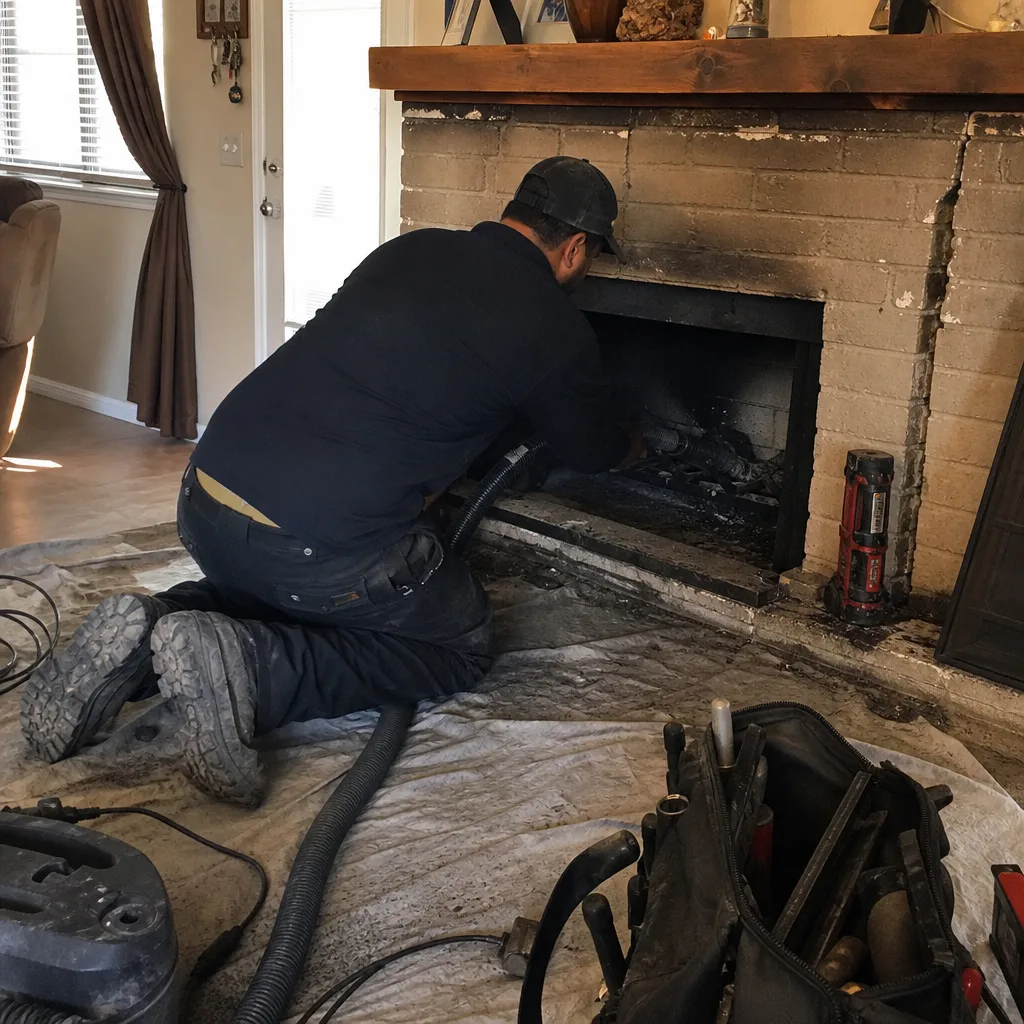 Before
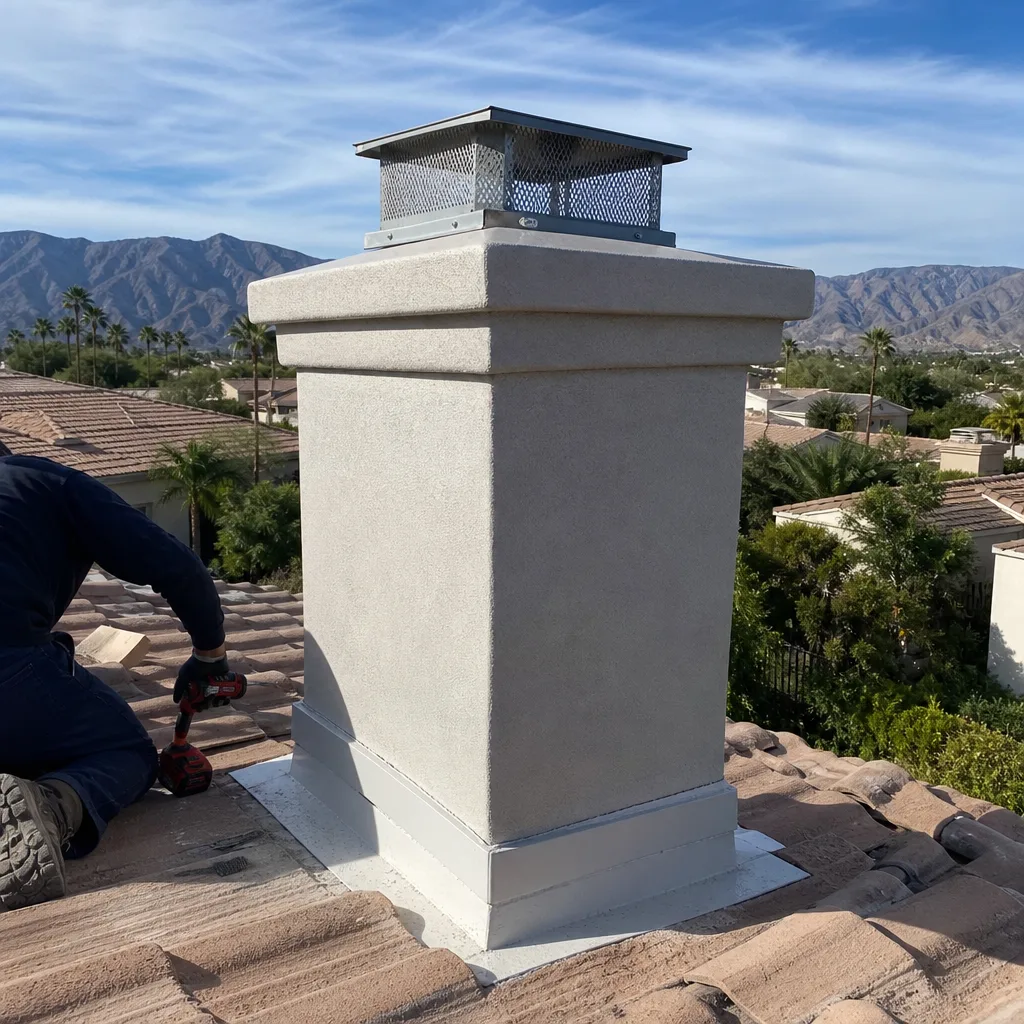 After
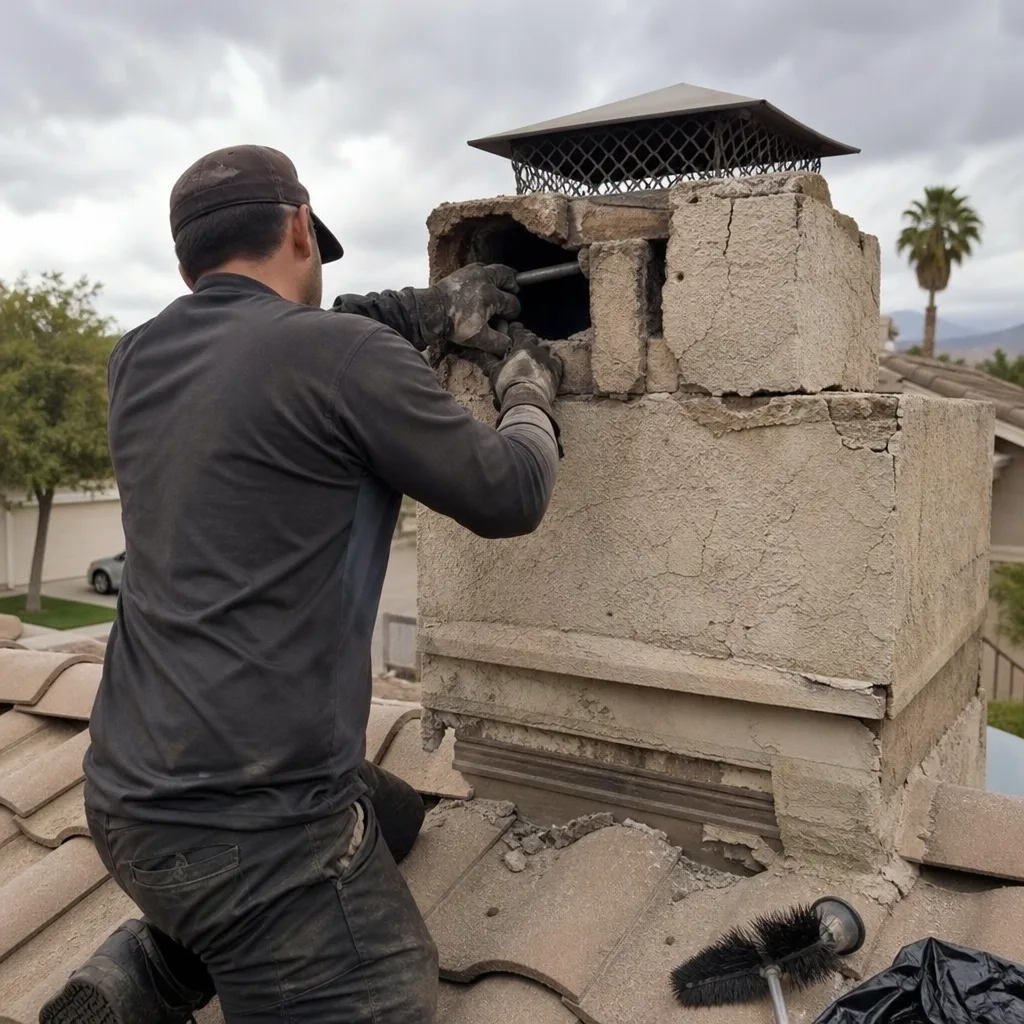 Before
 After
 Before
 After