
Emergency Chimney Sweep Near Me: What Indio Homeowners Should Do First
If you suspect an active chimney fire, close the damper if you can reach it safely, get everyone out of the house, and call 911 before you call anyone else. A chimney sweep comes after the fire department clears the scene, not before. If what you’re dealing with is a sudden blockage or animal intrusion rather than an active fire, then yes, call us at (877) 378-2419 right away and we’ll walk you through what to check while you wait.
A chimney fire doesn’t always announce itself with flames shooting out the top. Sometimes it’s a low rumble that sounds like a freight train passing overhead, or a stovepipe that’s vibrating hard enough to rattle the damper. Homeowners who don’t recognize that sound lose critical minutes. In Indio, where winter nights still push fireplaces into regular use and older homes carry decades of creosote history, knowing the first 20 minutes of protocol matters more than how fast a sweep can get to your door.
Active Chimney Fire: The Exact Sequence
Here’s the order. Write it down or save it somewhere you’ll actually find it at 2 a.m. with adrenaline pumping.
- Close the damper if you can do it without putting your face near the firebox. Cutting off air slows the burn. Do not open the fireplace doors. Do not throw water on it. A water blast inside a hot flue can crack masonry and create a bigger problem.
- Get every person and pet out of the house. Do not stop to grab sentimental items. Chimney fires can spread to the attic faster than most people expect.
- Call 911 from outside. Tell the dispatcher you have a suspected chimney fire. Do not call a chimney sweep first. This is not a cleaning issue anymore, it’s a structure fire. Firefighters in Indio respond to chimney fire calls regularly during the colder months, and they’ll check the attic and wall cavities for extension. That’s a job for them, not us.
- Once the fire department clears the scene, that’s when a chimney sweep gets involved. The chimney is now out of service until a Level 2 inspection happens. This is a code requirement after any chimney fire, not a suggestion.
We get calls from people who skipped step three and called us first. We tell them the same thing every time: hang up with us and call 911. There’s no sweep in Indio who can outrun an active fire.
Chimney Fire, Backdraft, or Blockage: Telling Them Apart
Not every scary chimney event is a fire. The symptoms are distinct, and knowing the difference tells you whether fire services need to respond or whether you’re dealing with something a sweep can handle same-day.
A chimney fire typically sounds like a low roar or rumble, not the crackle of a normal wood fire. The stovepipe or chimney may shake. You’ll often see thick, dark smoke pushing out the top, and sometimes flames. The smell is acrid, like burning tar, because creosote is essentially concentrated wood tar.
A severe backdraft event is different. Smoke pours into the room instead of up the flue. It happens when negative pressure inside the house overpowers the chimney’s draft. You’ll see smoke, not flames, and the smell is the wood smoke you’d expect from a normal fire, just in the wrong place. In Indio homes, this often shows up on windy nights or when a bathroom fan and kitchen exhaust are running at the same time as the fireplace. It’s a ventilation issue, not an emergency fire, but it is a carbon monoxide concern that needs attention.
A blockage emergency is quieter. You might notice smoke backing up slowly, or a campfire smell inside the house even when the fireplace is cold. Animals (birds in spring, raccoons in fall) build nests in flues. Sudden blockages also happen after wind storms knock debris or cap components into the chimney. No fire is involved, but you shouldn’t use the fireplace at all until the blockage is cleared. Carbon monoxide from an obstructed flue has nowhere to go but back into the house.
Here’s the quick read: roaring sound plus shaking plus dark smoke equals call 911. Smoke in the room with no roaring equals ventilation problem, call a sweep. Persistent campfire smell with no fire equals blockage, call a sweep. When in doubt, err on the side of calling the fire department.
What to Tell the Sweep When You Call
After a chimney fire, or really any incident that made you search for an emergency chimney sweep near me in Indio, the call goes better if you have answers ready. Here’s what we need to know:
- Did the fire department respond? If yes, we need to schedule a Level 2 inspection before anything else. That includes an interior video scan of the flue, which means we bring a camera, not just brushes.
- What did it sound like? A roar versus a rumble versus nothing at all tells us how hot it likely got.
- What did it smell like? Burning tar smell suggests creosote ignition. Wood smoke smell in the house suggests draft failure, which is a different repair path.
- How long has it been since the last sweep? If you can’t remember, that’s an answer. It tells us we’re probably dealing with accumulated creosote and need to assess flue damage, not just clean it.
- Any visible changes from outside? New cracks in the stucco or brick, a leaning cap, or separation where the flue meets the chimney crown. If you can safely see it from the ground, tell us about it.
The post-fire inspection is not optional. NFPA 211 requires a Level 2 inspection after any chimney fire because the heat can crack flue liners, separate mortar joints, and damage the chimney structure in ways you can’t see from the ground. We’ve seen chimneys that looked fine from the outside and were dangerously compromised on the inside. Camera inspection shows it plainly. That’s what you’re paying for: a real look at what actually happened.
What Emergency Chimney Sweep Services Actually Cover
The phrase “emergency chimney sweep” gets thrown around loosely. Let’s be straight about what qualifies as an emergency and what doesn’t.
Legitimate emergency calls include:
- Active animal blockages (a raccoon or bird nest fully obstructing the flue during burning season)
- Post-storm debris that’s blocked the chimney or damaged the cap
- Chimney cap failure that’s allowing rain, birds, or embers into the system
- Post-fire inspection and assessment
- Sudden, severe draft failure where smoke is filling the house
Not an emergency:
- Routine annual sweeping that you forgot to schedule until December
- “We just moved in and want it cleaned before we use it” (smart, but schedule it, don’t emergency dispatch it)
- Light creosote buildup discovered during a home inspection
In Indio, the genuine emergency pattern we see most often is the first one: animals. Raccoons and birds figure out that an uncapped or damaged chimney is a dry, sheltered place to nest. They block the flue with nesting material, and suddenly the fireplace that worked fine in November is filling the living room with smoke in January. The animal is the problem, but the real issue is usually a failed or missing cap that let it in. Clearing the nest is the first step. Fixing the cap so it doesn’t happen again is the second. We use Famco and Copperfield caps and termination components because they hold up against desert wind, direct sun, and the occasional hard Indio storm. Generic caps fail faster, and then you’re back to the same problem next season.
What happens when you call
- 1
A real person answersNo phone trees – you reach a local pro.
- 2
You get an upfront price rangeHonest numbers before anyone is dispatched.
- 3
A background-checked tech heads outLicensed & insured, dispatched right away.
- 4
You approve before work beginsNothing starts until you say go.
Structural Signs That Mean “Out of Service”
While you’re waiting for the sweep to arrive, there are things you can check from ground level that tell you whether the chimney is out of service until repairs happen. Do not climb onto the roof. These are look-from-the-yard observations only.
- Spalling brick or crumbling stucco on the exterior chimney chase. If you see brick faces popping off or debris at the base, moisture has gotten into the masonry and the structure is degrading. This is common in Coachella Valley homes where monsoon-season rain gets followed by extreme heat cycles.
- A cracked crown, which is the concrete slab at the top of the chimney. Hairline cracks let water in. Wide cracks mean water has been getting in for years.
- Separation at the flue collar, where the pipe or liner meets the top of the chimney. Any visible gap or leaning means the flue system is compromised.
- White staining (efflorescence) on exterior brick, which is salt deposits from water moving through the masonry. It’s not cosmetic; it means water is inside the structure.
After a chimney fire, we treat all of these signs as urgent until a camera inspection says otherwise. Heat from a flue fire can accelerate existing masonry damage dramatically. What was a hairline crack in the crown becomes a stress fracture. What was minor spalling becomes structural. When we do chimney repair in Indio, we see this pattern constantly: a fire event (often a small one, the homeowner didn’t even realize it happened) followed by rapid exterior deterioration over the next couple of seasons. That’s why the inspection matters, not just the cleaning.
If you’re looking at any of these signs, the chimney is out of service until repaired. Not “use it carefully.” Out of service. A compromised flue is a carbon monoxide risk and a fire risk, and no amount of careful burning makes it safe.
What Happens When We Arrive
When you call us for a chimney emergency in Indio, here’s what the visit actually looks like, step by step, so nothing is a surprise.
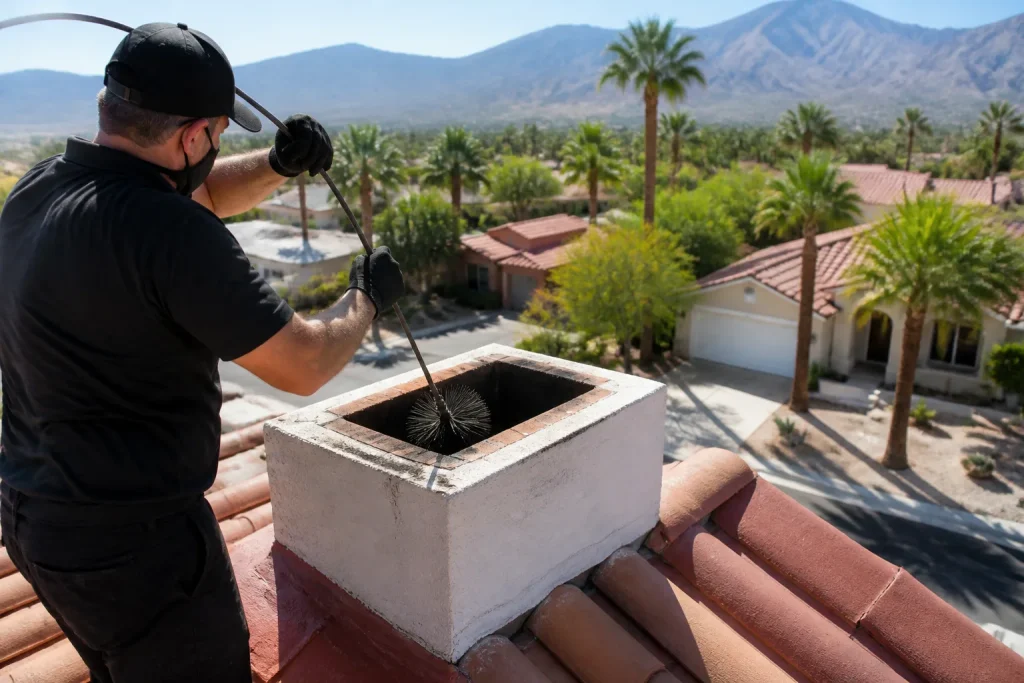
First, we assess from the ground and the roofline. We’re looking at the cap, crown, and visible masonry before we touch anything else. Then we run the camera. We don’t recommend any repair without camera evidence, and we’ll show you the footage. If the liner is cracked or deteriorated, you’ll see it on the screen with your own eyes. That’s when we talk about options like HeatShield resurfacing or a DuraFlex reline, depending on what the damage actually requires. If the flue just needs cleaning, we clean it. We repair what we find, with parts that last. We don’t sell liner work that the camera doesn’t justify.
One job we remember clearly: a homeowner in Indio called us after a small chimney fire that had been put out by the fire department. The exterior looked fine. The interior video scan showed the clay tile liner had cracked in three places from the heat. That chimney would have failed badly on the next hot fire. She hadn’t thought the fire was “that serious.” The camera told a different story. That’s the whole reason we do this the way we do.
When to Call a Pro
Any of the following means it’s time to call rather than troubleshoot:
- You’ve had any chimney fire, even a small one you think you put out yourself
- You smell smoke in the house when the fireplace is not in use
- You hear animal sounds coming from the chimney
- You see cracking, spalling, or separation on the exterior chimney
- You have any doubt about whether the flue is intact
This is not a DIY situation. High-temperature flue gases, carbon monoxide, and structural chimney failure are not things you can assess from the ground with a flashlight. Camera inspection and proper equipment matter.
Related services in Indio: if the issue is a blocked flue or post-fire assessment, that’s our Chimney Sweep in Indio page. If the camera finds liner damage and you need a Chimney Repair in Indio, we handle that too. And if you’ve been ignoring your dryer while worrying about the fireplace, Dryer Vent Cleaning in Indio is the same category of problem: combustion risk. One call covers all three.
The Bottom Line
The first 20 minutes matter. Active fire: close the damper, evacuate, call 911, then call a sweep after the fire department clears the scene. Backdraft or blockage: different symptoms, still urgent, but a sweep call is the first call. Structural damage after an incident means the chimney is out of service until a camera inspection says otherwise. And the inspection after any chimney fire is a code requirement, not an upsell.
If you’re in Indio and dealing with any of this, call Chimney Sweep Indio at (877) 378-2419. We’ll ask the right questions, tell you what to check while you wait, and get there with the equipment to actually see what’s going on inside your flue. And if what you’re dealing with is just “we forgot to schedule the annual cleaning,” we’ll take that call too, we just won’t pretend it’s an emergency.
Frequently Asked Questions
Same-day scheduling is available for genuine emergencies like active animal blockages, post-fire inspections, or storm-damaged caps. Call (877) 378-2419 and we’ll assess the urgency of your specific situation and schedule accordingly.
Yes. NFPA 211 requires a Level 2 inspection after any chimney fire, even a small one. Heat from the fire can crack liners and mortar joints in ways that are invisible from the outside and from the firebox. A camera scan is the only way to know if the chimney is safe to use again.
It includes a full assessment of the cap, crown, and visible masonry, plus an internal video scan of the flue. You’ll see the camera footage yourself, so any recommended repair is backed by visual evidence. Call (877) 378-2419 to schedule an inspection in Indio.
No. Smoke smell in the house with no active fire usually means either a blockage or a draft failure, and both are carbon monoxide risks. The fireplace should stay unused until a chimney sweep in Indio clears the flue and confirms proper draft. Call (877) 378-2419 and we’ll help you figure out what’s going on.
Written by the team at Chimney Sweep Indio, serving Indio since 2015.
Need Chimney Cleaning Help?
Call Chimney Sweep Indio - licensed & insured, with free written estimates in Indio.
(877) 378-2419